 Join on WhatsApp
 Join on Telegram
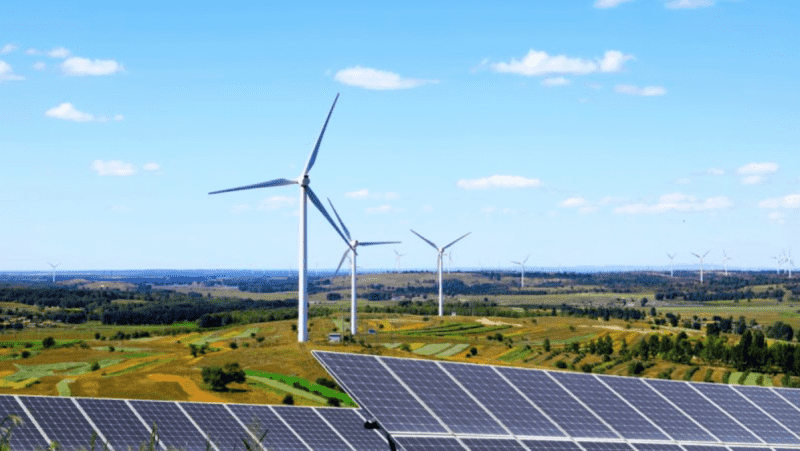
Rabat – Morocco’s goal of sourcing 52% of its electricity needs from renewables by 2030 is the “most credible” target in the Middle East and North African (MENA) region, according to a recent report from the Global Energy Monitor.
The country’s renewable energy ambitions are backed by concrete data as it aims to add approximately 3.6 gigawatts (GW) of new solar and wind capacity, excluding increasing demand, the report added, noting that renewable energy currently accounts for 19% of Morocco’s electricity production.
A significant portion of this capacity, 41 GW, is already committed to hydrogen production or direct electricity export to Europe, the report shows.
What stands out, however, is that the remaining 3.5 GW of potential utility-scale solar and wind capacity in Morocco could bring the country remarkably close to achieving its renewable energy targets.
Noting Morocco’s ambitions to become a key part of the future hydrogen supply chain, the report explains that while “not all identified prospective projects will be built, … as long as the large hydrogen and export projects do not divert resources and financing, and Morocco continues to double down on renewable energy, the country is on track to meet its target.”
In contrast to Morocco’s proactive approach, the broader North African region presents a mixed picture when it comes to the adoption of renewable energy.
Read also: Morocco Shines as Global Green Hydrogen Hub at the 3rd World Power-to-X Summit
Despite the immense wind potential in many nations in the region, progress has been slow. Since May 2022, only Mauritania and Morocco have increased their operational wind capacity, adding a combined 226 MW to the grid.
This represents a regional annual growth rate of just 5%, indicating a significant gap in tapping into wind energy.
One-third of the countries analyzed in a recent study the Global Energy Monitor quoted in its report exhibit a surprising lack of both operating wind farms and project-level proposals for new wind installations. This trend of neglecting wind resources persists in the region, hindering progress toward clean energy adoption.
This disparity in renewable energy adoption in North Africa is partly due to economic factors, the report assessed.
Six countries in the region, including Iraq, Kuwait, Libya, Oman, Qatar, and Saudi Arabia, derive more than a quarter of their GDP from oil and gas extraction.
Dependence on fossil fuels poses a significant economic risk in a world transitioning away from carbon-intensive energy sources. As a result, many of these oil-rich countries have been slower to embrace renewable energy than their less oil-dependent counterparts, such as Morocco and Egypt.
There are signs of change, however. Oman, for instance, is taking proactive steps to transition its economy, setting an example for other oil-rich nations.
Libya has also made strides towards diversification by exploring renewable energy exports to Europe, although its 25 GW project announcement is still in its early stages.