
Most armed conflicts involve rival countries; enduring rivalries represent three-quarters of armed confrontations worldwide and between 80% to 94% of total wars, according to authors like P. Diehl.
If we focus on the contemporary period without going further back into diplomatic history, the MENA region is the most active geographical region in terms of rivalries, accounting for 40% of total rivalries. It is followed by Africa with 17%, Southern Europe and the Balkans with 15%, East and Southeast Asia with 13%, Latin America with 9.6%, and South Asia bringing up the rear with 4%.
An analysis of rivalries from 1816 to 2021 reveals that territorial disputes account for about half of rivalries (45%) while positional and ideological rivalries represent 16% and Mixed rivalries account for 38% of the total.
It is noteworthy that, at present, intra-European rivalries are absent from the table, as is North America. This supports the liberal approach to peace, which suggests that democracies do not go to war with each other and that economic interdependence, especially economic integration, is a factor of stability and peace (EU, NAFTA, EEA).
Rivalries in the MENA System
The MENA system consists of Arab states and three non-Arab countries: Turkey, Iran, and Israel. It encompasses three relatively autonomous subsystems: the Maghreb, the Mashreq, and the Gulf, whose security dynamics are interconnected. This region has always been a zone of turbulence and ideological and religious divisions.
Not only does the MENA system occupy the top position in terms of the number of rivalries, but it also has the highest number of actors with more than one rivalry, it also has the most active rivalries in the world.
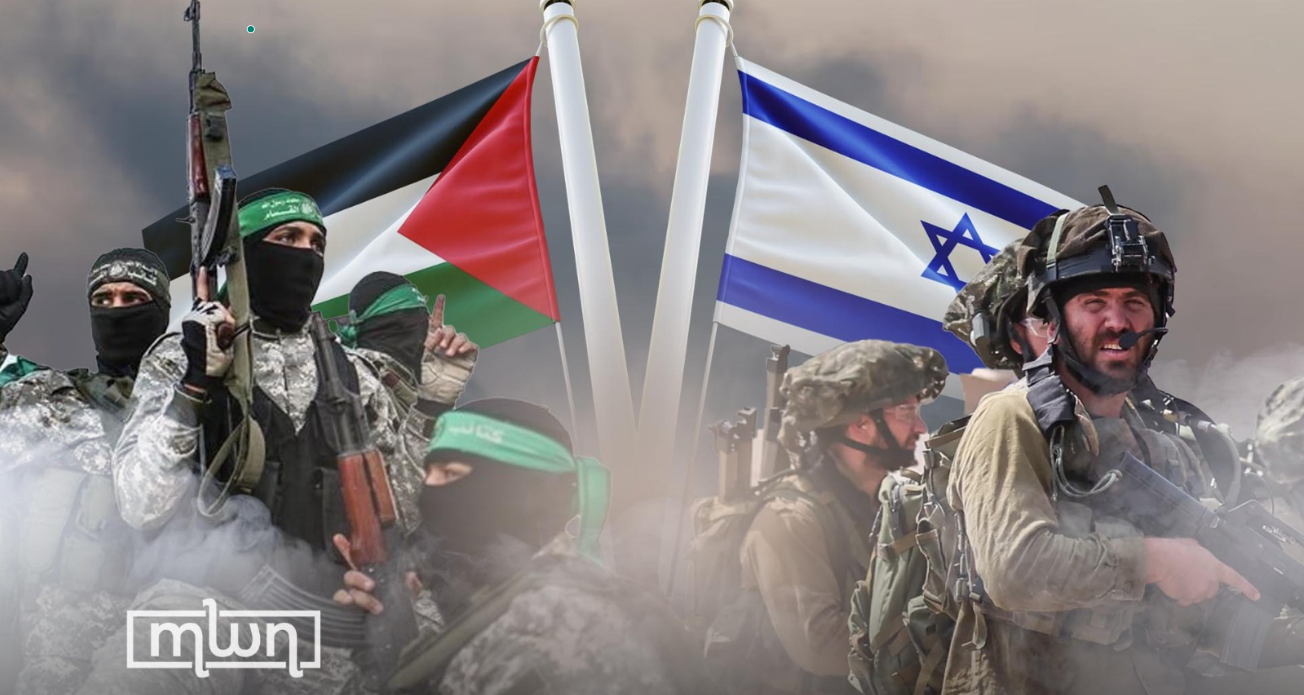
On the whole, rivalries within the MENA system have pitted not only Arab countries against Israel but also Arab countries divided according to the prevailing ideologies. Intra-regime rivalries (Nasserism versus Ba’athism), rivalries between monarchies and republics; while conflicts are nearly absent among monarchies. This observation leads us to suggest, without much risk of error, that Arab monarchies, in general, do not go to war. There have certainly rivalries, but they do not reach the same intensity and violence as in other regimes.
From the Suez War in 1956 (a three-partite war following the nationalization of the Suez Canal by President Nasser) to 2020, the MENA system has been marked by multiple shocks and schisms that have shaped rivalries and alliances. It should be noted that this system has always been characterized by a fragmented or multipolar configuration, despite hegemonic aspirations.
Conflicts were intense from 1955 to 1973, during which three Arab-Israeli confrontations occurred (Suez War, Six-Day War, October War or Yom Kippur, in addition to the War of Attrition between Egypt and Israel). After the shocks of the Six-Day War in June 1967 and the October 1973 War until September 1978, the region saw an inter-Arab détente in almost all sub-regions, except in the Maghreb, where rivalries resumed, especially around the Moroccan Sahara.
From September 1978 to 1995, the rivalry between Arab countries and Israel decreased in intensity following the signing of Peace Agreements, namely the Camp David Accords between Egypt and Israel and the Oslo Accords between Palestinians and Israelis.
However, this period of peaceful coexistence between Arab countries and Israel was marked by rivalries, this time around the Arab-Israeli conflict, pitting countries of the rejectionist front (Algeria, Libya, Syria, South Yemen, and the PLO) against countries that had chosen to sign or support peace agreements with Israel, and due to the Iranian Revolution (a new shock) and the revival of the rivalry between Arabs and Persians (Iraq, Saudi Arabia, Bahrain, and Iran). Iran attempted to spread its ideology to neighboring countries, especially those with a Shiite component (the Iran-Iraq War, the events in Mecca in December 1979, etc.).
The disintegration of Ba’athist Iraq (between 1991 and 2005) following the invasion of Kuwait and the international coalition intervention led by the USA, in accordance with Chapter VII of the UN Charter, provided Iran with a significant opportunity to supplant Saddam Hussein and regain the role of the Gulf’s gendarme, as was the case under the Shah’s Iran (intrusion and expansion in the region through non-state actors such as Hezbollah, the Houthis, the Popular Mobilization Forces, Al-Quds Forces in Lebanon, Syria, Iraq, and Yemen, etc.).
Since 2011, new rivalries have emerged, this time between countries that support the Arab Spring and countries opposing the rise of Islamist movements.
Sources of rivalries in MENA system
Several factors contribute to rivalries in the MENA system : territorial issues in spatial rivalries, the nature of political regimes and ideological differences in ideological rivalries, struggles for influence in positional rivalries, and interference in internal affairs as sources of interventionist rivalries.
Given its status as the cradle of monotheistic religions, a mosaic of ethnicities and cultural legacies, this region is marked by identity conflicts (Islam-Judaism, Sunni-Shia, Christianity, Orthodox Church, etc.).
Its geographic location as a bridge between East and West and as a crossroads between continents (with natural passages such as the Bosphorus, Aden, Gibraltar straits, and an artificial passage, the Suez Canal), as well as its vast underground natural resources (the world’s largest reserves of oil and gas), make this region one of the most coveted in the world, despite the shifting focus toward the Pacific and Ukraine.
Another element exacerbating conflict, and not least, is the historical legacy of British, French (the Sykes-Picot Agreement of May 2016 for the division of the Ottoman Empire and the Balfour Declaration of November 1917), Italian (in Libya and Somalia), and Spanish colonization. These colonial powers left the region sitting on a powder keg, leaving behind a trail of unresolved conflicts.
Are rivalries inevitable in MENA region?
Rivalries often end through various pathways; it has been demonstrated that most rivalries (from 1816 to 2010) ended in a non-coercive manner (54.7%). Coercive settlements still accounted for a significant portion (45%), with 11% due to one party recognizing the superiority of the other, ending the rivalry (Coralesi, Rasler, and Thompson, 2008).
Experts have attempted to model the non-coercive settlement process resulting from the following causes:
– Changing priorities (for example, leaders increasingly focus on the well-being of their population and the development of their country, such as Late President Anwar Sadat’s decision to sign the peace agreement).
– Regime change under certain conditions, however it should be noted that regime change may not necessarily lead to the end of a traditional and historical rivalry for example, between Persians and Arabs.
– Divergences between factions within the ruling bloc, between doves and hawks. For example, the peace efforts of the late President Yasser Arafat and Israeli Prime Minister Yitzhak Rabin, who concluded the Oslo Accords, or Ethiopian Prime Minister Abiy Ahmed, who signed a peace agreement with Eritrea.
– Negotiating a mutual agreement with various variations, whether a comprehensive peace agreement or any other instrument to reduce tension and appease rivalry, such as an agreement on sharing the waters of a river or demarcating land or maritime borders. However, the signing of a peace agreement does not automatically mean the end of a rivalry. For instance, the Ifrane Agreement of 1969 and the 1972 conventions did not end the rivalry between Algeria and Morocco, which resumed in 1975 and continues to this day.
The history of Europe, which suffered from two world wars, teach us that the best solution to end rivalries is economic integration of rivals into community space where each can benefit. The functionalist and neo-functionalist approaches to peace suggest that the process of regional integration contributes to conflict resolution by reducing territorial tensions and increasing well-being and prosperity in the community space. The gradual integration process aims to substitute the power politics of states with cooperative dynamics based on the organization of common international public services. States choosing to cooperate in one sector are compelled by a mechanism of spillover to extend their interactions to other sectors.
The integration process strengthens over time and promotes the end of conflicts.
However, this solution is not a panacea it requires some prerequisites in the MENA system:
– Firstly, resuming the Oslo process and implementing the two-state solution, living side by side based on the Arab Peace Plan, is a prerequisite for lasting peace throughout the system. This positive shock, which the entire region needs, will, in our opinion, dissipate all tensions in the system and beyond, in Afghanistan and the rest of the Muslim world.
– Secondly, peaceful coexistence between Sunni and Shia through ongoing dialogue and the establishment of an inclusive regional consultation mechanism where major powers have observer status.
– Thirdly, resolving all disputes through political dialogue and peaceful means
– Fourthly, non-interference in internal affairs and respect of territorial integrity of countries.