Marrakech – Preparation was the key word at the World Bank’s Tuesday panel, titled “A New Playbook for Challenging Times,” as participants discussed the need for a new global approach to facing the consecutive, multifront crises facing the world.
The panel saw the participation of World Bank Managing Director of Operations Anna Bjerde, Morocco’s Minister of Energy Transition Leila Benali, and Malawi’s Minister of Trade and Industry Sosten Alfred Gwengwe.
Save the Children UK CEO Gwen Hines, UNICEF Executive Director Catherine Russell, and Inter-American Development Bank Executive Vice President Jordan Schwartz also took part in the discussions.
Chronic Instability
The main reason behind the proclaimed need for a “new playbook” is the turbulence of the world’s current affairs, panelists explained.
Over the past few years, the world at large and developing countries in specific have been enduring consecutive crises and challenges that have impeded existing development agendas.
From the COVID-19 pandemic to the Russia-Ukraine war and a number of recent natural disasters such as the September 8 earthquake in Morocco, it has become imperative to be constantly prepared to deal with such shocks, the panel argued.
“In the last few years we’ve experienced that the world is changing. It’s one crisis after the other. It’s one shock after the other,” Bjerde explained, adding that such crises have intensified in both number and intensity.
“We have food insecurity at a level we haven’t seen before,” the senior World Bank official argued, adding that these challenges are adding pressure on already strained resources. “We have the underlying and everyday pressing impact of climate change.”
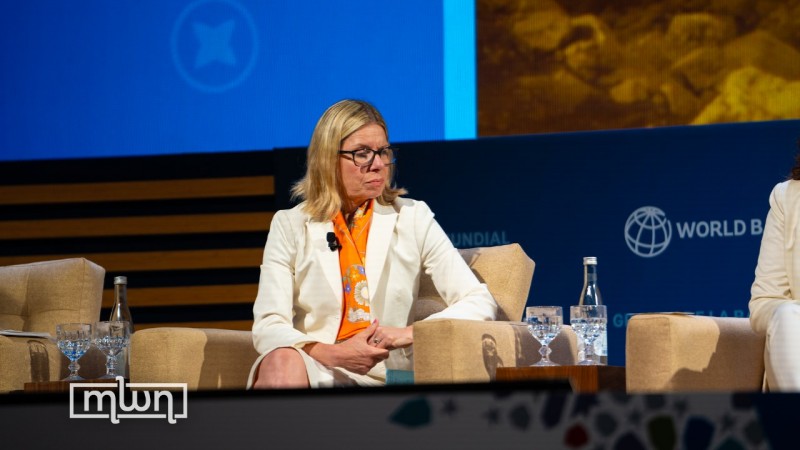
World Bank Managing Director of Operations Anna Bjerde.
Another concern addressed by the panelists was the rising number of conflicts, with Bjerde explaining that the World Bank expects that 60% of the world’s poor population will be living in conflict-ridden areas in the coming years.
The new playbook is long overdue, Benali suggested, citing countries that are especially susceptible to the effects of crises having been long aware of the need for a shift in approach.
The minister explained that the world is mainly suffering from “a crisis of fear,” whereby people and institutions are hesitant to move capital in anticipation of the next shock.
She drew attention to the example of China, where savings by workers went up following the COVID-19 pandemic, hampering capital flow between investors and countries.
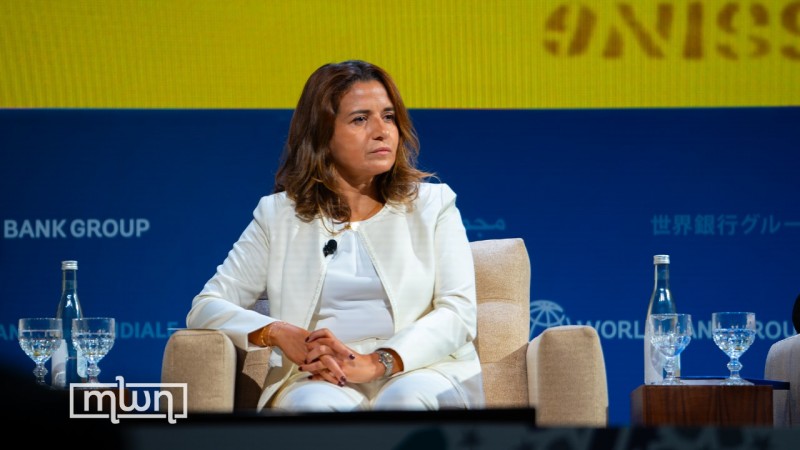
Moroccan Minister of Energy Transition and Sustainable Development, Leila Benali.
The mindset of needing to always be prepared for potential setbacks has also permeated levels of leadership in the state and international organizations, she added.
Benali also highlighted the need for a new playbook when dealing with existing development projects, as sticking to the same plans can hamper progress often.
She highlighted the progress Morocco has made in providing electricity to its rural areas. The rate of electrification in the country now stands at 99.9%, the minister explained, adding that a rate of 100% cannot be achieved without a change in strategy.
Such a change should include looking towards new resources such as renewable energies and new ways of delivering power.
Malawi’s Minister of Trade and Industry, Sosten Alfred Gwengwe, also echoed these beliefs, stressing that one of the key challenges today is to make sure that countries, especially those in the developing world, have enough economic buffers to be able to absorb the impact of such shocks.
“I think the crises, especially the climactic ones, are here to stay,” he emphasized, adding that such crises also impede existing development agendas and make them that much harder to execute.
For multilateral development banks such as the Inter-American Development Bank, this translates into a need for more staff on the ground and more practical work to manage the effects of these crises.
The bank’s Executive Vice President Jordan Schwartz said that his bank has been taking these very steps, while also ensuring that there is enough long-term development of instruments that can respond to crises.
“We have to find a way to convert all of our technical capacity and empathy into a quick response without giving up our broader vision of long-term sustainable development,” he said.
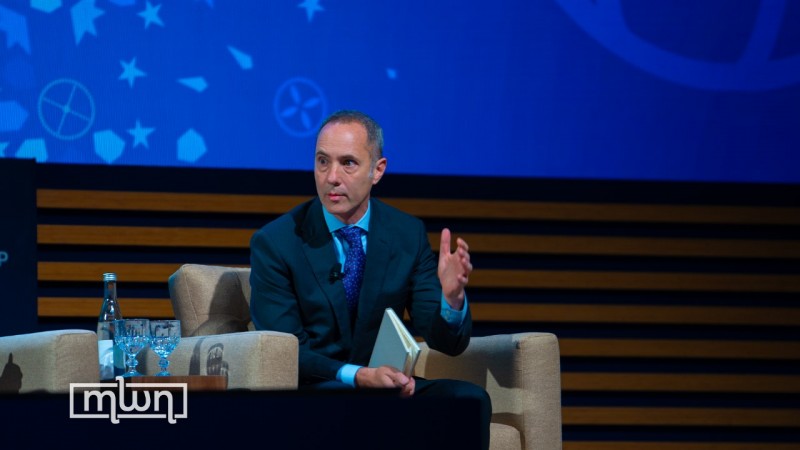
Executive Vice President of the Inter-American Development Bank Jordan Schwartz.
Effect on children
With the presence of representatives from UNICEF and Save the Children, there was also a focus on the possible ways to specifically protect children.
“Right now, more children are at risk in the world than at any other time in our history,” UNICEF Executive Director Catherine Russell said, emphasizing that conflict not only directly affects children’s lives, but also impacts infrastructure around them and their abilities to progress.
In this context, Russell emphasized that UNICEF tries to give the countries where it operates solutions to sustainably continue protecting children and their rights on their own.
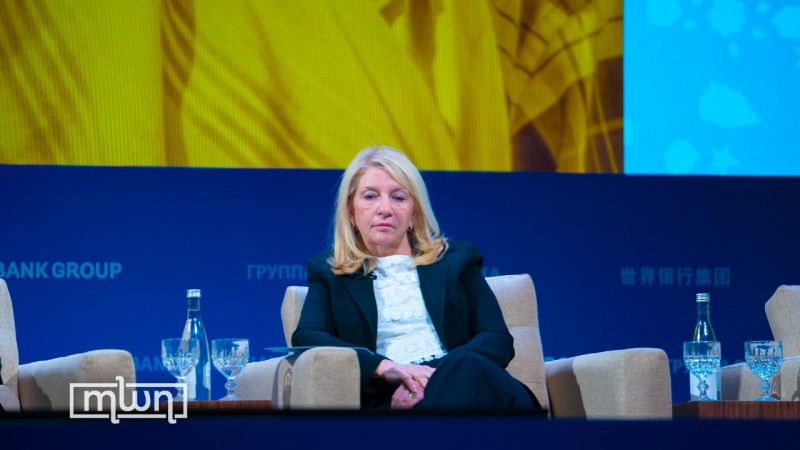
UNICEF Executive Director Catherine Russell.
“Politicians talk about the future all the time. Well, the future is the children,” she said. “If we don’t get the children healthy and educated, that is devastating not only for that country, but for the region as a whole.”
Gwen Hines, who is a chief executive at the children’s rights charity Save the Children, echoed the same sentiments, while emphasizing that the world needs to be more ready for future shocks under the assumption that they will keep coming.
“The key thing we all need to do is to stop treating shocks as surprising,” she said. “This is the new normal.”
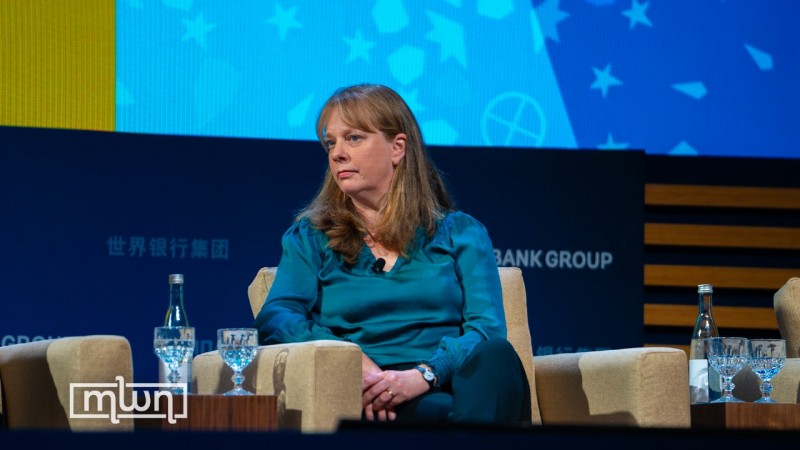
Gwen Hines, CEO of Save the Children, UK.
Speaking to Morocco World News (MWN) after the panel, Hines also drew attention to the efforts Morocco undertook to rebuild following the devastating September 8 earthquake.
“What was really impressive in Morocco was how the whole community and country came together to support those affected and to try and rebuild for the future,” she said.