


 Join on WhatsApp
  Join on Telegram
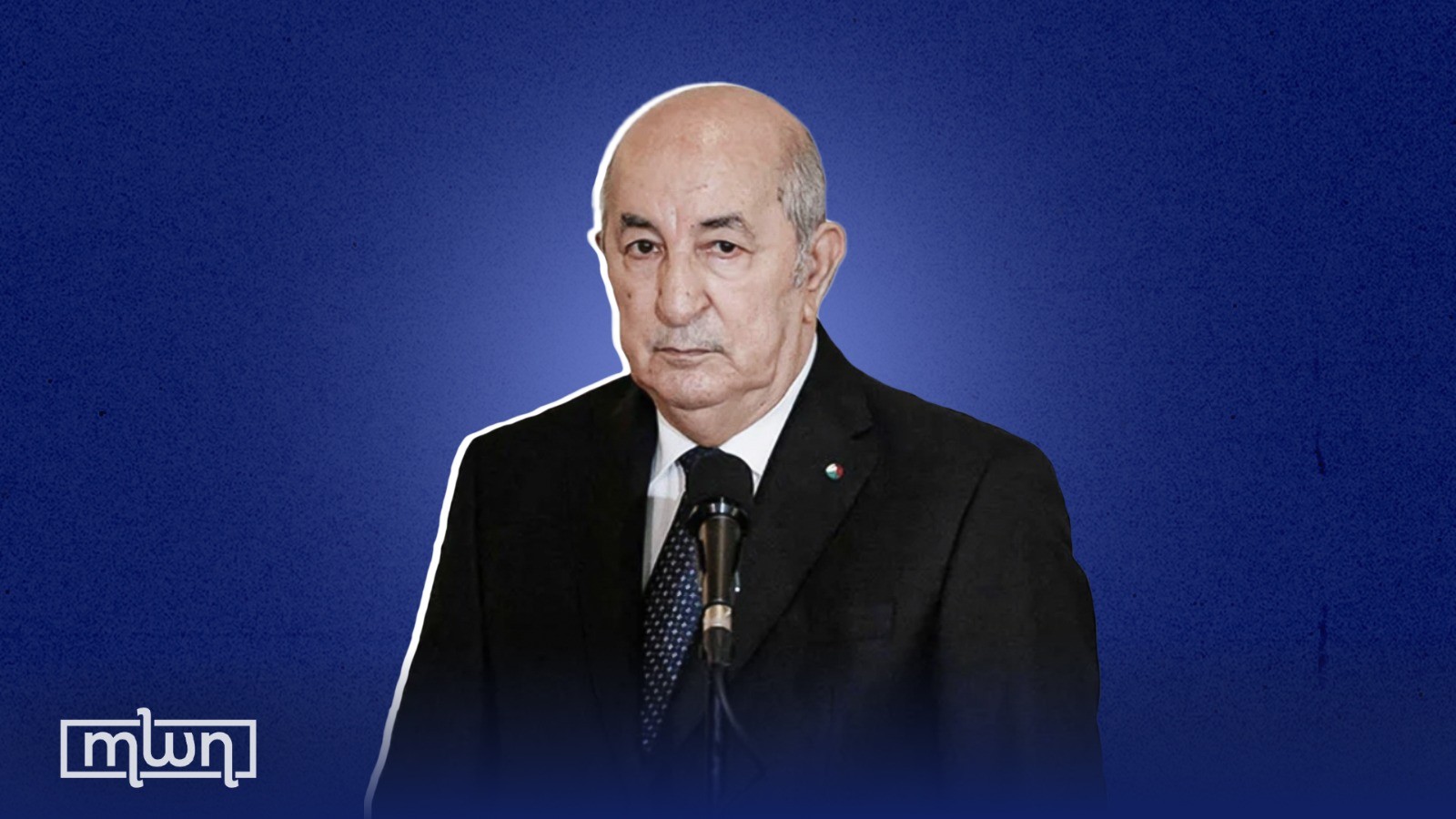
 The language used in political speeches is sometimes opaque and vague. It can be used as a tool to obscure the truth, manipulate public opinion, and avoid accountability. The Algerian President, Abdelmadjid Tebboune, has been using such linguistic manoeuvres to manipulate his discourse and evade responsibility. Such rhetorical strategies have undermined the credibility of his speech and raised doubts about his intentions. Will he continue to use opacity and vagueness in his speech, or will he be more transparent and honest as a leader and a contender for upcoming elections?
The president took office in December 2019 during a political turmoil following a popular uprising known as the “Hirak”. Since then, he made several speeches through national television and international media, France 24- Russia Today – Aljazeera, on how to rebuild the country’s institutions and to revive economy. Through the use of probability and hyperbolic structures, we argue that many of his speeches exhibit both opacity and vagueness, obscuring his message and leaving his audience uncertain of his true intentions. For instance, figures of speech, particularly hyperbole, are used to give a vivid perception to writing and emphasize meaning. To examine opacity and vagueness in Tebboune’s discourse, pragmatics and critical discourse analysis approaches were adopted in this article.
Opacity and Vagueness
Probability[10], as a means of vagueness, is a strategy used in political discourse through approximators, vague quantifiers, general terms, intensifiers, softeners, and epistemic stance markers to achieve pragmatic functions. In the matter being discussed, opacity in the Algerian president’s discourse when he speaks about politics is evident in topics such as the “Hirak”, “France”, and the “Moroccan Sahara”. Speaking about these issues, he employs vague language and avoids providing clear and direct answers. This lack of transparency can make it difficult for observers and common people to understand the president’s intentions and positions on these issues.
Interestingly, vagueness in his discourse is achieved through approximators (about, around, in two months or three, the coming two years), vague quantifiers (many, some), placeholder words (thing, stuff), vague category identifiers (something), general terms (etcetera, so on), intensifiers (really, very), softeners (kind of, sort of), and epistemic stance markers (I guess, I think).
Similarly, structures reflecting lies and trivialities are prevalent in his speeches: “Algeria has the largest electricity network in the world”, “Algeria created democracy”, “all European countries imported democracy from Algeria”, “Algeria was one of the first to maintain relations with America and thus recognized it”, and “Algeria has the most efficient health system in the Arab world and North Africa” among other delusions claims.
Politics
Ambiguity and inconsistency in Tebboune’s speeches have raised concerns about his credibility as a president. In an interview with Aljazeera, he discloses the achievements of the country’s foreign policy, usually reinforced by media, the elite and the army. His talk with the Qatari channel reveals many inconsistencies that show the weaknesses of a diplomacy sufficiently shaken by the revocation of three of his foreign ministers.
One particularity in the speech of the president is that it is “Laconic” and full of brief explanations. We believe that “being laconic” for Tebboune means a lack of knowledge on the issues. For instance, a recurrent figure of speech is the hyperbole “I am the only person who could do this” or “We have always been the first to…” are assertive expressions that convey confidence and leadership, and can be used to persuade or motivate an audience without speaking a lot. However, for Tebboune, these phrases, when bound to the shaken credibility of the president, the audience doubts his credibility, and henceforth these phrases are perceived as arrogant or insincere.
The president’s speeches on the “Hirak”, a pro-democracy and anti-system movement, contain fallacies and incoherencies. In an attempt to discredit the protestations, he claimed that the “Hirak” has been “infiltrated” by “foreign” and “internal” parties that sought to destabilize the country. He mentioned that the leaders of the movement were charged with offenses such as “insults”, “illegal gatherings”, and “incitement to mutiny”, but did not give tangible facts that might denounce their acts. As to the freedom of expression, the president stated that Algeria possesses “160 daily newspapers”. The hyperbolic claim overshadows a dark reality related to freedom of expressionas many journalists are impeded or imprisoned.
The relation with France was highlighted in the president’s speeches. On the issue of memory, he was opaque and avoided commenting on a question posed by the French journalist regarding colonization and the restitution of skulls from France that Algeria intends to bury as martyrs. While a candidate, Emmanuel Macron stated that “Colonization is a crime”. The response of the Algerian president to that was reframed in a euphemistic manner as the adverb “almost” was used: “colonization was almost a crime against humanity”. As for the Algerian skulls, many controversies around this matter were not explained by the Algerian president in his speeches as the Algerian skulls have been deposited, not returned[21]. Also, six of the skulls were identified as those of resistant fighters while the rest were not, according to reports from the New York Times. According to the annex accompanying the agreement formalizing the return of skulls, some were identified as pertaining to thieves or Algerians who served among the French army (Harkis).
Differently, the Moroccan Sahara was a topic for which the president uses opacity and vagueness to express the country’s unfounded policy. For instance, the statement “Nous ne lâcherons pas le Sahara occidental, quel qu’en soit le prix: “We will not let go of Western Sahara, whatever the cost”” can be considered a commissive illocutionary speech act that shows the interference of the Algerian state in the issue regardless of the cost. The account of the president on this issue is not only opaque or vague but it is also contradictory to the principle of non-intervention since the actions and statements of Algeria’s foreign policy positions are qualified as interference in Morocco’s internal affairs.
Socio-economic Situation
In a World Bank report, 2021 saw an increase in demand and prices for oil and gas, leading to a rebound in hydrocarbon production and exports. This reduced budgetary and external financing needs. However, the recovery in non-hydrocarbon sectors, such as agriculture, remains incomplete and inflation is rising.
The president mentions in his talks that agriculture alone produced the equivalent of “25 billion dollars”, but it is unclear if this amount is from agricultural exports or total revenue from agricultural products. The number of 25 billion is considered inflated. Akli Moussouni, an expert in the field, said that “If our agriculture generates 25 billion dollars, it would be more efficient than that of 2/3 of EU countries”. In the same sense, the president made use of a fallacious statement when he said that self-sufficiency in the supply of vegetable and other merchants’ stalls was “sufficient to meet the demand of all citizens” while the ordinary citizen suffers from soaring prices and indefinite queues to buy basic necessities.
In his lengthy speech, Tebboune only strayed from and went off on tangents made up of approximations and confusions. Making use of hyperbolic statements, he stated that Algeria is a “pivotal state in the region” due to its active role within the African Union. Something that is at odds with the reality of the political orientation of the country, as it has been engaged in nurturing a conflict with Morocco over the Moroccan Sahara territory since the seventies.
Additionally, Algeria’s status as an “oil and gas producer makes it an important economic player in the region” is hyperbole that the president used to hide the precarious and worrying situation[28] marked by food shortage, food crises, cash supply in banks and post offices. The absence of statistics in Tebboune’s language has various implications. While statistics can be used to support arguments and lend credibility to his claims, their absence indicates a lack of supporting evidence that was replaced by emotional appeals. On many instances, such as the example mentioned above, the president chose to use emotional appeals instead of data-driven arguments.
A recent event that showcased the President’s imaginative rhetoric took place on Thursday, 16th 2023. Abdelmadjid Tebboune delivered a speech during a meeting with economic operators, an event that marked the closing of the Global Entrepreneurship Week. However, his statements regarding the country’s economic situation were riddled with inaccuracies and unverified information.
The meeting was an opportunity for him to spread the country’s political propaganda (the only and the first country), and to promote his ongoing campaign. Through various reshuffles and declarations, Teboune expressed his vision of transforming Algeria into a modern state. His speech, delivered in a packed hall at the Congress Palace, was filled with hyperbolic claims. His intention is to make Algeria a global leader in the production and export of phosphate and iron. However, these claims, which have not been verified, introduced an element of uncertainty into his discourse. The President suggested that Algeria might become the “first or second” country in the region to export fertilizers within a “year or two”.
As is customary, the President also reviewed the work of young Algerian promoters and entrepreneurs during his speech. He responded to a miniature project of a satellite prototype[33], which the entrepreneur claimed would be exported to African countries. This claim, seemingly unverified, appears to reflect a broader trend among Algerians. In response, the President echoed this ambitious sentiment, stating that Algeria plans to launch almost 60 satellites in the coming years. This discourse analysis provides a fascinating insight into the current political and entrepreneurial landscape in Algeria, albeit one that is characterized by unverified claims and ambitious projections.
Finally, we contend that the Algerian people’s confidence has been repeatedly undermined by inconsistencies and incoherencies in the president’s discourse. Concerns about the language he employs and its potential impact on the upcoming elections in Algeria highlight the president’s ability to influence his fellow citizens. Our analysis of his opaque language when addressing the country’s real problems leads us to infer that he may not be a credible candidate if he continues to employ vagueness and probability. Should he emerge victorious, it could reinforce the belief among the Algerian populace that the process of presidential appointment is a legacy that supersedes democratic values, at least with respect to elections in Algeria.


