 Join on WhatsApp
 Join on Telegram
Rabat – In a move that stirred controversy and apprehension, Senegal’s National Assembly voted at a meeting on Monday night to postpone the presidential election originally slated for February 25 to December 15, 2024.
This decision unfolded amidst a backdrop of heated debate surrounding the disqualification of multiple opposition candidates and allegations swirling around the electoral commission regarding corruption.
The text advocating for the postponement, primarily championed by Karim Wade’s opposition camp—whose candidacy faced invalidation by the Constitutional Council—found backing from President Macky Sall’s faction.
The rationale behind this move, as elucidated by deputies on the preparatory commission in their report, was to mitigate “institutional instability and serious political unrest” and to facilitate “a complete resumption of the electoral process.”
The extension of the election timeline, exceeding six months, was justified considering the country’s realities, including the challenges posed by conducting an electoral campaign during the rainy season from July to November and the clash with significant religious festivals.
However, the opposition condemned the postponement, describe it as a maneuver orchestrated by President Sall to prolong his tenure. Sall vehemently refuted these allegations, asserting that the delay was imperative to ensure the integrity and fairness of the electoral process.
With 105 votes in favor and only one against, the decision to postpone the election was ratified. Opposition lawmakers, however, staged a walkout before the vote, alleging that the ruling party was attempting to ram the bill through parliament.
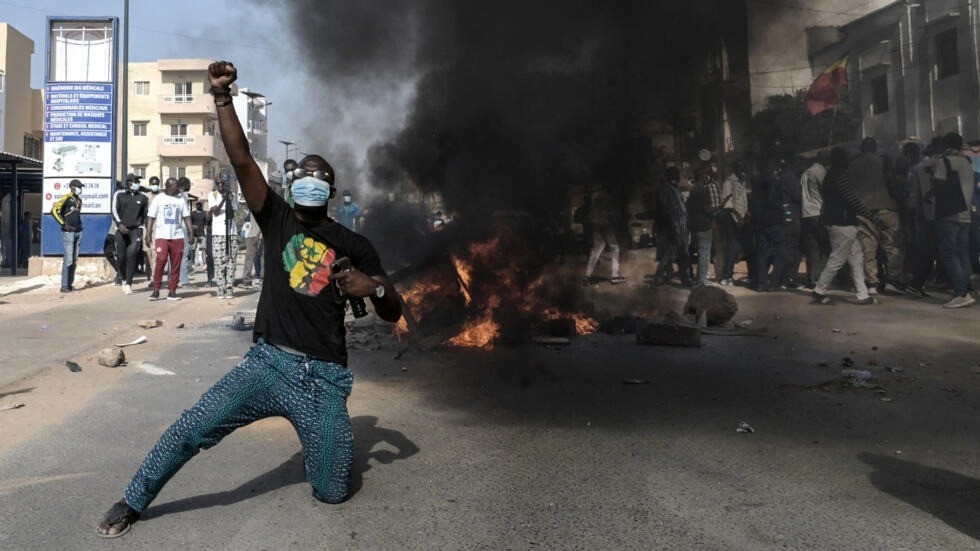
The announcement of the election postponement has reignited fears of unrest in Senegal, a nation with a history marked by political turbulence. In 2021, protests erupted against Sall’s pursuit of a third term, resulting in casualties.
This postponement presents a litmus test for Senegal’s democracy, which has garnered acclaim for its stability in a region fraught with political upheaval. Nevertheless, recent events have cast a shadow over the trajectory of democracy in Senegal.
The forthcoming months will serve as a crucible for Senegal’s stability. Should the opposition galvanize significant protests, the nation could find itself teetering on the brink of a political precipice.
President Macky Sall, who assumed office in 2012 for a seven-year term and was re-elected in 2019 for five years, reiterated his commitment to refrain from seeking re-election. “I will engage in an open national dialogue,” Sall affirmed, “to ensure the conditions for a free, transparent, and inclusive election.”
The postponement of the presidential election has elicited calls for clarity from regional and international stakeholders.
Bodies such as the Economic Community of West African States (ECOWAS) and the United States have urged Senegalese authorities to elucidate the new election date, while France and the EU have advocated for expedited elections.
Yet, questions linger regarding the efficacy of international appeals, as the influence of former colonial powers like France wanes in West Africa.
The stability of Senegal hangs in the balance, with opposition figures vowing to mobilize mass street protests against the postponement.
Critics speculate that President Sall’s decision may stem from apprehensions surrounding the potential electoral defeat of his chosen successor, Prime Minister Amadou Ba.