 Join on WhatsApp
 Join on Telegram
Rabat – The United Nations Relief and Works Agency for Palestine Refugees in the Near East (UNRWA) has long been a crucial player in providing humanitarian assistance to Palestinian refugees across the Middle East.
UNRWA is tailored to the specific needs of Palestinians, in accordance with a historical and political context. It supports 500,000 schoolchildren through its 700 schools, as well as the 150 health clinics. UNRWA plays an indispensable role in Palestine, though the organization’s credibility is currently under jeopardy.
After recent Israeli allegations of the involvement of a small number of UNRWA staff in the October 7 cross-border attack on Israel by Hamas, a contentious debate has sparked, leading to several countries suspending funding.
This controversy highlights the challenges faced by UNRWA and underscores the need for a nuanced approach to address the complex issues surrounding the organization.
Sigrid Kaag, the United Nations Senior Humanitarian and Reconstruction Coordinator for Gaza, emphasized that, at present, there is no organization capable of replacing the “tremendous capacity” of UNRWA.
The humanitarian coordinator stressed the importance of UNRWA’s knowledge of the population in Gaza, making it a unique entity in delivering essential aid.
However, the suspension of funding by countries like Germany, Switzerland, and the United States poses significant risks. UN relief chief Martin Griffiths warns that cutting off funds to UNRWA could have “catastrophic” consequences, leading to the collapse of the humanitarian system in Gaza.
Read Also: UN Sounds Alarm as Countries Halt Funding, Endangering 2 Million Gazans
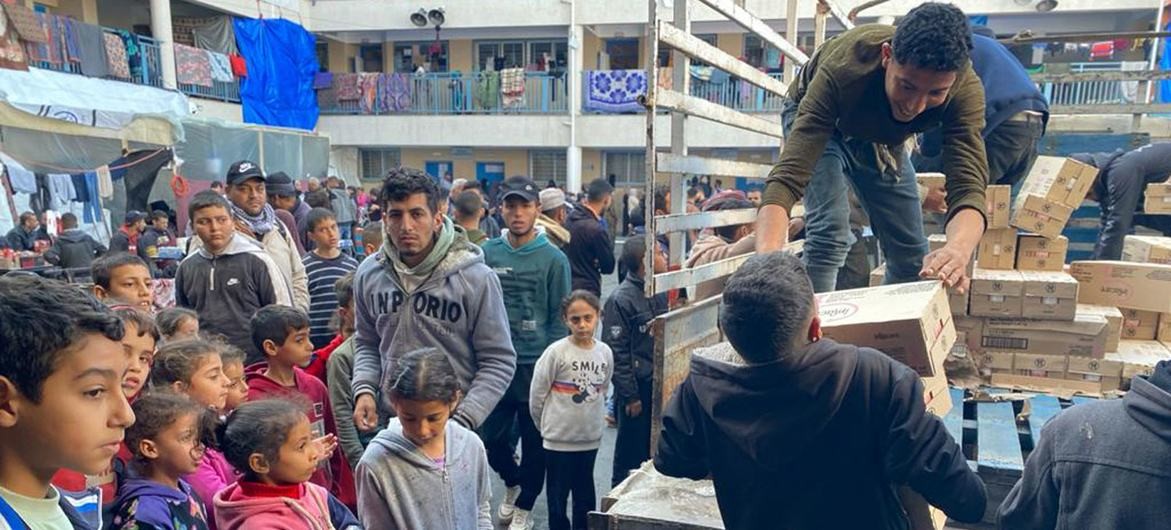
This move threatens the well-being of the 2.2 million people in Gaza who rely on UNRWA for vital services like food, shelter, and protection.
The Israeli allegations of UNRWA staff involvement in the October 7 attack by Hamas have led to a wave of criticism and condemnation. Within Israel, officials have seized upon the accusations to call for the dismantlement of UNRWA.
Some argue that UNRWA perpetuates the Palestinian refugee issue, and they emphasize the need for a viable alternative. However, this call for dismantlement raises questions about the broader consequences and the absence of a clear alternative plan.
The suspension of funding for the United Nations Relief and Works Agency for Palestine Refugees in the Near East (UNRWA) poses severe risks to the well-being of vulnerable populations in the region. With at least 12 countries, including Germany, Switzerland, and the United States, halting financial contributions, the potential consequences are dire.
UN relief chief Martin Griffiths rightly warns that cutting off funds to UNRWA could have “catastrophic” effects, leading to the collapse of the humanitarian system in Gaza.
This could result in a devastating humanitarian crisis, leaving 2.2 million people without essential services such as food, shelter, and protection.
The vacuum created by the absence of UNRWA’s support may exacerbate existing challenges, including acute shortages of basic necessities and an increased risk of instability in the already fragile region.
It underscores the urgency of finding a diplomatic and sustainable resolution to the situation, as well as the importance of maintaining support for organizations crucial to the well-being of millions of Palestinian refugees.
While addressing allegations and concerns, it is equally important to recognize the indispensable role UNRWA plays in delivering humanitarian aid to vulnerable populations, and Israel’s decades of lobbying to have the organization dissolved.
Efforts should be directed towards finding a comprehensive solution to the Israeli-Palestinian conflict, rather than hastily dismantling an organization that has been a lifeline for millions of refugees for decades.
The current crisis highlights that the international community must work collaboratively to ensure the continuity of essential services and, most importantly, seek a lasting resolution to the protracted humanitarian crisis in the region.
In light of recent events, the decision by several countries, including the United States, Canada, and others, to cut funding for the United Nations Relief and Works Agency for Palestine Refugees (UNRWA) appears to be part of a broader effort by Israel to undermine the agency.
Israel has a longstanding desire to eliminate UNRWA, which plays a crucial role in recognizing and providing services for Palestinian refugees. The allegations against UNRWA employees, conveniently timed with an International Court of Justice ruling ordering Israel to provide aid to Gaza, are seen by some as a tactic to divert attention and delegitimize the agency.
The targeting of UNRWA aligns with Israel’s opposition to the right of return for Palestinian refugees, as enshrined in UN Resolution 194, and may contribute to the broader political agenda of sabotaging this collective right.
The funding cuts risk exacerbating the already dire humanitarian situation in Gaza, potentially leading to increased suffering and displacement among the Palestinian population.
The conversation between al-Nahyan and UNRWA’s Commissioner-General Philippe Lazzarini addressed the urgent need for humanitarian relief and medical aid to Gaza, emphasizing the importance of preventing further loss of life in the region.
The UAE’s confirmation of support for the UN Relief and Works Agency for Palestinian Refugees (UNRWA) comes at a crucial time amid the agency’s funding crisis. The UAE’s foreign minister, Sheikh Abdullah bin Zayed al-Nahyan, expressed unwavering support for UNRWA and emphasized its vital role in delivering humanitarian aid and assisting Palestinian refugees.
This statement follows Israel’s accusations that some UNRWA employees were involved in a cross-border attack on October 7. While at least 12 countries, including Germany, the US, and others, have suspended funding for UNRWA, the UAE urged reconsideration of this decision.