 Join on WhatsApp
 Join on Telegram
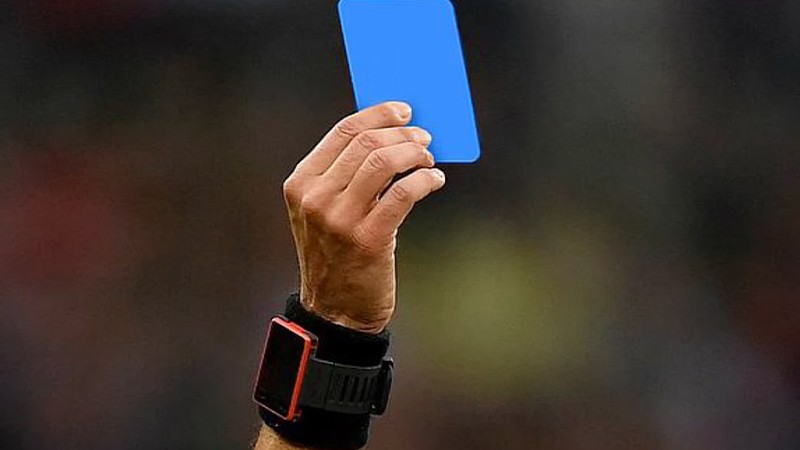
Rabat – FIFA has confirmed that rumors regarding the use of the “blue card” in top-level football are “incorrect” and “premature,” in a statement released on its official X account, formerly Twitter.
The federation went on to say that this topic is considered on the agenda, and if approved, testing ought to be restricted to lower-level football and conducted responsibly.
“Any such trials, if implemented, should be limited to testing in a responsible manner at lower levels,” the world football organization noted, underlining its plan to restate its position when the International Football Association Board’s (IFAB) General Assembly takes place on March 2.
FIFA’s statement came in response to rumors indicating that the IFAB had given its approval for a blue card to be used in lower division events starting next summer.
However, the same source further stated that this refereeing measure will be introduced progressively in the professional divisions.
According to FIFA, the Football Association (FA) suggested that the introduction of blue cards will start with lower divisions such as the Men’s and Women’s FA Cups, to assess its effectiveness and potential long-term issues.
If a player shows disrespect towards the referee or commits a dubious foul, they will be given a 10-minute penalty via the blue card.
Similar to how yellow cards function, players can be sent off if they obtain two blue cards. They may also be dismissed from the game even if they obtain a yellow and a blue card.
The desire to add the blue card penalty and hold referees accountable to bad behavior came about following various incidents of misconduct.
This trend of changing the game is not new, especially in regards to rule enforcement. In the past few years, football has been subject to modifications in such a fast-changing world.
On December 19, the Spanish Football Federation (RFEF) and La Liga declared that they will start making public the audio and visual records of the exchanges between the VAR referee and the on-field referee at the end of each matchday.
Due to the continuous controversy surrounding the VAR system, the soccer authorities in Mexico and Spain had decided to make this public beginning last January of this year. According to RFEF, this action came in an effort to encourage “transparency.”
Read also: Morocco, Spain, Portugal Sign Letter of Intentions for 2030 World Cup Hosting