
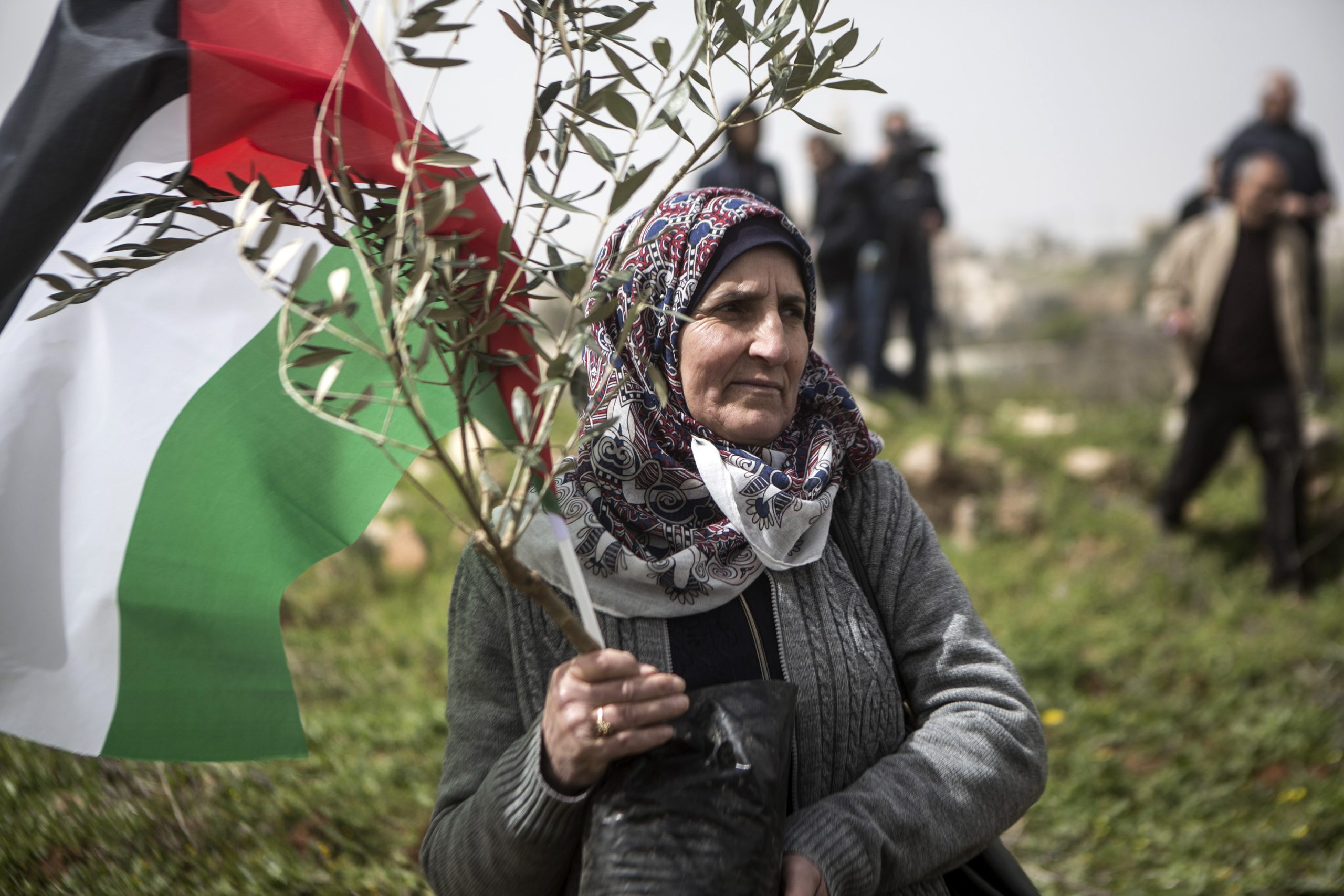
Doha – As people celebrate the 48th commemoration of Palestine Land Day today, the occasion takes on a profoundly tragic character. Palestinians in Gaza face unimaginable hardships amidst a brutal six-month-long Israeli military offensive that has left the Strip in ruins.
Civilian infrastructure, including homes, hospitals, schools, places of worship, and both governmental and non-governmental institutions, has been systematically destroyed. Even UNRWA buildings have not been spared from the onslaught, rendering Gaza virtually uninhabitable.
The genocidal campaign, predominantly ravaging Gaza, has claimed the lives of over 32,000 Palestinians since October 7th, 2023, with more than 78,000 people injured. Women and children are the most affected, representing about two-thirds of those killed and injured.
The entire population of Gaza teeters on the brink of starvation due to Israel’s cruel blockade, severely restricting access to food, water, electricity, and fuel, and stifling the entry of humanitarian aid.
Despite worldwide protests and interim rulings from the International Court of Justice calling for an end to this massacre and allowing free entry of humanitarian aid, Israel has escalated its blatant genocidal warfare.
However, Gazans have withstood the devastation and suffering, remaining steadfast in their commitment to their ancestral land. They continue to defy the claims of early Zionist leaders like David Ben-Gurion and Golda Meir, who believed that the older generation would die off and the younger would eventually forget about the 1948 Nakba.
The elders passed on the keys to their homes and the torch of freedom to the younger generation, who, now grown old themselves, continue to carry the memory of their dispossession alongside their children. In the face of torture, death, and maiming, they stand firm, shaking the foundations of the Zionist occupation in defense of their land and honor.
The significance and history of Land Day
Land Day holds immense significance in the Palestinian struggle for justice and self-determination. It commemorates the events of March 30th, 1976, when Israeli occupation forces seized thousands of acres of private and communal Palestinian land in areas with a majority Palestinian population.
In response, Palestinians organized a general strike and marches that spanned from the Galilee to the Negev. The peaceful demonstrations were met with brutal force by Israeli security personnel, resulting in the deaths of ten Palestinians and the injury and arrest of hundreds more.
This pivotal moment marked the first time that Palestinians within the territories occupied since 1948, often referred to as “Arab Israelis,” collectively mobilized to protest the Israeli government’s discriminatory policies.
It solidified Land Day as a symbol of Palestinian unity and resistance against ongoing occupation and dispossession. The late Palestinian poet Mahmoud Darwish captured the essence of Land Day when he said: “In the month of March, in the year of the Intifada, the land told us its violent secrets.” Were the great poet alive today, he would say: “In the month of March, in the time of Al-Aqsa Flood, the land told us all of its violent secrets.”
Ongoing struggle, racist policies, and the denial of Palestinian rights
Successive Israeli governments have enacted numerous laws since 1948 to legitimize their control over occupied Palestinian territories. In particular, the Absentee Law and the Land Law have allowed the apartheid state to seize more than one million dunums of the most fertile Palestinian land.
Additional laws aim to limit Arab demographic continuity between the territories occupied in 1948 and those occupied in 1967. To cement the declared Jewishness of a state where 20% of the citizens are non-Jews, systematic Judaization policies have been imposed on historical Arab sites, mosques, and churches, particularly in the Galilee, Negev, and occupied Jerusalem.
The racist government of Prime Minister Benjamin Netanyahu, along with his far-right ministers Itamar Ben-Gvir and Bezalel Smotrich, seeks to control the political decision-making process without judicial oversight.
This move, dictated by the agenda of extremist, racist religious parties, perpetuates the ethnic cleansing of the indigenous Palestinian population. The Israeli Supreme Court tacitly supports the occupation by remaining silent in the face of countless violations of Palestinian rights.
Israel’s refusal to acknowledge the true story of its creation and the ongoing denial of Palestinian rights lie at the heart of the conflict. The state has refused to accept legal and moral responsibility for those displaced during the Nakba, the catastrophe inflicted upon the Arab people of Palestine during Israel’s establishment in 1948-49.
Furthermore, Israel denies Palestinians’ right to self-determination, a denial enshrined in Israeli law in 2018. This mentality underpins the continued appropriation of Palestinian land, against which Land Day stands as a powerful protest.
Global solidarity and the fight against Zionism
During the Land Day 2024, Palestine finds itself at the center of global attention, with the plight of Gaza’s Palestinians serving as a rallying cry for supporters worldwide. Millions of people from diverse backgrounds stand in solidarity with the Palestinian struggle for rights, justice, and freedom.
The fight against the religious fascism of Zionism, the ideology underpinning the Israeli occupation, has become a unifying force in the global battle against racism and oppression.
On this somber yet significant day, the world reaffirms its commitment to the Palestinian cause and redouble efforts to support their struggle for freedom. The road ahead may be long and arduous, but with unwavering determination and global solidarity, a future where Palestine is free, and its people can enjoy the rights and freedoms they have been denied for far too long, is possible. The struggle against racist Zionism is the epitome of the struggle against racism around the entire world.
To achieve a lasting solution, certain parameters are essential. These include the admission of Palestine to the UN alongside Israel and the need to listen to the stories of all who have suffered and lost their homes.
Israel must acknowledge the true story of how it came into being and accept responsibility for the Nakba. Only through such acknowledgment and a genuine commitment to justice can a path towards peace be forged.
Read also: Is there a possibility of peace between Israel and the Palestinians?