 Join on WhatsApp
 Join on Telegram
Whatever their position in the global system is, several countries began to increase their interest in preventive strategies due to the unpredictability and uncertainties in international relations arising following the COVID-19 sanitary crisis and the Ukraine and Gaza wars.
Countries resort to multiple strategies, to pursue and protect their national interests, and implement the objectives of their foreign policy; some of which are conflictual, some are cooperative, and some depend on hard and soft power.
Strategic hedging and multi-alignment are the main foreign policy strategies applied by countries to navigate the complexities of international relations and protect their national interests during periods of uncertainty.
Multi-alignment is a comprehensive approach that emphasizes the diversification of partnerships from diverse horizons and ideological backgrounds, it’s a more open and adaptable approach that seeks to maximize diplomatic, economic, and political opportunities while maintaining a non-aligned stance in conflicts.
Hedging strategy comes between strategies that adopt conflict mechanisms and those that adopt cooperative mechanisms on the one hand, and between traditional non-alignment “balancing” and alignment “bandwagoning” on the other hand. Strategic hedging is primarily a risk mitigation strategy, often used by small countries in the context of great or regional power rivalry and security concerns.
Still, many countries continue to adopt neutrality and non-alignment orientation while others are involved in alliances with the major great powers which often involve more explicit choices between major powers or specific alliances.
The kingdom of Morocco is a founding member of the Non-Aligned Movement formed at the conference of Belgrade in September 1961, where the first milestones of non-alignment had been laid; late King Hassan II contributed greatly to the success of the conference with a resounding speech where he highlighted the virtues of “positive neutralism” and stressed the need to support the release of Africa from the oppression of colonialism; and this in the presence of other leaders like President of former Yugoslavia B Tito , Gamal Abd El Nasser of Egypt, P.M J Nehru of India, President Habib Bourguiba of Tunisia and President Soekarno of Indonesia.
Even though the condition for membership to the non-aligned movement is non-enrollment in NATO or the Warsaw Pact, still in practice many members of the movement are close to one of the two main blocs like North Korea, Cuba, or Venezuela.
In contrast with many countries, Morocco remained neutral, it never moved away from one camp against another camp, nor did it alienate the friendship of either power; the testimony of such orientation is voting behavior at the UN General Assembly; recently Morocco was absent from the vote of the UN GA resolution on Ukraine crisis in March 2022.
As a matter of fact, diversification of partnerships was the order of the day of the new reign of King Mohammed VI; Morocco kicked off balancing its European and Maghrebi relations, with Africa at large and Atlantic to hedge against risks from the above-mentioned regions.
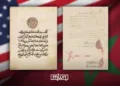
In this vein, Morocco and the United States signed an FTA on June 15, 2004 entered into force on January 1, 2006. This comprehensive agreement covers not only trade in goods but also trade in services, Investments, and Intellectual property as well.
Since 2014, Morocco has been actively strengthening its ties with Africa and deepening its Atlantic orientation, this strategic move encompasses economic, diplomatic, and cultural dimensions, fostering closer relationships with the USA and pivotal African nations such as Ethiopia, Nigeria, Kenya, Angola, and Tanzania.
It is in this context that the Kingdom of Morocco launched several initiatives, it initiated the gas pipeline project between Nigeria and Morocco which crosses several ECOWAS countries, it initiated the Atlantic African States Process (APEAA), three ministerial meetings held respectively in Rabat in June 2022, in New York in September 2022 and in Rabat in July 2023, and in November 2023 King Mohammed VI announced, in a speech to the nation, a new international initiative aimed at granting Sahel nations access to the Atlantic Ocean.
However, Morocco’s outreach isn’t confined to Africa alone; while reinforcing its Atlantic orientation Morocco is not turning its back on Europe; on the contrary, it is initiating a new mutually beneficial partnership with north-western Mediterranean neighbors, notably Portugal and Spain.
How has the new foreign policy strategy impacted Moroccan domestic national interest and its role at the international level?
Moroccan foreign policy underwent a major change at the start of the reign of King Mohammed VI which will mark the new Moroccan diplomacy based on modern non-alignment.
Among the changes at the start of the new reign we can quote the diversification of partners, the return to Africa, economic diplomacy, and especially the Sahara Autonomy Plan in 2007, after having ardently rejected the partition plan proposed by President Bouteflika in 2002 and which demonstrated that Algeria does not defend the oppressed peoples by supporting the pseudo-Sahrawi cause but it seeks above all to enclave Morocco, to have access to the Atlantic ocean and become the hegemon of the Maghreb.
It is by activating the diverse levers of its soft power and diplomacy in an integrated and judicious manner that Morocco was able to reap diplomatic successes and turn the situation in its favor with regard to its territorial integrity; in this vein, Morocco returns to the African Union, several great powers and influential countries recognized the Moroccan Ness of Sahara, in particular, the United States of America, Spain, Germany, France, Holland, UK, Ukraine, the 6 GCC countries, Egypt and Turkey and opening of about 30 consulates in the Morocco Saharan provinces, while the majority of remaining UN members observe a positive neutrality in favor of Morocco,
In the global economic landscape, Morocco has emerged as a pivotal economic connector country, earning acknowledgment from Bloomberg alongside Poland, Mexico, Vietnam, and Indonesia. An in-depth analysis of 2022 trade and investment data reveals Morocco’s outstanding achievements, including a notable 25% upsurge in manufacturing exports and a significant 20% shift in the global greenfield investment share.
These connectors countries succeeded in attracting in their soil foreign direct investment from rivals; effectively in Morocco’s automotive industry we can find American, Chinese, and Japanese manufacturers working together in the same supply chain and ecosystem.
This commendable performance is attributed to Morocco’s strategic geographical positioning, robust logistical infrastructure, and adept multi-alignment strategy, all of which have contributed substantially to its economic success.
Morocco is becoming not only a mediator in international crises like those in Libya, the Sahel Mano River, and the Middle East but also an anchorage of economic peace between geopolitical rivals.
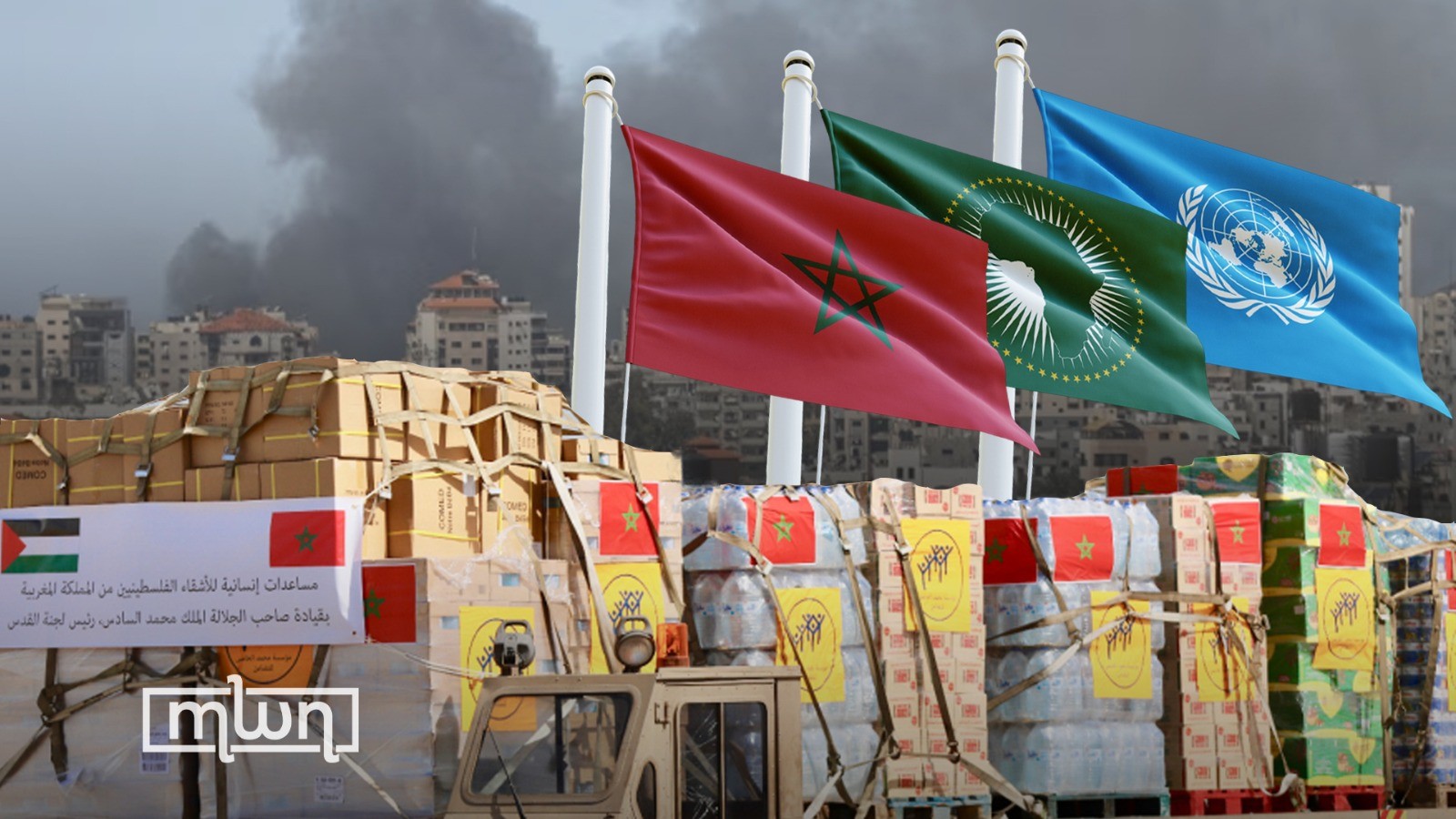
Last but not least at the humanitarian level, the Kingdom of Morocco plays a more active role, it’s worth recalling in this regard the major achievements of Moroccan humanitarian diplomacy inter alia in the Gaza wars and during the COVID-19 crisis when it provided its assistance to more than 15 African countries notably by dispatching about 8 million masks in a period of worldwide shortage.
Recently, upon the directives of King Mohammed VI, Chairman of the Al Quds Committee, and in a notable departure from conventional airborne aid delivery methods, Morocco has distinguished itself as the first nation to transport humanitarian aid through a groundbreaking land corridor for the Palestinian population in Gaza and the Holy City of Al Quds. This approach ensures dignity and the safe and direct delivery of assistance to the intended recipients, without risking any collateral damage to populations.
This aid initiative, which coincides with the holy month of Ramadan, aims to alleviate the suffering of Palestinian communities, particularly the most vulnerable segments among them.
The aid package, totaled over 40 tons of foodstuffs, including essential items with a significant portion financed from His Majesty’s private funds, especially targeting infants and young children, as highlighted by the ministry.
Furthermore, in his capacity as Chairman of the Al Quds Committee, King Mohammed VI has instructed the Bayt Mal Al Quds Agency to extend humanitarian assistance to the inhabitants of this Al Qods city. This includes the distribution of 2,000 food baskets to as many Al Quds families, along with the provision of 1,000 daily meals for Palestinians within the city. Additionally, plans are in place to establish an emergency coordination center at the Jerusalem Hospital as part of the aid effort.
Indubitably, this intervention required close collaboration between the Moroccan authorities and Israel and Palestinian authorities in order to access targeted and affected areas ensuring that aid can be safely delivered in cooperation with national and local authorities.
This initiative was undertaken in compliance with international humanitarian law and the UN charter; any humanitarian intervention or offer of assistance that does not observe the humanitarian diplomacy principles can be perceived by the recipient country as interference in its internal affairs.
Once more, Morocco has achieved what others struggled to accomplish for months. The kingdom’s reputation and the wisdom of its Leadership have played a pivotal role in achieving a breakthrough that can serve as a valuable asset in political processes and negotiations aimed at ending the Gaza war and its associated atrocities.