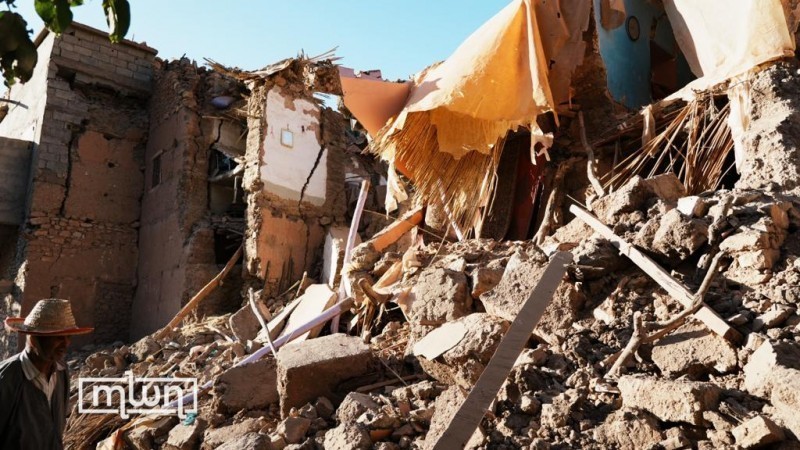
Doha – Handicap International (HI), an aid organization that has been present in Morocco since 1993, has recently praised the Moroccan authorities for their great efforts in meeting the immediate needs of the disabled and injured population affected by the devastating earthquake that struck the country in September 2023.
In their latest report, HI commends the government’s swift response while also highlighting the ongoing collaboration between the two entities to provide crucial physical rehabilitation assistance to survivors.
HI has been working hand in hand with Moroccan authorities to provide vital physical rehabilitation assistance to survivors. However, with rehabilitation treatment and specialists primarily centralized in major cities, ensuring continuity of care for survivors who have returned home has been a challenge.
To address this issue, HI has deployed mobile medical units called “caravans” to reach out to survivors in the hardest-hit provinces of Al-Haouz, Chichaoua, and Taroudant. These caravans aim to provide follow-up treatment to those who were treated in hospitals but left without guaranteed ongoing care.
Hélène Nigay, HI’s rehabilitation specialist, stresses in the report the importance of their work, stating, “The needs are still very great, and these types of pathologies require specific case management.”
The organization focuses on providing relief to those who have not received proper care, preventing long-term disabilities, and supplying mobility aids such as crutches, walking sticks, and wheelchairs to those in need.
The earthquake left many communities shattered, with homes and infrastructure destroyed, forcing inhabitants to live in tents under harsh conditions.
These living conditions put a severe strain on the injured, making physical therapy sessions more challenging for both patients and healthcare providers.
To cover the largest area; HI is collaborating with two Moroccan partners: the national community-based rehabilitation (CBR) network and the association Migrations et Développement.
The CBR network consists of Moroccan rehabilitation professionals who work with HI as volunteers, while Migrations et Développement employs humanitarian workers specialized in the community approach.
HI has taken charge of training their community workers and relays to adapt their interventions to the specific needs of earthquake survivors in a post-emergency context.
Coordinating the “caravan” service presents numerous challenges, requiring significant preparation and scoping to adapt to the geographical area and its population.
The teams have put a comprehensive care pathway in place, including patient referral, physical therapy sessions, and mental health support. Detailed logistical preparation is crucial to ensure that patients receive high-quality care.
Hicham Habibou, Project Manager at HI, notes in the report that; “the organisation is quite intense for our teams; we work during the week and also at weekends to meet everyone’s requirements and guarantee quality care for our patients.”
The first caravan was deployed from 29 to 31 December 2023 in the communes of Sidi Bedhaj and Amizmiz, in Al-Haouz province, following a period of training for the partners. Six more caravans were subsequently organized, reaching more than 210 people.
The results so far have been encouraging, with the teams establishing a good working dynamic and finding their rhythm with partners and patients, says the report.