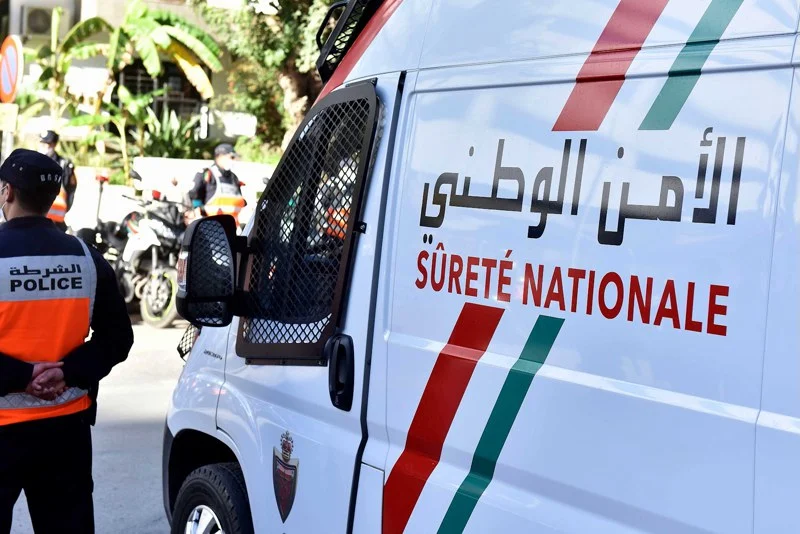
Marrakech – Moroccan authorities have arrested the man Spanish police consider Spain’s largest hashish trafficker, according to police sources cited by the newspaper ABC on Wednesday.
The suspect, identified as Juan Carlos T.B. and known by the alias “Moreno,” had been in hiding for months when Spanish investigators dismantled his drug network.
ABC refers only to his arrest on Moroccan soil, without specifying which force carried it out. In practice, however, a suspect wanted by Spain and arrested in Morocco would be detained by Moroccan authorities, typically acting on a Spanish request through established police cooperation channels.
Investigators with Spain’s Central Unit for Drugs and Organized Crime (UDYCO Central), part of the National Police, regard the group he led as the most powerful hashish distribution operation in the country. The probe led to the arrest of more than a dozen people and the seizure of over 10 tons of the drug.
The case drew wider attention because of how the money moved. According to the police investigation reviewed by ABC, “Moreno” used the company of Juan Andrés González Santos, the husband of model and Miss Spain 2005 Verónica Hidalgo, to launder drug proceeds through its business activity.
ABC had already reported on October 1 that González Santos did more than clean the money. The paper’s exclusive placed him directly in the buying and selling of narcotics alongside his laundering role.
The police reports laid out the conversations González Santos held with his associates, who knew him by the nickname “El Flaco.” In one exchange, he offered a simple cover to a partner who needed cash, telling him to just make out an invoice.
The encrypted messaging app Sky ECC gave investigators the clearest picture. Through it, they confirmed that the man under investigation “actively took part” in drug trafficking. He also played, in their words, “a very relevant role” in laundering capital from that trade.
That laundering ran through ARTECAR Soluciones Gráficas SL, the firm he solely administered. Police found he had paid fraudulent payrolls through the company to one associate since before 2020, and to one of the organization’s ringleaders since at least 2017. Investigators described the arrangement as a way to launder the money generated by the drug trade.
The relationships behind those payrolls were fictitious. The group met regularly in restaurants, bars, and even their own homes, with no trace of any real work tied to the company, according to the police. At times, investigators found, the men joked about the fake jobs they had created to wash the funds.
One voice note captured how brazen the scheme had become. In it, one of the traffickers asked to have three payslips stamped, explaining he had been on sick leave since June and needed the documents to appear as though he were currently employed.
The traffickers also worked to keep the trail clean. Their WhatsApp messages carried no criminal traces, but they shifted to other platforms whenever they discussed the more sensitive details of the operation.
Read also: Morocco Arrests Three in Europol Operation Targeting Violence-as-a-Service Rings