
 Join on WhatsApp
 Join on Telegram
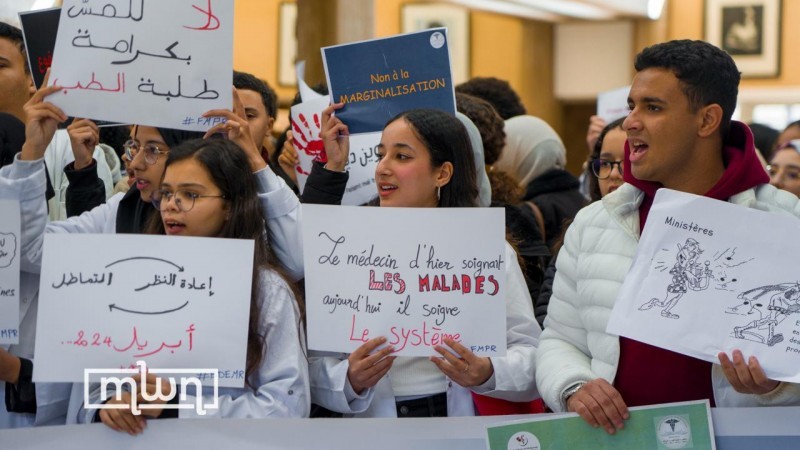
Rabat – In an address to members of the Moroccan Parliament on Monday, Moroccan Minister of Higher Education Abdellatif Miraoui, warned of the detrimental effects that the continued boycotts by medical and pharmacy students have on classes and exams, stating that the situation “does not bode well.”
Warning of the consequences of prolonged boycotts on the academic calendar, Miraoui stressed that there will be no exceptional sessions.
In his address, he said that prolonging the boycott hinders efforts to find ways to save the academic year.
The minister further added that a repeat of the 2019 scenario is unlikely given the current circumstances.
In 2019, widespread boycotts by medical and pharmacy students over exam timing and demands for increased job opportunities nearly led to a lost academic year. However, an agreement was reached between the ministry and the national union after extensive negotiations.
The minister said that such a scenario would not repeat itself and ruled out any exceptional sessions, noting that second-semester exams are scheduled to begin in early June.
He urged Members of Parliament to convince striking students to return to their departments and take their exams, noting that 45 out of their 50 demands have been met, with only five remaining, which he has deemed unacceptable.
The minister highlighted that while there is no national dialogue, there are discussions in all faculties, with their respective heads addressing local issues to find solutions. He reiterated that every problem has a solution, and emphasized the importance of dialogue and cooperation to address the remaining issues effectively.
Since December 2023, medical students in Morocco have been boycotting classes, training, and exams primarily due to unresolved grievances over the quality of education and training.
Their main concern revolves around the government’s decision to shorten their medical education by one year, which had drawn widespread criticism and raised fears about the deteriorating quality of medical training.
In addition, concerns about overcrowding in classes and hospitals, ambiguity regarding the restructuring of the third cycle of medical studies, and local issues in each medical faculty have further fueled their boycott.