
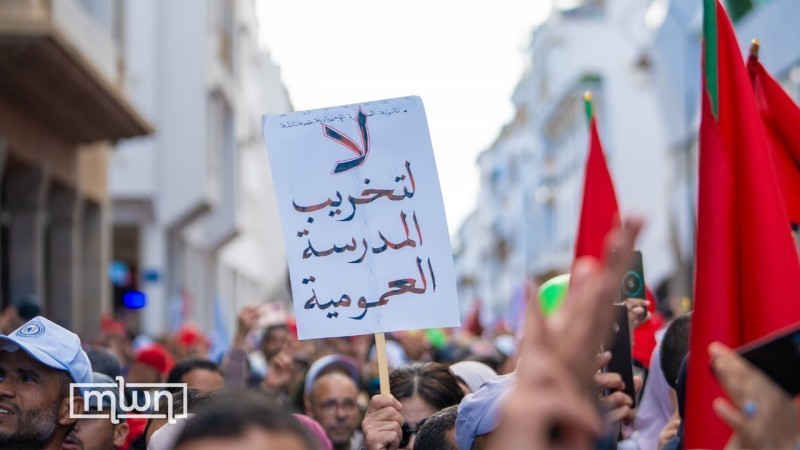
Rabat – The Moroccan Minister of National Education, Primary Education, and Sports Chakib Benmoussa said today that suspended teachers who contested the disciplinary measures could file grievances or challenge them through legal avenues.
The statement comes as the Ministry grapples with the aftermath of prolonged disciplinary actions taken against teachers following their involvement in strikes that marred the school year.
Teachers protested against the “New Basic System,” a controversial educational reform implemented by the Moroccan government. They argued that the reform significantly increased their workload without providing adequate compensation.
The reform triggered nationwide protests among teachers, who demanded the Ministry of Education to scrap it.
The cases of the suspended teachers were referred to disciplinary committees across regional academies.
During a session at the House of Representatives on Monday, Benmoussa disclosed the nature of these disciplinary measures.
He revealed that the cases of approximately 200 suspended teachers were examined by regional committees.
Following thorough review, some teachers received warnings or reprimands as disciplinary measures, the minister said, adding that their salaries were reinstated retroactively from January.
Benmoussa added that another group of suspended teachers underwent hearings before specialized disciplinary councils. He said that their numbers were “limited,” and recent meetings of these councils resulted in warnings for some, with their salaries to be reinstated accordingly.
However, for a subset of teachers, the disciplinary councils imposed temporary suspensions from duty, lasting no longer than a month.
The minister said that their situations will be resolved following approval of the disciplinary council, after which they will resume their duties.
Benmoussa reiterated that his ministry did not interfere with the disciplinary councils’ proceedings.
The minister also clarified the reasons for the suspensions, explaining that the teachers were not solely suspended for participating in strikes against the new system. Instead, he argued, the suspensions were due to the teachers’ association with “actions that infringed upon the sanctity of institutions and students’ freedom in pursuit of education.”
He concluded by saying that over two-thirds of the suspended teachers have resumed their duties and received regular salaries, leaving fewer than 200 teachers still under suspension.