 Join on WhatsApp
 Join on Telegram
Rabat – Last week in Washington D.C., Amina Bouayach, President of the National Human Rights Council (CNDH), held a series of bilateral meetings centered around the improvement of human rights in Morocco.
These meetings brought together various American organizations, institutions, and committees interested in Morocco and its approaches to managing human rights issues and freedoms in North Africa, the Middle East region, and beyond.
During these encounters, Bouayach underscored Morocco’s significant progress and leadership in the region. Several officials who met with the delegation highlighted Morocco’s unique approach to addressing human rights and freedoms.

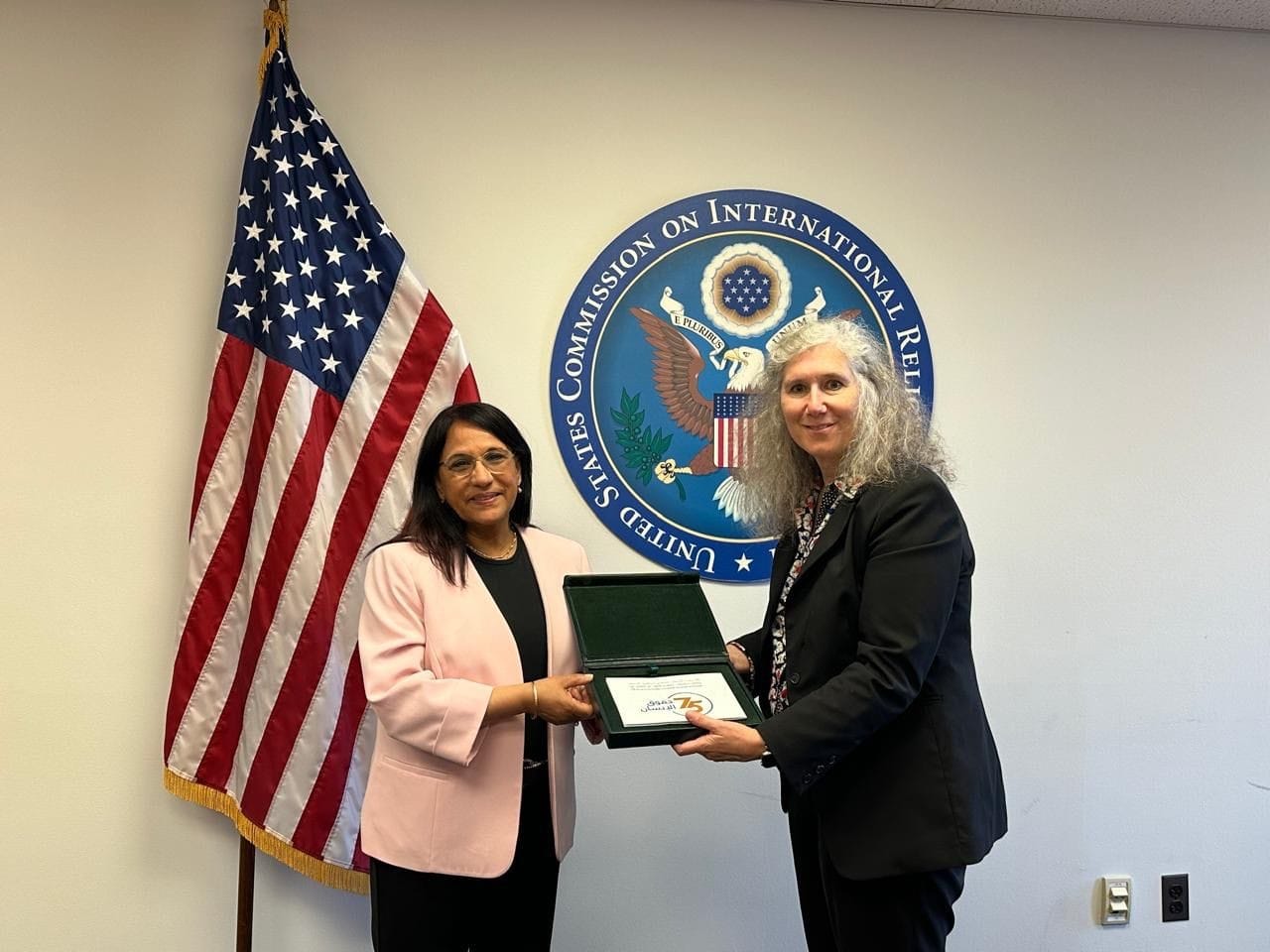
CNDH delegation in Washington
According to Bouayach, Morocco’s experience with their truth, justice, and reconciliation committee over the past two decades has been instrumental in building a state of law and laying the groundwork for a clear Moroccan approach to addressing human rights and freedom issues.
She emphasized that this approach is fundamentally based on “continuous interaction between civil society and the state, with three main pillars: consensus-building among all stakeholders, innovation tailored to the national context, and the inclusion and engagement of all actors across the country’s 12 regions.”
These open discussions depict Morocco’s commitment to a continuous and structured approach to human rights issues.
During her visit, Bouayach also engaged American stakeholders in discussions concerning women’s rights. The timing of the visit, amidst King Mohammed VI’s recent launch of reforms to the Family Code, marked a pivotal moment.
Echoing her sentiments made during her reception of the prestigious North-South Prize by the Council of Europe on May 21, Bouayach reiterated in her meetings in DC that Morocco is poised to reform the Family Code with the same vision and determination to safeguard women’s dignity and enhance their rights.
Bouayach shed light on Morocco’s intentions for an effective approach to human rights, which aims to prevent violations, protect victims, promote freedoms, and foster a human rights culture.
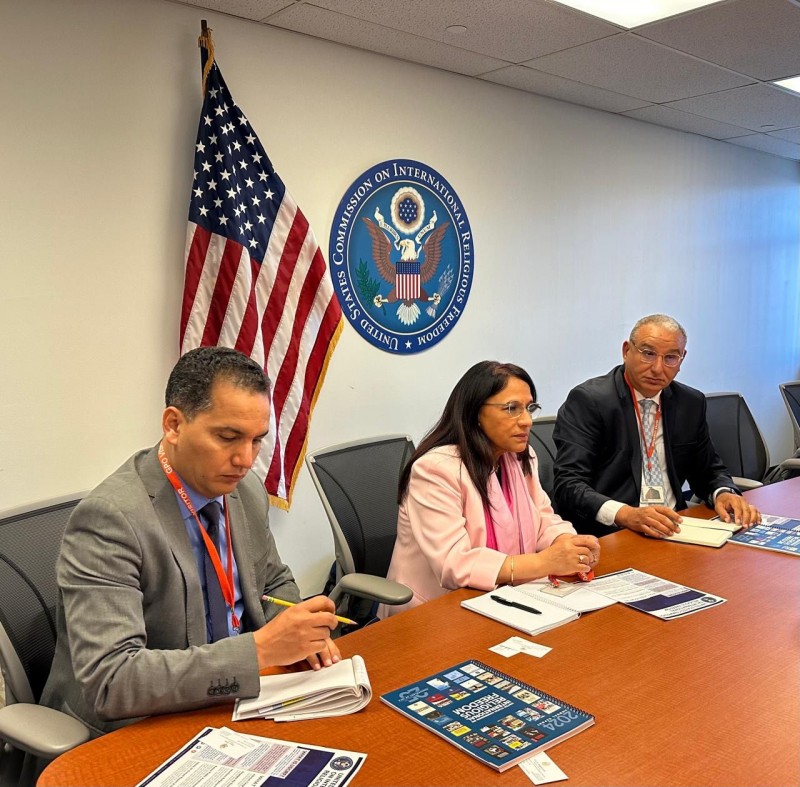
CNDH officials with US officials
Following a referendum on July 1, 2011, Morocco has adopted a new constitution that recognizes human rights as they are universally acknowledged, according to data from CNDH.
Read Also: Amina Bouayach Wins North-South Prize for Fostering Human Right in Morocco
American stakeholders expressed keen interest in Morocco’s National Human Rights Institution and its qualitative practices, particularly regarding human rights protection, democracy, and election observation.
Bouayach emphasized the importance of election observation as an extension of the council’s regular monitoring activities.
She further stressed Morocco’s extensive network of election observers and monitors, including national and international non-governmental organizations and regional organizations such as the African Union, the Arab League, and the Council of Europe.
Bouayach also chaired working sessions at the United Nations headquarters in New York. She focused on strategic partnerships between the Global Alliance of NHRIs, the United Nations Development Program, and the UN Human Rights Office.
Throughout her engagements in both New York and Washington, Bouayach highlighted Morocco’s expertise and its national human rights institution’s commitment to emerging rights issues, including climate change, water crisis management, digitization, AI systems, and sustainable development goals.
Since assuming the presidency in 2018, Bouayach has propelled CNDH’s efforts to address gender equality, freedom of expression, and socio-economic rights in Morocco.
Morocco’s election to the presidency of the United Nations of Human Rights Council for 2024 reflects Morocco’s fundamental role in contributing to the improvement of human rights worldwide.
This is the third term of Morocco in the Council, based in Geneva. The country has served between 2006-2008 as a founding member holding the position of Vice President and then as a member of the Council between 2014 and 2016.