
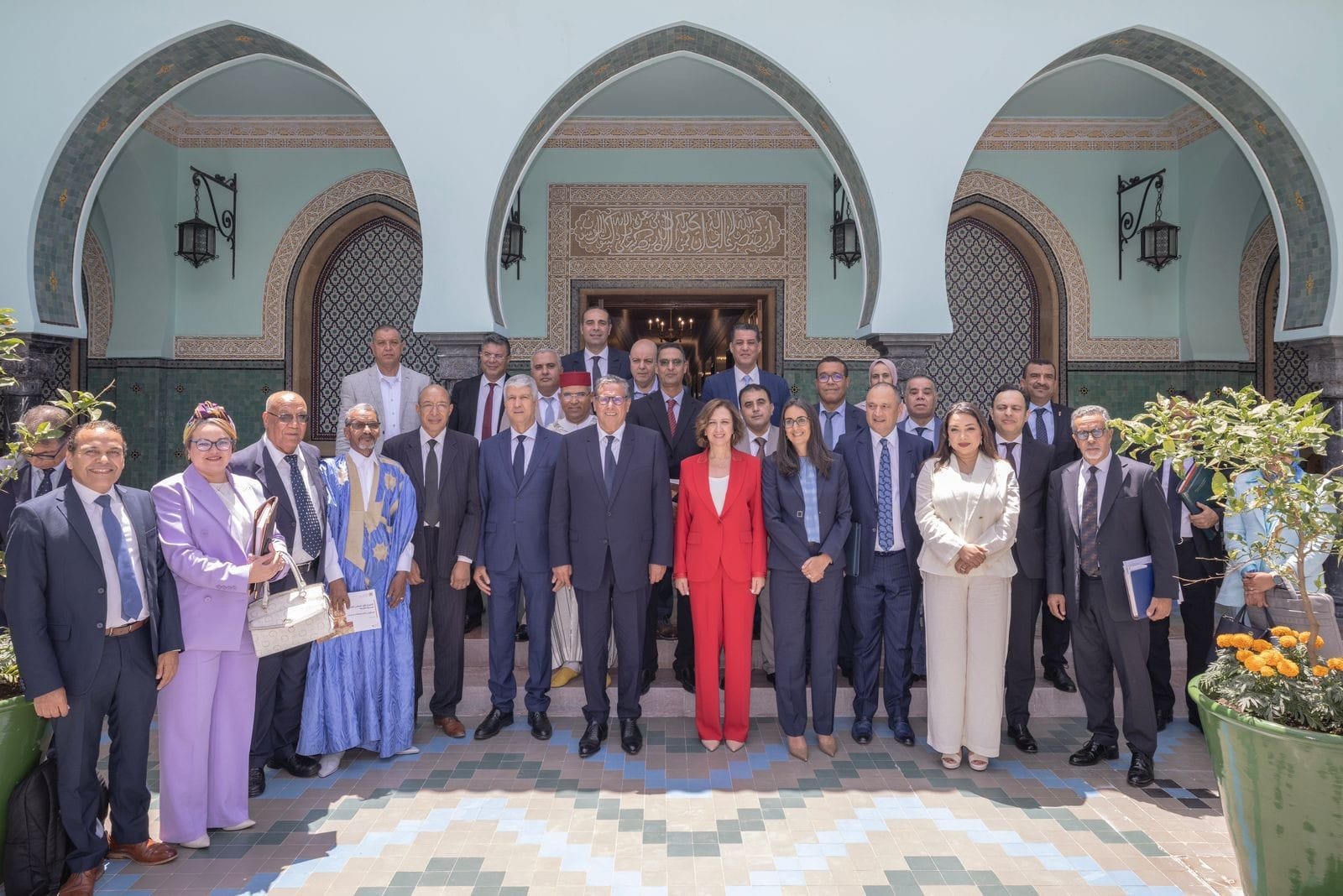
Rabat – The head of the Moroccan government Aziz Akhannouch presided over the inaugural session of the National Crafts Council (NCC) on Tuesday. Established under Law 50.17 enacted in 2022 to modernize and regulate artisanal activities, the council aims to propel the sector forward through strategic planning and policy initiatives.
The meeting focused on assembling a dedicated commission tasked with drafting a comprehensive strategic roadmap for artisanal development. The roadmap is aimed at tackling sector-wide challenges and maximizing its economic potential, according to a press release from the government.
The strategy seeks to address challenges in the sector, including heritage preservation, social security expansion, enhanced roles for Artisan Chambers, cooperative development, vocational training, raw material procurement, market access, and export promotion.
The NCC aims to serve as a collaborative platform uniting stakeholders from across the sector, including professional bodies, public institutions, ministerial departments, experts, and artisan representatives.
This collaborative effort is set to identify pathways for progress, propose innovative solutions, formulate necessary legislative and regulatory measures, and coordinate actions for the sustainable development of Morocco’s artisanal industry, added the statement.
Read also: Three New Partnership Agreements Seek to Boost Moroccan Artisanal Sector
During the meeting, Akhannouch emphasized the key role of artisanry in Morocco’s cultural identity and tourism sector. He also underlined the government’s commitment to boosting support for artisans across the country.
Meanwhile, the Minister of Tourism and Handicrafts, Fatim-Zahra Ammor, presented a detailed overview of key government initiatives since 2021, including the accelerated implementation of Law 50.17 and the successful launch of the National Crafts Registry.
Notably, over 400,000 artisans have been registered, with 647,000 artisans enrolled in mandatory health insurance, she revealed.
The meeting saw the participation of ministers from various sectors, including Economy and Finance, Agriculture and Rural Development, Economic Inclusion, Industry and Commerce, and Sustainable Energy Transition, among others.