
 Join on WhatsApp
 Join on Telegram
Marrakech – Keir Starmer has officially become the new Prime Minister of the United Kingdom after his Labour Party won a decisive majority in Thursday’s general election, ending 14 years of Conservative rule.
Starmer, 61, a former lawyer known for his cautious approach, faces immense challenges as he takes the reins. He inherits a nation grappling with economic malaise, eroded public services, and diminished trust in government.
In a resounding victory, Labour secured 410 out of 650 seats in the House of Commons according to nearly complete results. Meanwhile, the Conservatives suffered a historic defeat, plummeting to just 118 seats – their lowest total since 1906.
Speaking to jubilant supporters, Starmer declared “We did it. Change begins now,” but acknowledged the difficult road ahead. “I have to be honest, huge damage has been done to our economy. It is going to take time,” he reckoned.
Outgoing Prime Minister Rishi Sunak conceded defeat, saying the British people have “delivered a sobering verdict.” In his final speech outside 10 Downing Street before tendering his resignation to King Charles III, Sunak apologized for the loss and wished Starmer well, calling him “a decent, public-spirited man.”
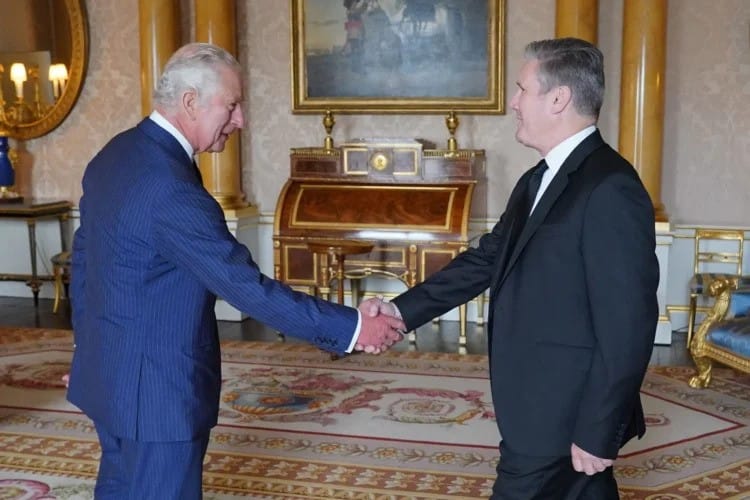
After the ceremonial “kissing of hands” with the King, Starmer officially assumed the role of prime minister. He pledged that his government would always “put country first, party second” and embark on a “mission of national renewal.”
However, he inherits a slim fiscal cushion – state reserves – and has tried to temper expectations, warning he has no “magic wand” to quickly fix long-standing problems.
Labour’s victory was mainly driven by voter anger over the cost-of-living crisis, record NHS waiting times, and years of Conservative scandals and infighting. However, some voters expressed reservations, with one saying “I’m excited about change, but I don’t really love the Labour Party.”
The election saw other notable outcomes. The Scottish National Party won 10 seats while pushing for a new independence referendum. The centrist Liberal Democrats surged to 61 seats.
The upstart Reform UK, previously known as the Brexit Party, led by hard-right populist Nigel Farage, entered Parliament for the first time with 13 seats by capitalizing on discontent over immigration and so-called “woke” policies.
Some high-profile Conservative figures were ousted, including former Prime Minister Liz Truss and senior ministers Penny Mordaunt and Grant Shapps. Meanwhile, former Labour leader Jeremy Corbyn, expelled from the party in 2020, retained his London seat as an independent.
As he assembles his Cabinet, Starmer faces pressure to swiftly address the country’s woes but has limited fiscal headroom – the government budget that would allow for increased public spending on welfare or tax cuts -, inheriting a debt-to-GDP ratio of 100% and the highest tax burden in decades. Rachel Reeves, set to become the first female Chancellor of the Exchequer, warns she is “under no illusions” about the “truly awful” situation.
Still, after years of turbulence punctuated by Brexit, a revolving door of prime ministers, and the COVID-19 crisis, many Britons and business leaders cautiously hope Starmer can usher in a period of competent, stable governance, even if sweeping improvements take time.
The new prime minister has vowed to restore trust in politics and prove that, in his words, “boring is good.” The work of change now begins.
Read also: United Kingdom Elections: Labour Party Wins Historic Race By a Landslide