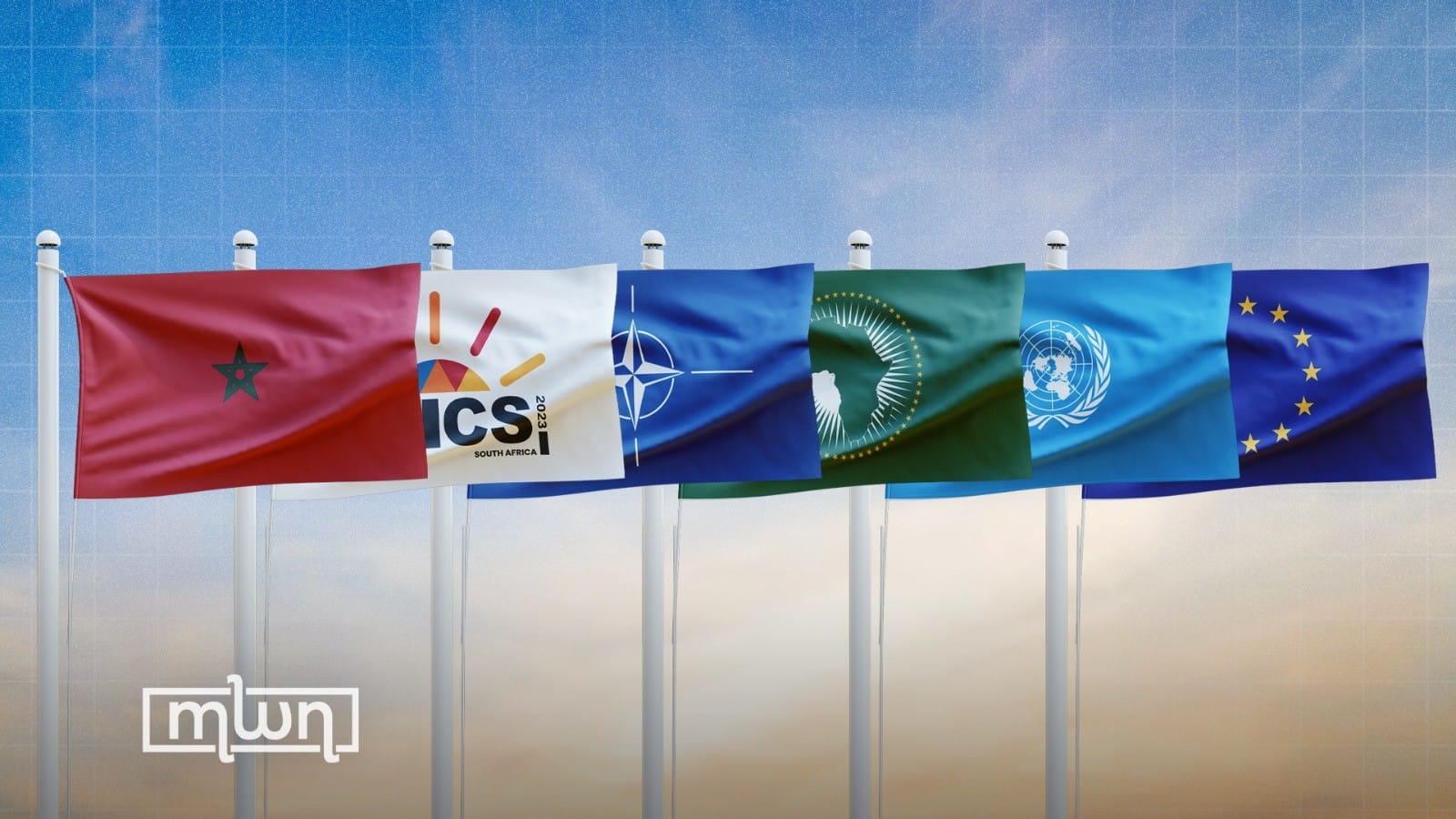
In response to global uncertainties stemming from intense U.S.-China competition, ongoing conflicts in Ukraine and Gaza, and the COVID-19 pandemic’s aftermath, countries worldwide have increasingly adopted preventive strategies. This shift underscores the need to manage geopolitical risks and safeguard national interests.
Nations are utilizing a range of approaches—from conflictual and cooperative tactics to leveraging both hard and soft power. Notably, strategic hedging and multi-alignment have emerged as key foreign policy tools, enabling states to navigate the complexities of an evolving global order shifting from unipolarity to polycentrism.
Under the reign of King Mohammed VI, Morocco has adopted a strategy of diversification and multi-alignment. While balancing its less reliable European and Maghrebi relations, Morocco has also strengthened its connections with Africa and the Atlantic region to mitigate risks from the aforementioned partners.
The free trade agreement with the United States is part of this strategy by aiming to strengthen trade and create new investment opportunities, while maintaining its partnership with the European Union. Morocco’s recent Atlantic initiative is part of this repositioning of Moroccan diplomacy under the reign of King Mohammed VI.
In contrast with many countries, Morocco remained neutral, it never moved away from one camp against another camp, nor did it alienate the friendship of either power. Such testimony of an independent orientation is voting behavior at the UN General Assembly; Morocco recently was absent from the vote of the UN GA resolution on the Ukraine crisis in March 2022.
The Evolving Concept of the ‘Global South’
The Global South is no longer represented solely by traditional organizations like Non-Aligned Movement (NAM) and the G77; in the 21st century, new alliances and groupings have emerged, involving major powers like China and Russia alongside emerging countries such as India, Brazil, and South Africa.
These alliances share a common goal: challenging Western hegemony and advocating for a multipolar world. They call for the reform of the UN WTO and Bretton Woods institutions to reflect new global realities, ensuring a more balanced distribution of power and resources.
Transformation of the Non-Aligned Movement
Indeed, the notion of the “South” has significantly evolved since the establishment of the Non-Aligned Movement (NAM) in 1961. Initially, NAM was a coalition of nations resisting Cold War superpowers, focusing on countries not aligned with NATO or the Warsaw Pact. Today, this concept encompasses major global players such as Russia and China, reflecting a more complex geopolitical landscape beyond traditional Third World countries.
Morocco is a founding member of the Non-Aligned Movement formed at the conference of Belgrade in September 1961, where the driving tenets of non-alignment ideology were formulated.
The late King Hassan II contributed greatly to the success of the conference with a resounding speech in which he highlighted the virtues of “positive neutralism” and stressed the need to support the release of Africa from the oppression of colonialism. Notably the monarch made this historic speech in the presence of other leaders like President of former Yugoslavia Josip Broz Tito, Gamal Abd El Nasser of Egypt, P.M J. Nehru of India, President Habib Bourguiba of Tunisia, and President Soekarno of Indonesia.
Although the condition for membership to the non-aligned movement is non-enrollment in NATO or Warsaw Pact, still in practice many members of the movement are close to one of the two main blocs like North Korea, Cuba or Venezuela.
As a matter of fact, NAM has shifted its priorities from geopolitical concerns to economic ones, to such an extent that some observers have referred to it as the “Third World Trade Union,” advocating for the establishment of a “New International Economic Order.”
Indeed, during the Cold War, disarmament was central, accounting for 29.5% of NAM’s focus, but this issue has largely faded, mirroring a decrease in emphasis on nuclear arms control. Economic development and equity, once prominent at 23.9%, have gone down to 14.29%, reflecting a shift towards broader issues of global economic cooperation and integration. Conversely, self-determination and sovereignty have gained prominence, rising from 18.2% to 23.81%.
Human rights and humanitarian issues have become the most critical concerns, now representing 33.33% of NAM’s agenda. Regional and global governance reform has increased to 19.05%, highlighting the need for modernizing international institutions to address current global challenges. Focus on geopolitical tensions and peacekeeping has decreased to 4.76%, while attention to environment and sustainable development has risen to 4.76%.
BRICS: Shaping a Multipolar World and Financial Systems
The XV BRICS Summit, held last year from August 22-24, gathered leaders from Brazil, Russia, India, China, and South Africa to reinforce their commitment to a more inclusive and sustainable global order. The summit, themed “BRICS and Africa: Partnership for Mutually Accelerated Growth, Sustainable Development, and Inclusive Multilateralism,” highlighted the importance of collaboration among emerging markets.
One quarter of discussions were devoted to inclusive multilateralism, with BRICS advocating for balanced global power dynamics and international cooperation. The club prioritizes sustainable development (25%) and peace and security (20%), demonstrating its commitment to global stability and economic growth.
A significant aspect of BRICS’ strategy is its emphasis on financial and transactional systems. The bloc is increasingly focused on developing alternatives to Western financial systems like SWIFT and the U.S. dollar, promoting its own financial mechanisms to enhance economic sovereignty and influence global financial architecture.
A central focus of last year’s summit was the urgent need to reform global institutions such as the United Nations (UN) and the World Trade Organization (WTO) to better represent developing countries. Leaders expressed concerns about the underrepresentation of emerging economies and pledged to advocate for a more democratic international system.
Sustainable development also emerged as a major theme, with leaders expressing strong support for achieving the United Nations’ 2030 Agenda goals. Special emphasis was placed on agricultural reform and food security, recognizing the need for resilient practices to combat hunger and promote sustainable agriculture.
Shanghai Cooperation Organization: Promoting a Multipolar World
BRICS is not the only significant alliance to emerge from East-South cooperation. The Shanghai Cooperation Organization (SCO) is another pivotal grouping. Unlike BRICS, which spans three continents, the SCO’s core lies in Eurasia, originating with the “Shanghai Five” states of China, Russia, Kazakhstan, Kyrgyzstan, and Tajikistan.
While BRICS primarily focuses on economic development, the SCO has a broader agenda centered on security and state sovereignty. The regional bloc has been expanding in recent years, incorporating India, Pakistan, and Iran as members, with several other states in the process of joining.
The SCO focuses on fostering a multipolar world order, dedicating 30% of its agenda to regional security and stability, it also emphasizes economic cooperation and integration (25%), reinforcing its commitment to regional economic collaboration. It supports reforms in international institutions to reflect contemporary geopolitical realities and promotes a diversified global power structure.
Besides, the SCO is heavily invested in executing specific initiatives and programs, which constitute the majority of its focus. This practical orientation is complemented by a broad acknowledgment of various geopolitical, economic, cultural, and security-related themes, though these are given relatively equal but lesser emphasis. The graph effectively illustrates this distribution, underscoring the SCO’s commitment to actionable outcomes.
Is a Merger Between BRICS and SCO on the Horizon?
Recently, some experts and diplomats have speculated about the potential merger of the SCO and BRICS, driven by the overlapping nature of organizations within the Global South. The proliferation of these groups and economic alliances has become a notable obstacle to economic integration. Streamlining and consolidating such groupings is considered crucial for improving their functionality and efficiency, as well as for revitalizing their influence on global economic dynamics.
“I think the BRICS should serve as a transitional arrangement, in my view, for a solid Shanghai Cooperation organization that includes everyone who is in the BRICS and those who will be joining the BRICS,” Dr. Kingsley Makhubela, a former South African ambassador and conflict resolution specialist stated recently.
“I think if the BRICS were to expand, my own view is that in the future, the BRICS and the Shanghai Cooperation Organization (SCO) would match to form one entity. Because having the BRICS and the SCO running in parallel with the same members would not make sense.”
Coming from a former ambassador from South Africa — a key player in BRICS — this statement is indeed surprising; this may suggest a degree of unease within BRICS, especially concerning its South African component. Indeed, the SCO is gaining momentum under China’s leadership. Meanwhile, BRICS has recently undergone expansion and has broadened its agenda, while member countries are competing for influence, and their programs often lack practical implementation and realism.
Strategic Considerations for Morocco: Prospects of joining BRICS and the SCO
If Morocco explores the possibility of joining the SCO or/and BRICS, it would need to carefully evaluate the potential move, considering both the opportunities and challenges.
Actually, these organizations offer substantial strategic benefits but also present potential risks.
Given the consequences of the Ukrainian war, the US and China are navigating a complex geopolitical landscape as they compete, coexist, and confront each other to set the rules of the emerging international system. In this transitional setting, they will seek to influence pivotal countries to secure a strategic advantage.
As such, pivotal countries, such as Morocco, have substantial influence in shaping their own paths on various issues and can affect the future balance of international power at least in their regions. The North African kingdom is exceptionally well-positioned to meet the membership criteria, supported by substantial strengths and assets that make it a highly compelling candidate.
Below are some reasons why:
Competitive Advantage in Global Supply Chains: Morocco controls part of components and resources critical to global supply chains, enhancing its strategic significance.
Economic Connector: Morocco plays a key role in facilitating trade and investment flows between major economies such as the U.S. and China, highlighting its importance in the global economic landscape.
In the global economic landscape, Morocco has emerged as a pivotal economic connector country, earning acknowledgment from Bloomberg alongside Poland, Mexico, Vietnam, and Indonesia. An in-depth analysis of 2022 trade and investment data reveals Morocco’s outstanding achievements, including a notable 25% upsurge in manufacturing exports and a significant 20% shift in the global greenfield investment share.
These connector countries succeeded in attracting in their soil foreign direct investment from rivals; effectively in Morocco’s automotive industry we can find American, Chinese and Japanese manufacturers working together in the same supply chain and ecosystem.
Ideal for Nearshoring, Offshoring, or Friendshoring: Its strategic location attracts businesses seeking to relocate operations for economic or political reasons, further solidifying its role in global trade networks.
Global Vision: Morocco is guided by a visionary monarch who pursues an ambitious global agenda within specific constraints, reflecting its commitment to broader international engagement.
This commendable performance can be attributed to Morocco’s strategic geographical positioning, robust logistical infrastructure, and adept multi-alignment strategy, all of which have contributed substantially to its economic success.
Morocco is becoming not only a mediator in international crises like those in Libya, Sahel, the Mano River basin, and the Middle East but also an anchorage of economic peace between geopolitical rivals.
Indeed, this shift and repositioning of Morocco would not have been possible without the kingdom’s economic emergence, political will, and the skill and foresight of its political leadership under the wise guidance of King Mohammed VI.
BRICS excels in economic influence with a robust organizational structure and strategic objectives. The Shanghai Cooperation Organization (SCO) also wields significant regional influence but faces its own challenges.
While NAM remains historically important, it lags in economic influence and adaptability compared to BRICS and SCO. Each organization plays a distinct role in the global order, with varying degrees of impact and effectiveness.
Benefits of Joining SCO and BRICS
Experts agree that participation in organizations such as the SCO or BRICS could offer a multitude of benefits spanning the economic, political, security, and cultural domains.
Strategic Geopolitical Positioning: Joining SCO and BRICS would strengthen Morocco’s diplomatic leverage, amplifying its role in the international arena and strengthening its position as potential permanent member of the Security Council representing Africa. Engagement with SCO could improve security cooperation and intelligence sharing, supporting regional stability and the final settlement of its national Cause.
Economic Opportunities and Trade Diversification: Membership in BRICS provides access to major emerging economies, potentially boosting sectors like agriculture, textiles, and mining. SCO’s emphasis on economic cooperation could offer Morocco new investment opportunities, enhancing its infrastructure.
Economic and Financial System Integration: Participation in SCO and BRICS ‘s financial systems might provide more financial options, reducing exposure to global economic fluctuations.
Membership in the SCO and BRICS certainly offers advantages, but it also involves risks that must be carefully assessed by decision-makers to avoid straining relations with the WEST and the USA, in particular.
What are the significant risks associated?
Diplomatic Strains: Aligning with SCO and BRICS might strain Morocco’s relations with the U.S.A potentially leading to diplomatic tensions.
Geopolitical Complications: Morocco’s alignment with SCO and BRICS could complicate its geopolitical stance and lead to tensions with other Western powers especially EU and UK.
Financial and Economic Stability: Relying on BRICS and SCO’s emerging financial systems could pose economic risks due to their lack of stability compared to established Western frameworks. A shift towards SCO and BRICS might lead to decreased Western investment, impacting financial support from the U.S.A and EU.
Besides, unlike BRICS, where Morocco faces the challenge of overcoming South Africa’s veto for membership, Morocco already maintains friendly relations with most SCO members, particularly the key leaders of the group: China, Russia, and India.
In conclusion, while Morocco’s potential membership in SCO and BRICS presents significant opportunities, it also involves risks, particularly concerning its relations with Western allies. By drawing parallels with India’s multi-alignment strategy, Morocco can navigate these complexities effectively, capitalizing on the advantages offered by BRICS and SCO while maintaining its crucial international relationships.
Navigating relationships between, SCO, BRICS and Western allies would require sophisticated diplomacy to balance engagements and avoid alienating key partners. Increased focus on BRICS and SCO could potentially isolate Morocco from Western-led international platforms and initiatives.
In this regard, it’s worth mentioning that India’s successful navigation of multiple alliances can offers valuable lessons. India balances its affiliations by aligning with the Quad (the United States, India, Japan, and Australia) in the Indo-Pacific while maintaining strong ties with Russia, a key player in BRICS and SCO. This multi-alignment strategy allows India to enhance its strategic positioning without compromising relationships with other global powers.
Through a multi-alignment foreign policy, the Kingdom of Morocco can skillfully manage its relationships with BRICS, SCO, and Western allies. By leveraging diplomatic agility, Morocco can capitalize on the opportunities presented by these new organizations while preserving its essential ties with the U.S.A and the West.