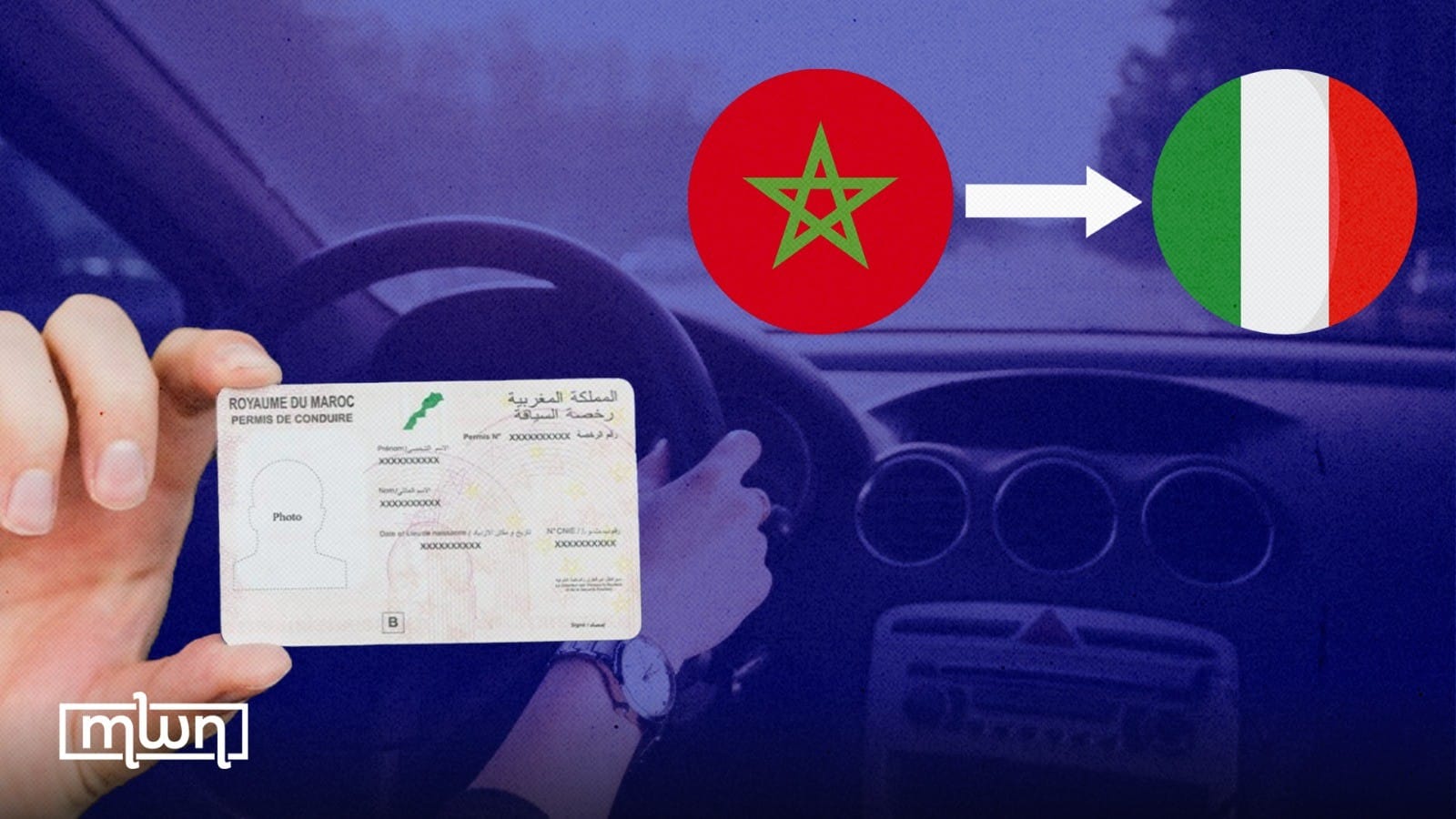
Doha – While Morocco and Italy signed on March 27 an updated bilateral agreement for the mutual recognition of driver’s licenses, Moroccans residing in Italy continue to face hurdles in converting their licenses.
According to reports, the new biometric model introduced in 2019, which was not covered in the 1991 bilateral agreement, is particularly affected by this concern.
The updated agreement was signed in the presence of the Moroccan Ambassador to Italy, Youssef Balla, and the Italian Deputy Prime Minister and Minister of Infrastructure and Transport, Matteo Salvini.
According to Italian media reports, however, there has still not been any official communication on the issue and Moroccan citizens are still being denied license conversion requests.
Under Italian law, non-EU citizens can drive with their country of origin’s license for a maximum of one year after acquiring residency in Italy.
After this period, they must either obtain an Italian license or convert their foreign license, provided a reciprocity agreement exists between the two countries, as is the case with Morocco.
This issue has left many Moroccan residents in the European country without a valid driving document, causing them to miss out on job opportunities in the transport sector, which is currently struggling with a shortage of drivers.
Further complicating matters is the fact that there is a time limit for converting licenses after acquiring residency, which for Morocco is six years.
This means that those who entered Italy in 2019 with a biometric license have only a few months left to complete the conversion process.
After this period, Italian authorities may re-evaluate the validity of the Italian license issued via conversion.
For now, Moroccan citizens in Italy can only wait for the updated agreement to be officially implemented and come into force.
The Moroccan government has been working to address these issues, with agreements for mutual license recognition now in place with 20 countries, including European nations like France, Portugal, Switzerland, Spain, and Belgium.