

Rabat – The recent All-African Movement Assembly (AAMA 2024), held in Accra from August 29 to 31, stressed the mounting challenges facing civic engagement across Africa. With over 400 in-person participants and 1,000 virtual attendees, the assembly provided a crucial platform for dialogue on the continent’s shrinking civic space.
Organized by Africans Rising, the event drew notable figures to Ghana under the theme “Towards Pan-African Solidarity: United We Stand, Divided We Fall.” It focused on the urgent need for collective action in the face of increasing restrictions on civil liberties, dissent, and activism.
On the sidelines of the event, Morocco World News spoke to Kim Pool, founder of the Teaching Artists Institute and a member of Africans Rising. In the interview, she remarked on the African diaspora’s connection to the continent and emphasized the need for their inclusion into broader continental initiatives.

“I am here in Ghana to talk about the immense power I saw, the camaraderie that they have and still hold for those of us living outside of Africa, still understanding our African identity, still working to promote and preserve the African identity in the diaspora,” Pool said.
Pool emphasized the need for greater integration of the diaspora into African solidarity efforts. “Today I served as a panelist to discuss pan-African solidarity and unity. And what I help them to remember is that the power of the African continent is with the member states, and it’s at the grassroots level and the member state level that we need them to help us actualize article 3Q,” she added.
Article 3Q is a part of the African Union’s (AU) Constitutive Act, which was adopted in 2000 and serves as the founding document of the AU. This specific article of the Constitutive Act outlines the AU’s commitment to promoting the integration of the African continent and enhancing the freedom of movement for African citizens.
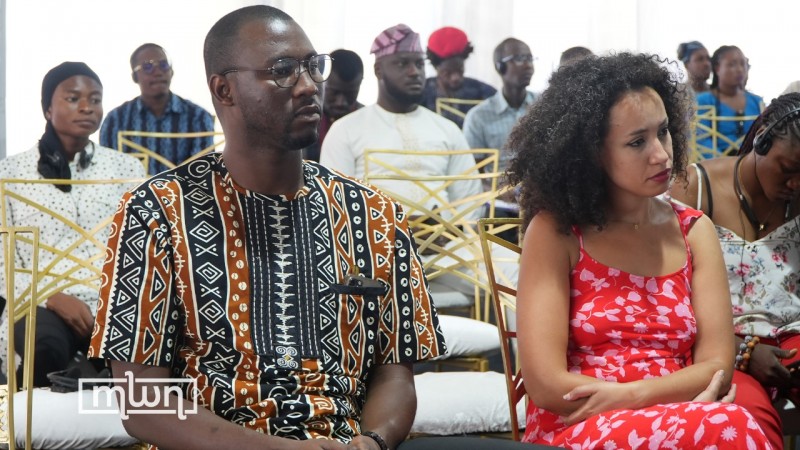
Describing the African diaspora as the “sixth region” of the continent, Pool called for practical measures such as an African passport for diaspora members to enhance their access to “the spirituality, to the indigenous knowledge, to the cultural currency that keeps us grounded and reminds us of our Africanity. “
Read also: Africans Rising To Host Assembly in Accra to Combat Shrinking Civic Space in Africa
Meanwhile, Muhammed Lamin Saidykhan, Coordinator of Funding Movement and Adviser to Africans Rising, spoke to Morocco World News about his work on the Fossil Fuels Non-Proliferation Treaty as a unified approach to address environmental issues across Africa.

Saidykhan outlined the treaty’s three pillars: the phased-out of fossil fuels, the non-proliferation of new fossil fuels, and fair financial and technological support for the global south. “We want a fair phase-out where wealthier nations phase out faster, and African countries are given time to transition due to their limited technical and financial resources,” he said. He also highlighted the need for increased endorsement of the treaty by African nations to ensure comprehensive global support.
The 2024 edition of AAMA y served as a crucial platform for activists and leaders from across the continent to unite and address critical issues. The gathering came at a crucial juncture in geopolitical stability throughout the region, in the wake of rising protests in Senegal, Kenya, Ghana, Nigeria, and Uganda. Within this context, Africans Rising highlighted the urgent demand for improved living conditions and respect for human rights.
The assembly aimed to address these pressing concerns by fostering dialogue and action towards a unified and equitable future for Africa. As the assembly concluded, participants left with a renewed commitment to advocating for expanded civic space and addressing systemic issues affecting the continent’s development.