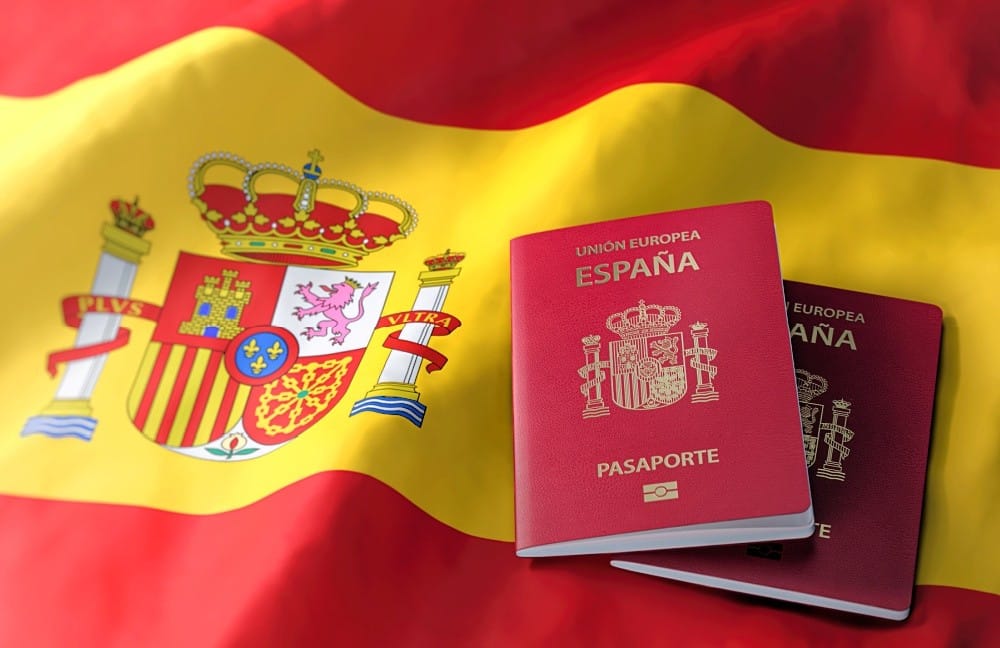
Doha – The coalition government of Spain, led by the Spanish Socialist Workers’ Party (PSOE) and Sumar, has proposed regularizing the status of all undocumented immigrants who arrived in the country before the end of 2023.
According to Spanish media reports, this move could grant legal residency to around 700,000 people, a significant increase from the 500,000 initially anticipated under a citizens’ initiative currently being debated in the Spanish parliament.
The proposed amendment, jointly introduced by PSOE and Sumar, would make this the largest regularization of undocumented immigrants in Spain’s history if approved.
It would benefit nearly 700,000 foreigners who were in Spain illegally as of December 31, 2023, according to The Objective.
Existing mechanisms for individual regularization, such as “arraigo” (social ties), training, and streamlined procedures for obtaining permits, have so far prevented the need for mass regularizations in recent years.
However, a report by Funcas indicates that the actual number of foreigners living in Spain without legal status is around 686,000, representing 17% of the non-EU foreign population, as reported by The Objective.
This figure is considerably higher than the 517,000 undocumented immigrants recorded at the end of 2021.
Spain has a history of extraordinary regularizations under governments of various political leanings.
Read also: Spanish National Court Rules Poverty in Morocco Insufficient for Asylum Qualification
There have been six such processes since 1985, with former Prime Ministers Felipe González granting papers to 115,000 immigrants, José María Aznar conceding permits to 525,000, and José Luis Rodríguez Zapatero regularizing 576,000 non-EU foreigners, according to La Gaceta.
Across these processes, 15.5% of applications were rejected for various reasons.
The citizens’ initiative #RegularizaciónYa, which has collected over 700,000 signatures and has the support of more than 900 NGOs, initially called for regularizing the status of half a million undocumented foreigners living in Spain prior to November 1, 2021.
The Spanish parliament took the first legislative step towards approving this initiative on April 17 this year, according to the European Website on Integration.
Gaining legal residency in Spain opens the path to citizenship and access to full rights and obligations, including the right to vote.
Citizenship can typically be requested after ten continuous years of legal residence, with shorter periods for certain groups like Ibero-Americans, Filipinos, Equatorial Guineans, Andorrans, Portuguese, and those with Sephardic origins.
Having a clean criminal record is essential for obtaining Spanish citizenship.
The proposed regularization, if extended to all immigrants who arrived before December 31, 2023, as suggested by PSOE and Sumar, could become one of the most significant in Spain’s history.
This move could particularly benefit Moroccans, the leading recipients of Spanish nationalities, with a staggering 54,027 individuals acquiring citizenship in Spain in 2023, marking a 32% annual increase, according to data released by the National Institute of Statistics (INE) cited in Spanish media reports.
As the parliamentary process advances, the final scope and details of the regularization program remain to be determined in the coming months.