


 Join on WhatsApp
  Join on Telegram
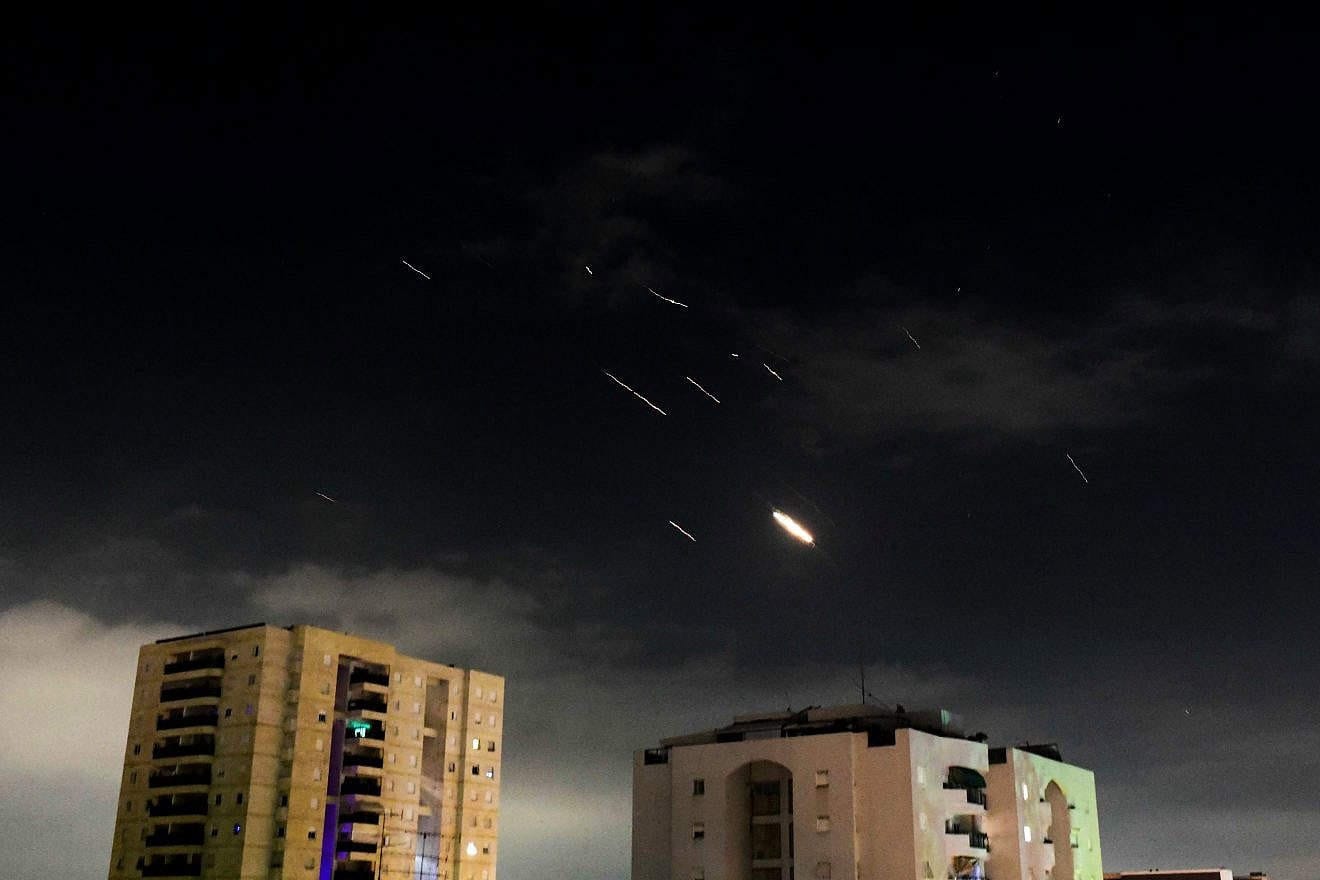
 Doha – In a major escalation of the long-simmering conflict between Israel and Iran, Tehran launched a barrage of over 400 ballistic missiles at Israel on Tuesday.
The attack, which Iran claimed was in retaliation for the recent killing of top Hezbollah leader Hassan Nasrallah and Hamas political chief Ismail Haniyeh, set off sirens across Israel and prompted widespread emergency responses.
According to the Israeli Occupation Forces (IOF), Iran fired around 180 projectiles at the country, with Israel’s air defense systems quickly activated to intercept the incoming threat.
The IOF said there were no immediate reports of casualties, though some missiles had landed in central and southern Israel.
Two people were lightly injured by shrapnel in Tel Aviv, while a few other minor injuries were reported elsewhere.
The Iranian Revolutionary Guards Corps (IRGC) claimed responsibility for the attack, stating it had targeted Israel in response to the “martyrdom” of Nasrallah, Haniyeh, and an Iranian commander.
The IRGC warned of further “crushing” attacks if Israel dared to respond.
The missile strike came just a day after Israel launched a rare ground offensive in southern Lebanon aimed at crippling Hezbollah positions in the border region.
Tensions have been rising for weeks amid intensive Israeli airstrikes that killed hundreds, including several top Hezbollah and Hamas leaders.
The United States, which had earlier warned of an imminent Iranian attack, strongly condemned the missile strikes.
President Joe Biden ordered the US military to aid Israel’s defense and shoot down incoming Iranian missiles.
The White House emphasized that a direct attack on Israel would carry “severe consequences” for Iran.
US Secretary of Defense Lloyd Austin spoke with his Israeli counterpart Yoav Gallant prior to the attack, stressing Washington’s readiness to defend its allies and interests in the region.
Austin warned of serious ramifications should Iran choose to escalate further.
The attack marks a significant escalation in the Israel-Iran conflict, drawing the region closer to a potential full-scale war.
Iran’s supreme leader, Ayatollah Ali Khamenei, was reportedly moved to a secure location following the strikes.
In Israel, millions sought shelter in bomb shelters as sirens wailed across the country.
The IOF instructed residents to remain vigilant and follow the guidelines of the Home Front Command.
Israel’s airspace was temporarily closed, with flights redirected to alternate destinations.
The UN Secretary-General Antonio Guterres condemned the “escalation after escalation” in the Middle East, calling for an immediate ceasefire.
Regional countries, including Jordan and Iraq, temporarily suspended air traffic in response to the attack.
Read also: UN Warns Israeli Incursion into Lebanon Violates Sovereignty


