 Join on WhatsApp
 Join on Telegram
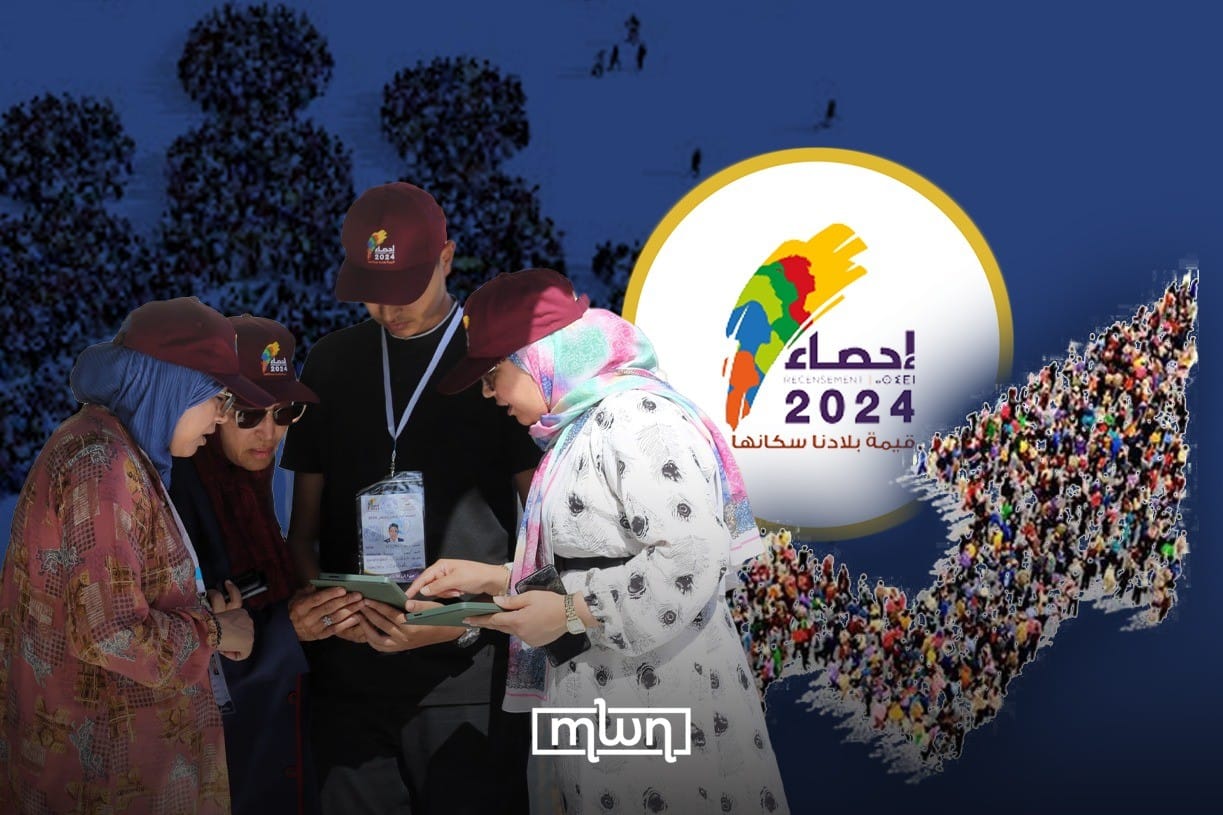
In 2014, Morocco conducted its decennial census. The country’s population then was 33,848,242. Over half the population was under 30 years old—a recurring trend in North Africa that heavily informed the economic, social and security policies of regional governments. Ten years on, the population is now 37 million, a nearly nine percent increase. Modest steady growth. A familiar mix, too: 63% urban, 37% rural population.
Steady growth is not easy to achieve. Most demographers would find this growth rate (0.9% yearly) to be optimal in the real world of dramatic climate change, declining global fertility rates, and stressed public health institutions. Population growth in Egypt, the Arab world’s most populous nation, slowed to 1.4% last year, welcome news to many Egyptian leaders and the lowest rate there in seven decades. Severe economic challenges in Tunisia have led to significant capital flight for several years, accompanied by a significant departure of young Tunisians under 30 for Europe and elsewhere.
For Morocco, beyond the data points, the 2024 census can be viewed as much a barometer of national progress as it is a tally of people and households. Population growth in Morocco’s major metropolitan areas give meaning to a modern fact: metro areas attract people, particularly the young. The Casablanca-Settat region now has nearly 7.7 million citizens, ten percent larger than the Madrid metropolitan region in Spain. Along the Atlantic coast, Mohammedia and Casablanca urban borders creep closer to each other, year after year.
The 50 miles separating Casablanca and Rabat seem to shrink each year as the metro areas sprawl out. Growth and development is subtle in some places like Fez. In other places, like Tanger, it is fast and big. Medium-sized regional centers like Beni Mellal, El Jadida and Al Hoceima represent destinations of choice for the many Moroccans who want to avoid expensive relocation to big metro areas. In the United States, too, some of the fastest population and economic growth rates are in metro areas far from the Northeast corridor or the West Coast, cities like Kansas City, Missouri; Henderson, Nevada, Phoenix, and Arizona.
The Rabat-Salé-Kenitra region (5.1 million) attracts young college graduates as well as automotive industry workers. By the early 1970s, the Rabat-Salé metro region population was still modest, around 500,000. The prestige of Rabat has grown dramatically in the last two decades, now seen in landmark projects like the Mohammed VI Tower, the expanded Rabat train station, and revitalized oceanfront neighborhoods. The Bou Regreg riverfront becomes trendier each passing day. From there you can look to the northeast and see the region’s rapid growth in distant Sala Jadida.
None of this was a given. The social and political landscape across North Africa back in 2014 was very different. Egypt’s civil society was under strain as the nation struggled to craft a new constitution. As Tunisian and Algerian leaders toiled to define a coherent national narrative, Morocco assembled a national development program that balanced economic growth, civil society aspirations, administrative reform, youth engagement, and complex regionalization initiatives.
The transition from a middle-of-the-pack developing nation to a regional powerhouse was well underway by 2014. Tourism, textiles and tangerines had laid the foundation for a more diverse economy by 2024. Boeing, for example, is now partnering with Mohammed VI Polytechnic University to establish an advanced aerospace manufacturing research center. The Al Boraq high-speed train connecting Tangier and Casablanca is being extended to Marrakech. The future has arrived.
Certainly some challenges on the path to 2024. In July 2014, two dozen people died in a building collapse in a neighborhood of Casablanca. Structurally deficient older buildings in Morocco’s largest cities led to widespread calls for more robust municipal services. In late 2017, two brothers drowned while mining for coal in an ad hoc mine in rural Jerada. The incident led to a national dialogue about rural marginalization and investment priorities, particularly in the interior regions of Morocco.
High Planning Commission data reveal that large urban centers, housing costs and national consumer spending (household consumption expenditure, or HFCE) often overlap. The Tanger-Kenitra-Rabat/Salé-Casablanca coastal corridor is home to about 8.5 million people. Accordingly, over half of Morocco’s total household consumption expenditure comes from the Casablanca-Settat (25.3%), Rabat-Salé-Kénitra (14.7%), and Tangier-Tetouan-Al Hoceima (11.5%) regions, respectively. Urban affordability and comprehensive municipal services will remain an important policy issue for the foreseeable future.
The past decade has also seen the ebb and flow of political movements across North Africa, some conservative, some secular, some youth oriented. By 2021, Morocco adequately handled the political whiplash of moving from a Justice and Development Party (JDP)-led government to one led by Aziz Akhannouch’s National Rally of Independents.
The stability has paid off: From Morocco being the second largest exporter of automobiles to Europe to average life expectancy at birth reaching 75 years, just two-and-a-half years less than in the U.S..
Between 1998 and 2023, according to UN data, Morocco’s income per capita doubled in inflation-adjusted terms. GDP growth in Morocco this year will be 2.8%, according to an IMF estimate. This is satisfactory given consumer inflation and Mediterranean region agriculture challenges due to recurring drought. Stability.
There will be ups and downs on the path to development, from a housing affordability problem in big cities to rural health care infrastructure challenges. But the census provides an opportunity for Morocco to take stock of population, household and locality trends.
As American investment guru Warren Buffett put it, “We don’t have to be smarter than the rest. We have to be more disciplined than the rest.”
Read Also: Census: Five Moroccan Regions Account for Over 70% of Morocco’s Population