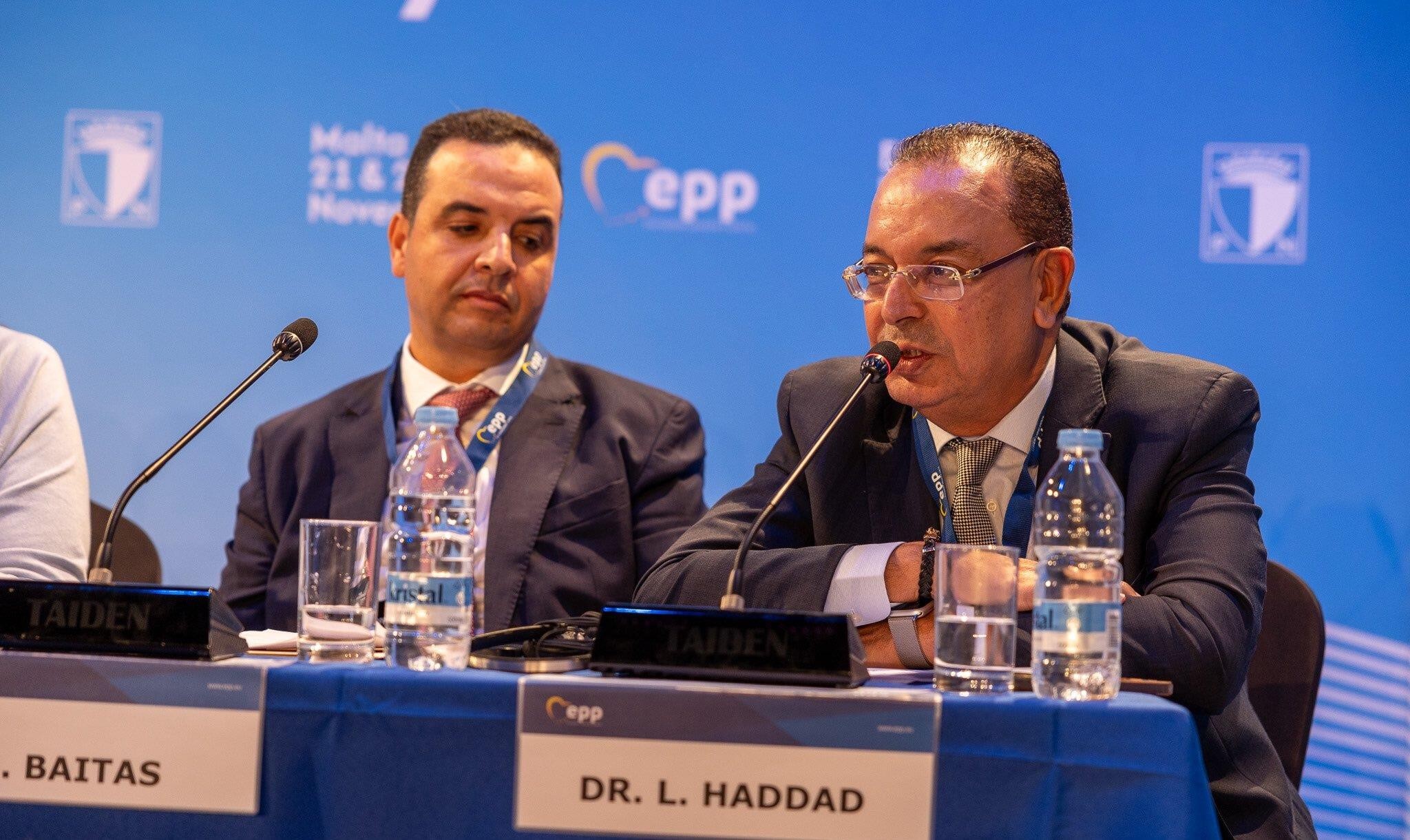
Rabat – At the Political Assembly of the European People’s Party (EPP) in Valletta, Malta, Moroccan representatives called for enhanced cooperation between Europe and Africa and discussed Morocco’s growing influence in shaping the region’s future.
Held on November 21-22, the assembly brought together key political figures from Europe and the Mediterranean, with Morocco showcasing its strategic initiatives in security, energy, and agricultural resilience.
Lahcen Haddad, a representative of Morocco’s Istiqlal Party (IP), expressed his country’s commitment to advancing the Euro-Mediterranean region’s stability and prosperity.
A highlight of his presentation was Morocco’s AAA Initiative (Adaptation of African Agriculture), launched in 2016 to help African agriculture adapt to climate change.
This initiative aims to improve sustainability, enhance technical support, and curb forced migration by stabilizing rural economies across Africa.
Haddad also touched upon Morocco’s role as a leader in renewable energy, particularly in the development of green hydrogen. With partnerships such as the one with TotalEnergies, Morocco is positioning itself at the forefront of the global energy transition.
He pointed to the Nigeria-Morocco gas pipeline project as a key example of how Morocco is fostering regional energy cooperation, which is vital for energy security in West Africa and beyond.
Addressing the growing security threats in the region, Haddad raised concerns over the use of Iranian drones and missiles by the Polisario Front, operating from Algerian soil.
He urged the European Union and the EPP to take a stronger stance to safeguard stability in North Africa and the Mediterranean.
In a broader geopolitical context, Haddad also pointed out Morocco’s role in co-hosting the 2030 World Cup, which he said would strengthen international cooperation and foster positive cultural ties across borders.
Mustapha Baitas, a representative of the National Rally of Independents (RNI), has echoed the call for a more equitable and strategic relationship between the European Union and its southern neighbors.
He focused on addressing the issue of brain drain, advocating for investment in local systems and creating mutually beneficial partnerships. Baitas has also called for reforms to ensure the sustainability of bilateral agreements and strengthen cooperation between Africa and Europe.