 Join on WhatsApp
 Join on Telegram
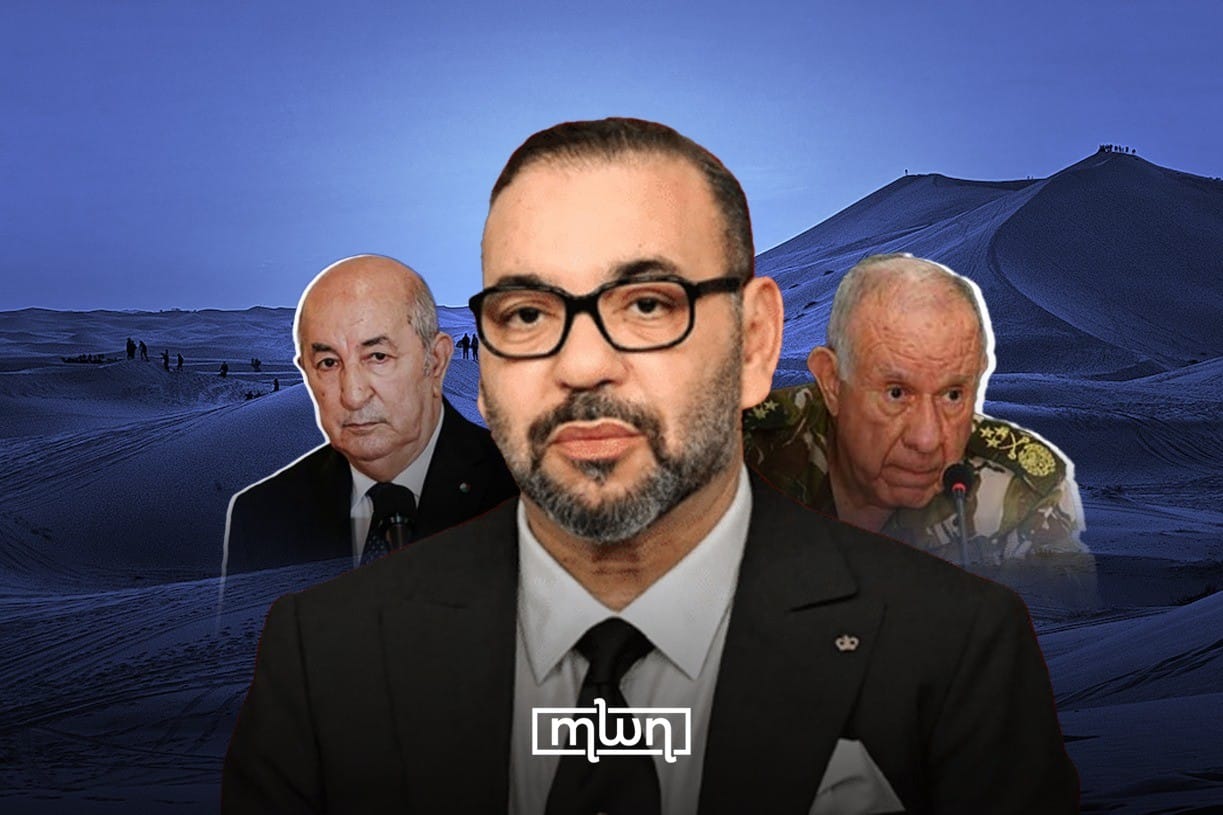
In a historic speech marking the 49th anniversary of the legendary Green March, King Mohammed VI reaffirmed Morocco’s unwavering commitment to safeguarding the country’s sovereignty over its southern provinces.
In the speech, the monarch delivered a direct message to those challenging Morocco’s territorial integrity.
While the monarch did not mention Algeria by name, his message unmistakably referenced the Algerian regime’s hostile stance on Morocco’s territorial integrity.
Notably, the King highlighted Algeria’s refusal to conduct a census in the Tindouf camps, describing this and Algerian support for separatism in the Sahara as a reflection of the Algerian establishment’s clinging to the outdated and impractical option of an independence referendum.
While Morocco is backed by the strong attachment of the disputed region’s locals to their Moroccan identity and commitment to reintegration within Moroccan sovereignty, there are those that are “still feeding on the illusions of the past,” the King said, referencing Algeria and its shrinking list of allies that support their separatist agenda.
With all the recent political and diplomatic development in the Sahara dossier, the King suggested, clinging to an independence referendum amounts to being stuck in another “world clearly disconnected from reality.” Algeria, the King argued, is “clinging to outdated theories and claims.”
“As a result, there are some who demand a referendum, despite that option being discarded by the United Nations and the impossibility of implementing it,” the monarch said, recalling the dire conditions in the Tindouf camps, where the Polisario Front and its supporters are using the distressed Sahrawis in the camps as hostages in “deplorable, humiliating conditions and depriving them of the most basic rights.”
Facing scrutiny over the situation in Tindouf, Algeria’s regime refuses to allow Sahrawis to move freely in the country although they live on Algerian soil. They also face well-documented challenges, including diseases like anemia due to malnutrition caused by embezzlement of the humanitarian aid directed to Sahrawis.
Read also: UN Envoy’s Partition Proposal: A Lifeline for Algeria’s Faltering Sahara Strategy
Despite the multi-dollars of aid sent by the US and many countries in the international community, UN reports highlight serious concerns faced by Sahrawis in the region.
One of the latest documents is UNSG’s recent report on the situation in Western Sahara, where he reiterated concerns over the situation.
“Combined with extreme environmental conditions and limited economic opportunities, this situation leaves many Sahrawis malnourished and highly vulnerable,” Antonio Guterres said in his report in October.
King Mohammed VI views Algeria’s obsession with Morocco’s domestic affairs as a means to exploit the situation to “deflect attention from their many internal problems.”
Algeria, which hosts, finances, arms, and backs the Polisario Front, notably boycotted the recent vote on Western Sahara by the UNS Security Council.
Algeria’s regime move followed also its attempt to disrupt the vote with two hostile amendments, which the UN Security Council rejected.
Despite Algeria’s support for the separatist Polisario group, it insists that a solution should be brokered solely between Morocco and the Polisario, hindering the UN-led political process by refusing to shoulder its role.
The UN repeatedly called on Algeria to engage constructively in resolving the dispute.
But the repeated appeals have had limited effect, as Algeria continues to refuse to participate in dialogue and deflects responsibility.
Observers now argue that the international community should apply greater pressure on Algeria’s regime urging it to join the UN-sponsored process to foster a realistic and lasting solution.
Read also: Hilale: New Resolution Urges Algeria to Constructively Engage in Western Sahara Process
Morocco’s long-standing campaign reached new momentum in the past years given the growing international recognition of its efforts, including the Autonomy Plan as a credible and political solution to the decades-old dispute.
A significant momentum that Morocco recorded recently is France’s decision to fully recognize Morocco’s sovereignty over its southern provinces.
The support aligns with the US position, initially established in December 2020 by Donald Trump, who was reelected today.
In recent months, many other countries have deepened the growing global endorsement of Morocco’s Autonomy Plan, including Spain, Hungary, Finland, Denmark, Germany, and the Netherlands.
In Africa and the Arab world as well, the majority of countries have embraced Morocco’s Autonomy Plan and described it as the most viable and realistic path to a lasting resolution of the Sahara dispute.
Moroccan Foreign Affairs Minister Nasser Bourita said in a recent interview with French outlet Le Point that the significance of France’s recent decision was a welcome and expected culmination of the widespread global support Morocco’s plan has garnered over the years.
Morocco’s plan, now backed by over 112 countries, including a significant contingent from the Americas and almost three-quarters of African nations, is increasingly being recognized as the only hope for a sustainable solution in the Sahara dossier.