Doha – Spanish media has openly been reporting about Morocco’s formidable position in the joint bid to host the 2030 FIFA World Cup alongside Spain and Portugal.
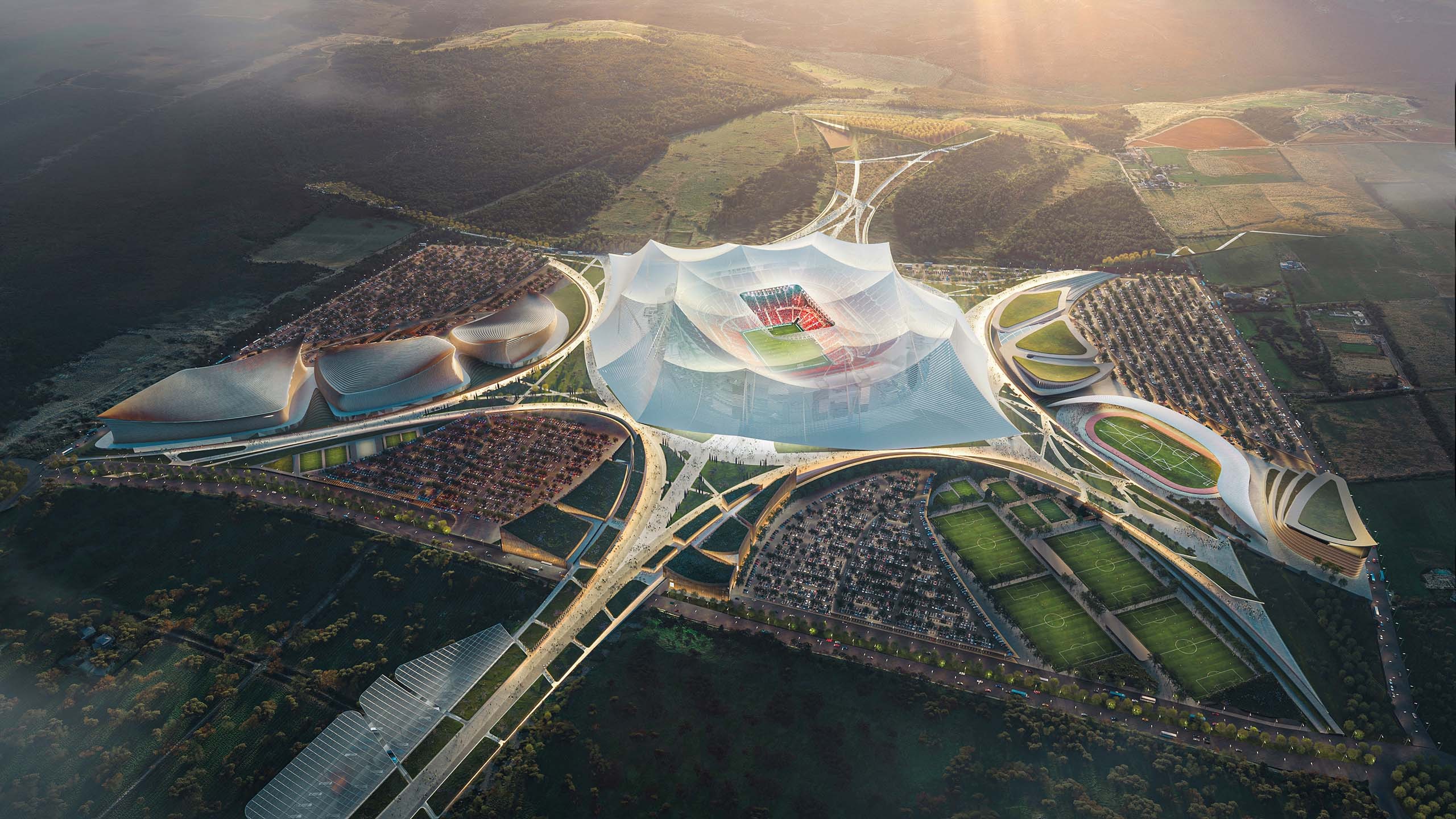
Recent reports from prominent Spanish outlets have shed light on the growing apprehension within Spain about Morocco’s potential to secure the prestigious final match at the ambitious Grand Stade Hassan II in Casablanca.
The official FIFA report, released on Saturday, has given equal scores to three stadiums vying to host the tournament’s opening match and final: the Santiago Bernabeu in Madrid, the Camp Nou in Barcelona, and the soon-to-be Hassan II Stadium in Casablanca, Morocco.
This revelation has sent shockwaves through the Spanish football community, as they grapple with the realization that Morocco is not merely a partner in the bid, but a formidable contender.
Spanish daily ABC’s article, “Confirmed Threat: Morocco Could Take the 2030 World Cup Final to Casablanca,” details the impressive features of the Hassan II Stadium, which is currently under construction.
Set to be completed by 2028, this Moroccan marvel stadium, with a projected capacity of 115,000 spectators, will surpass both the Bernabeu and Camp Nou in terms of size and grandeur.
The Spanish newspaper concedes that “those who gave the Santiago Bernabeu as a sure choice to host the final of the 2030 World Cup did not calibrate well the bet and capacity of influence of Morocco and all the powerful environment of the Arab countries.”
Footboom, another Spanish media outlet, echoes these sentiments of apprehension for losing their venue bid in their piece “FIFA Confirms Threat: Bernabeu and Camp Nou Tied with Morocco to Host the World Cup Final.”
The article elevates the significance of the Hassan II Stadium project, and that it will become the largest football stadium in the world upon completion.
The realization that Morocco’s stadium is not only on par with, but potentially surpassing, Spain’s iconic venues has left the Spanish media grappling with the possibility of a Casablanca-hosted final.
It is worth noting that these are not the first instances of the Spanish media expressing apprehension about Morocco’s role in the 2030 World Cup bid.
In August, the Spanish outlet Relevo reported that Morocco had “eaten Spain” in the bidding process, suggesting that the North African nation had dictated the terms of the joint bid.
The article highlighted the ongoing challenges faced by Spanish football, including scandals and controversies, which have weakened their position in the negotiation process.
The recent FIFA evaluation further confirms Morocco’s strong position in the bidding process.
The report praises the joint bid for exceeding the minimum requirements for hosting the 2030 World Cup, with a total of 20 proposed stadiums—11 in Spain, six in Morocco, and three in Portugal.
This extensive array of venues offers unparalleled flexibility and diversity in hosting matches across the three countries.
Moreover, FIFA has highlighted Morocco’s commitment to delivering state-of-the-art infrastructure, with the Hassan II Stadium serving as the crown jewel of their ambitions.
The Moroccan government has pledged to invest a staggering €500 million in this monumental project.
Read also: Who Will Host the World Cup Draw 2030? Morocco, Spain, and Portugal Battle it Out