


 Join on WhatsApp
  Join on Telegram
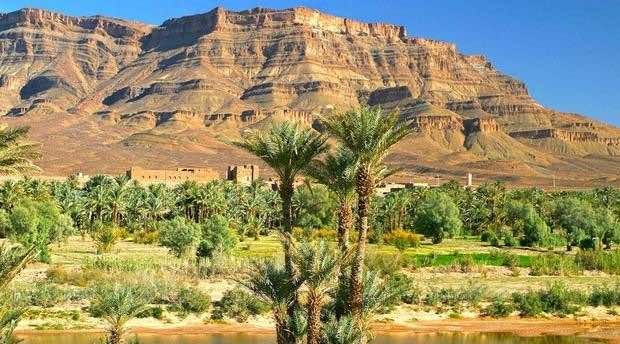
 Rabat – The World Bank has spotlighted Morocco’s national strategy to preserve and revitalize its oases, describing these ecosystems as “irreplaceable reservoirs of cultural, natural, and human heritage.”
As climate change threatens the resilience of oases worldwide, Morocco’s efforts are being recognized as a leading example of sustainable adaptation.
In a recent statement ahead of COP16, the UN Conference to Combat Desertification (UNCCD), set for December in Riyadh, the World Bank noted that Morocco’s strategy addresses both environmental and social challenges, combining ecological preservation with community empowerment.
A vision rooted in sustainability
“Morocco is deeply aware of the inestimable value of its oasis heritage,” the World Bank stated. By implementing a national strategy, the country aims to restore these fragile ecosystems while improving the livelihoods of local populations.
Central to this vision is the integration of sustainable development principles—economic, environmental, and cultural—into all projects.
One prominent initiative, highlighted by the World Bank, is the Ferkla date processing unit in Errachidia.
Designed to support small-scale farmers, the facility enables the storage and transformation of dates, reducing waste and expanding market opportunities.
“This project allows me to preserve my harvest and sell it over time instead of rushing to offload it,” said farmer Mbarek Taadid. “It’s a game-changer for farmers like me.”
The World Bank also lauded the efforts of Morocco’s National Agency for the Development of Oases and Argan Trees (ANDZOA), describing it as a key player in implementing Morocco’s oasis preservation strategy.
Tasked with crafting and overseeing a comprehensive development plan for oases and argan tree regions, ANDZOA ensures that projects align with sustainable development principles, addressing economic, social, cultural, environmental, and human needs.
Through its programs, ANDZOA aims to boost the quality of life for local populations while preserving the natural and cultural heritage of oases. Its initiatives include infrastructure development, water management systems, and agricultural innovation, all designed to meet the specific challenges of these fragile ecosystems.
Empowering communities through innovation
The World Bank underlined Morocco’s dedication to empowering marginalized groups, particularly women and youth, as a core aspect of its oasis revitalization efforts.
Through initiatives supported by ANDZOA and partners like the World Bank, women’s cooperatives producing local goods, such as date-based products, have created new economic opportunities in areas with limited traditional employment.
At the same time, youth-led projects are turning agricultural waste into innovative products, fostering entrepreneurship and sustainability in oasis communities.
Mama El Harrouch, a cooperative member, explained how these programs have transformed her life. “This work not only supports my family financially but also allows me to contribute to preserving the oasis’s legacy. Before, women in our village had few opportunities, but now we have a voice and a purpose,” she said.
Youth engagement is another pillar of the strategy. Through World Bank-supported programs, young entrepreneurs are turning agricultural waste into value-added products.
For instance, Hmad Ousshat has created a cooperative that repurposes palm tree waste into decorative items. “Thanks to this initiative, I’ve been able to showcase my creations internationally,” he said, adding that the exposure has opened doors for his business.
Building climate resilience
As Morocco faces escalating droughts, which have reduced the country’s water resources by nearly 30% over six decades, water management has become a cornerstone of oasis preservation.
The World Bank has supported the distribution of 200,000 resilient date palm vitroplants, designed to withstand harsh conditions and maintain productivity.
“These plants are not just about survival—they symbolize resilience and innovation,” said Redouane Bousshaba, a farmer from Errachidia. “They are proof that sustainable solutions are within reach if we act decisively.”
Leading global efforts to protect oases
Morocco’s leadership extends beyond its borders. In April 2025, the country will host a landmark conference to launch the International Commission for Sustainable Development of Oases.
This global initiative, backed by the World Bank, will bring together governments, researchers, and civil society to develop strategies for oasis conservation worldwide.
The conference will also unveil the “Sustainable Oasis Initiative,” an ambitious framework aimed at harmonizing efforts across regions to ensure the longevity of these critical ecosystems.
A partnership for the future
The World Bank’s collaboration with Morocco exemplifies how targeted investments and strategic planning can yield tangible benefits for both communities and the environment.
Yesterday, the bank announced approving a $70 million (more than MAD 696 million) loan to support Morocco’s ongoing social protection reform.
The project strives to enable digital applications, reduce paperwork, and integrate advanced technologies to modernize the delivery of social service and improve targeting efficiency.
Looking ahead, the bank has pledged to deepen its partnership with Morocco to address emerging challenges, from water scarcity to biodiversity loss.
“Morocco’s oases are not just ecosystems—they are living legacies of resilience, ingenuity, and culture,” the World Bank noted. As global climate challenges intensify, Morocco’s strategy offers valuable lessons on balancing environmental stewardship with human development.
Read Also: Morocco Strengthens Cooperation with AfDB Through Multi-Million Funding Agreements


