

Rabat – At least five wildfires are raging across Los Angeles and neighboring counties, creating the most destructive fire crisis in the city’s history. Authorities report that three of the fires remain completely uncontained.
The fires have claimed the lives of five people and forced the evacuation of over 137,000 residents. Aerial footage showed neighborhoods reduced to ash, and firefighters are struggling to control the blazes due to water shortages. In some areas, crews are resorting to using water from swimming pools and ponds, BBC reported.
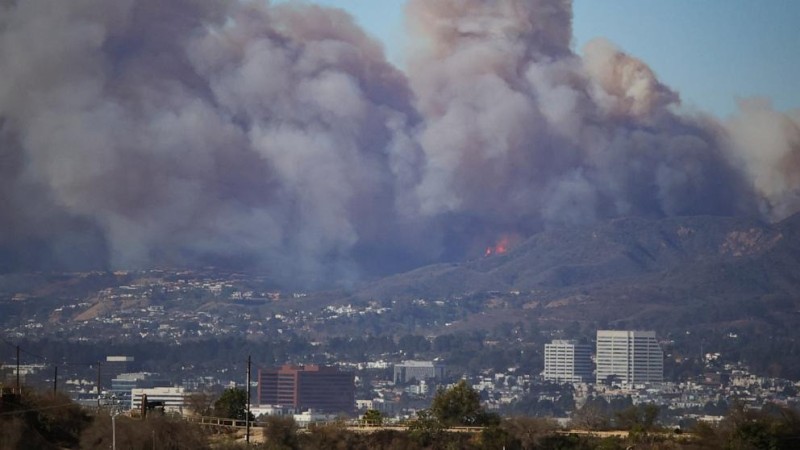
Among the major blazes include the Palisades fire, the largest of them all. It began on Tuesday and has scorched over 17,200 acres, including parts of Pacific Palisades.
Meanwhile, Eaton fire burned through northern Los Angeles, including Altadena, and has consumed about 10,600 acres.
Located north of San Fernando, the Hurst fire started Tuesday night and has spread to 855 acres.
The Lidia fire erupted Wednesday afternoon in the Acton area. Authorities have managed to contain 40% of the 350-acre blaze.
Meanwhile, the Sunset fire broke out in Hollywood Hills on Wednesday evening and rapidly grew to 43 acres.
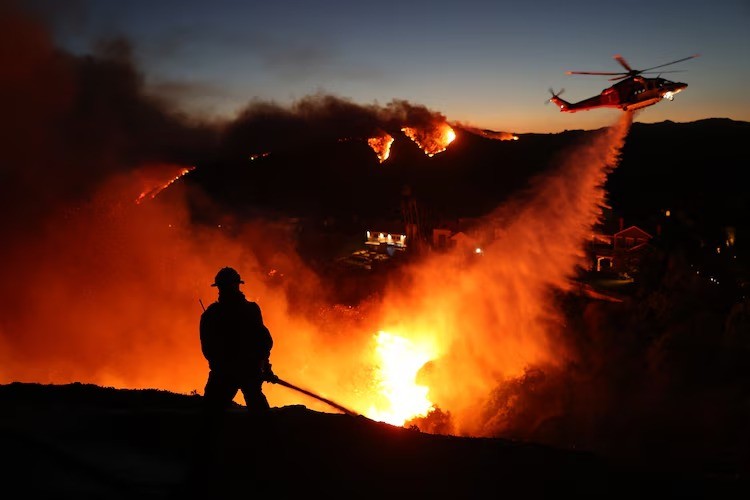
Firefighters were able to successfully contain the Woodley and Olivas fires.
Firefighters warn of worsening conditions. Hollywood Hills fire chief David Acuna described the situation as dire, with “zero chance” of containing the rapidly growing flames. Acuna blamed climate change for the unprecedented scale of the fires, saying to the press “We are in a significant position of threat.”
Wildfires are a common occurrence in California every year from the summer months of June/July when the weather becomes warmer and there is less rainfall, running through October normally. However, there has been a major uptick in recent years as the effects of drought have increased throughout the state, causing for there to be more dry underbrush and trees which easily allow for the blazes to spread.
Political sparks
President Joe Biden has declared the situation a major disaster and unlocked federal funding to help affected individuals and communities. However, the wildfires have also sparked political tension.
President-elect Donald Trump criticized California Governor Gavin Newsom for poor water management policies. Trump claimed on his social media site, Truth Social, that state decisions to protect fish species, like the smelt, have limited water supplies for Southern California. He accused Newsom of refusing to sign a water restoration declaration that could have redirected water to areas now facing fire devastation.
Meanwhile, Trump seems to continue to deny and belittle the climate crisis, the root cause of the uptick in forest fires. Just this past October, while visiting storm-ravaged Florida after the devastating aftermath of Hurricane Helene, the president-elect said that the hurricane was a result of nuclear “warming,” refusing to say “climate crisis.” It is “the warming that you’re going to have to be careful with,” he remarked vaguely, and later called the climate crisis “one of the greatest scams of our time” in a speech.
As Trump is gearing to take the highest US office on January 20, climate activists, policy makers and scientists are waiting with anxious anticipation as to what changes his administration will make in terms of environmental policy.