
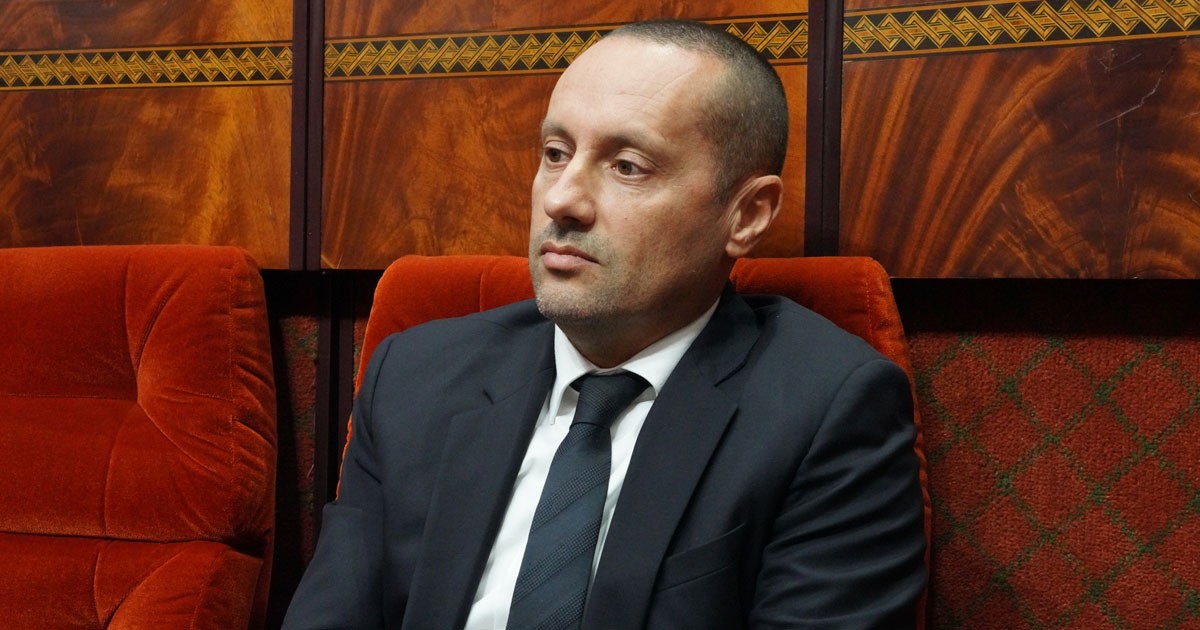
Rabat – On Tuesday, Minister of Health and Social Protection Amine Tahraoui announced a draft law aimed at reforming Morocco’s Basic Compulsory Health Insurance (AMO) system.
A key element of the reform is the proposal to centralize the management of AMO for the public sector under a single entity, the National Social Security Fund (CNSS).
During his presentation to the committee on education, cultural, and social affairs in the House of Councillors, Tahraoui explained that this shift would simplify and streamline the already existing system.
The draft law also plans to repeal provisions in law n° 116.12, which regulates AMO for students, and to introduce new eligibility criteria for individuals unable to afford membership fees.
Tahraoui pointed out that the reform draws inspiration from the framework law on social protection, which calls for the establishment of a unified management body and the revision of relevant legislative and regulatory texts.
A unified system under CNSS
The new legislation would place the management of AMO under CNSS’s authority for both public and private sector employees and for those unable to cover their membership costs.
Tahraoui explained that this responsibility would fall under the CNSS board of directors, ensuring a more unified and efficient approach to health coverage.
The draft law also outlines that CNSS will replace the National Fund for Social Welfare Organizations (CNOPS) in its agreements with mutual insurance companies.
However, existing agreements will remain in effect for a period to be determined by a decree. For current CNOPS beneficiaries, services under the third-party payment system will continue uninterrupted.
Student health coverage adjustments
The reform also addresses the health insurance needs of students. It proposes extending coverage to most students as dependents under the general AMO scheme.
Furthermore, it increases the age limit for unmarried students enrolled in higher education or vocational training from 26 to 30, with some exceptions for students in specific traditional education institutions.
Students who previously benefited from state-paid contributions will have the option to transition to a new regime designed for those unable to pay fees, provided they meet application deadlines.
Additionally, foreign students in Moroccan institutions will gain access to AMO through agreements between CNSS and the relevant authorities.
New eligibility and financial monitoring provisions
Under the new law, individuals seeking to access AMO coverage under the regime for those unable to pay fees must meet new eligibility criteria. Specifically, applicants must not be enrolled in any other health insurance system, either as a primary insured person or as a dependent.
They will also need to be registered in the Unified Social Register and demonstrate financial incapacity.
Tahraoui addressed the reform of penalties for late payments of AMO contributions, aligning them with penalties for late social security contributions.
He noted that CNSS would receive the necessary data to monitor the financial health of AMO systems effectively.
Expanding CNSS’s role
The proposed law also allows CNSS to contribute to public health initiatives, including medical exams, follow-ups, and awareness programs. These contributions will be detailed in subsequent regulations.
Lastly, Tahraoui confirmed that Article 81, which governs mutual insurance companies, would remain in place to ensure continued coordination with mutual societies. However, the decree-law establishing the Moroccan Health Insurance Fund will be repealed as part of the reform.
The draft law represents a significant step towards modernizing and simplifying Morocco’s health insurance system, looking to establish broader accessibility and greater financial stability.
Read Also: One in Four Moroccans is Without Medical Insurance, Report Finds