
Morocco is characterized by its rich and diverse terrain for many documentary films that seek to highlight the importance of the Moroccan multicultural identity and revive it through recalling local people’s memory. In this context, memory is defined as a mental process of remembering almost past events through evoking past stories, pictures, or places into the present.
Interestingly, the documentary film genre serves as a means to preserve these memories for future generations. Though this genre differs from other types of film production. Yet, it is still considered one of the most relevant genres that can mirror any society’s cultural and historical background and preserve its cultural identity through memory. Therefore, this article highlights the importance of documentary film in preserving one’s and a nation’s cultural identity through collective memory.
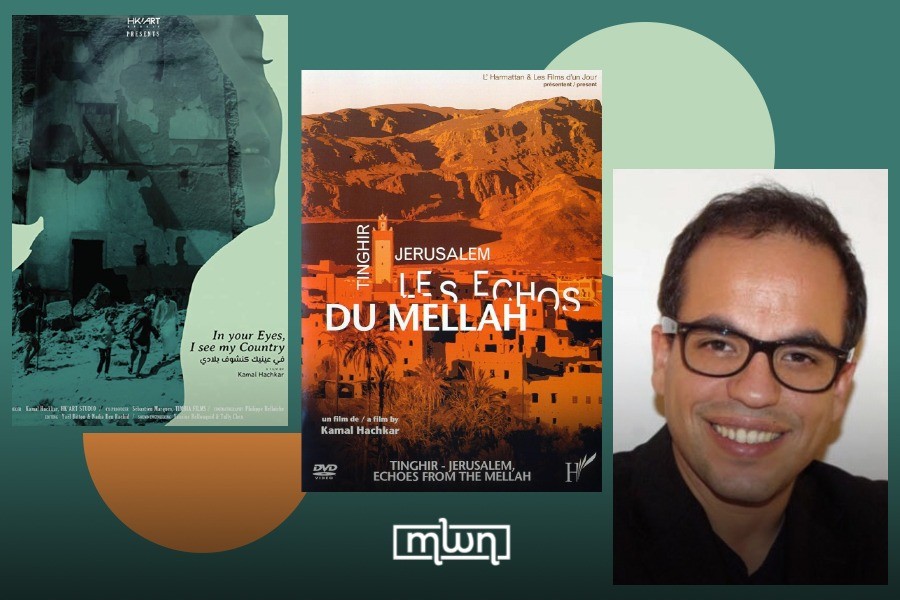
Hence, memory and postmemory represent key concepts for this paper argument. It is going to be mainly about the depiction of the Moroccan multicultural and collective identity through shared collective memory among Jewish and Muslim Moroccans. This article takes as a framework Kamal Hachkar’s two documentary films: Tinghir Jerusalem: les echoes du Mellah, which can be translated as Tinghir Jerusalem: Echoes of the Mellah (2013), and Dans tes yeux je voix mon pays, which can be translated as In Your Eyes I see my Country (2019).
Kamal Hachkar is a Moroccan-French filmmaker originally from Tinghir, a small city in the southeast of Morocco. Though he lives with his family as a Moroccan immigrant in France, he used to visit Tinghir regularly during summer vacation as many Moroccan immigrant families do. Those regular childhood visits to his origins, Tinghir city, have marked Hachkar’s adulthood as one depicted in his documentaries.
The aforementioned documentary films portray Tinghir’s inhabitants’ memories. Hachkar depends on different generations to narrate stories and recall shared memories about the past life among Moroccan Jews and Muslims to revive an existing collective memory among the present and future Moroccan generations. Undoubtedly, the collective memory that Hachkar highlights in his documentary films shapes the present multicultural and collective identity of Moroccan society and aims at preserving it for the coming generations of Moroccan Jews and Muslims.
Both documentaries underscore the coexistence among both communities to generate visual historical documents about a particular era in Moroccan history. Accordingly, retrieving the inhabitants’ collective memory is a process of rewriting history. Kamal Hachkar’s documentaries depend on theoretical concepts and frameworks of memory and postmemory in the formation of multicultural Moroccan identity.
Documentary Film for the Sake of Preserving Memory
It is worth noting that memory studies is described as a multidisciplinary field that emerged in the last decades in academic research. It is an interdisciplinary field of interest focusing on invoking stories about memories of the past in the present to preserve the future identity of nations.
Various critics propose multiple approaches to memory studies, notably historical memory, psychological memory, collective memory, and communicative and cultural memory approaches. It is considered by scholars as a new field of research that can help to rethink and rewrite societies’ histories. The notion of collective memory was first introduced by Maurice Halbwachs, a French sociologist who is considered the founding father of the memory studies, mainly “collective memory”.
In his book La Mémoire collective, 1950, Halbwachs illustrates that each individual in any society has an individual memory that contributes to the understanding of the past of a certain group within that society, which produces a collective memory of that society. These contributors are not only narrators of past events, but they lived and witnessed those past events before narrating and telling them as past stories as collective memory.
Halbwachs’ concept of “collective memory” leads several contemporary scholars to criticize him. Among these are Jan Assmann and Aleida Assmann, known for the development of the theory of “cultural and communicativememory,y” which has become an international or transnational theory. In this vein, Jan Assmann clarifies in his article “Communicative and CulturalMemory,” Jan Assmann refers to cultural memory as follows: “Cultural memory is a form of collective memory, in the sense that it is shared by a number of people and that it conveys to these people a collective, that is cultural, identity. Halbwachs, however, the inventor of the term “collective memory,” was careful to keep his concept of collective memory apart from the realm of traditions, transmissions, and transferences which we propose to subsume under the term “cultural memory.” We preserve Halbwachs’s distinction by breaking up his concept of collective memory into “communicative” and “cultural memory,” but we insist on including the cultural sphere, which he excluded, in the study of memory.” (Jan Assmann, 2008.)
Collective Memory and Postmemory to Revive Collective Identity and Roots
Kamal Hachkar’s documentary film Tinghir–Jerusalem: Echoes from the Mellah (2013) focuses on the collective memory about the past life among both Moroccan Muslims and Jews. Watching the film, the viewer may notice that the same stories are repeated with different narrators.
Nevertheless, the documentary film was realized in two different areas, one part in Tinghir and the other in Jerusalem. The memorized stories that the people in Tinghir remember are more or less retold by the Moroccan Jews who are now living in Jerusalem.
In this context, Hachkar insists that both communities recall the same past memories even though they live in different cultural contexts now. By doing so, he aims at reinforcing the Moroccan multicultural identity aspects, including the Jewish, Muslim, Arabic, and Amazigh cultures that exist in Morocco in general and Tinghir in particular.
In contrast to Tinghir–Jerusalem: Echoes from the Mellah, the film In Your Eyes, I See My Country (2019) concentrates on postmemory. This latter recalls communicated past memories to the “generation after” (Marianne Hirsch, 2012). Therefore, the next generation memory, or what Hirsch refers to as “generation after,” incorporates narratives preserved by those who witnessed those past events and creates its own imagined stories about its ancestors’ past memories.
Consequently, the narrator influences the receiver’s mind and imagination, which results in a new memory about the same past event that the latter had never witnessed. In Hachkar’s documentary film In Your Eyes I See My Country, Neta Elkaim, a young Jewish native Moroccan, has known Moroccan Jewish memories through her grandmother’s memories. Neta’s grandmother’s memory about Morocco and the Moroccan Jewish past life in Morocco has constructed Neta’s memory about her Moroccan identity and pushes her to search for her roots. It is all about a process of transmitting shared and collective memories about the past shared coexistence among Moroccans, Jews, and Muslims.
In Your Eyes I See My Country is about the journey of a young Moroccan Jewish couple, Neta Elkayam and Amit Haï Cohen, from Jerusalem to Tinghir. Neta and Amit have created a musical band through which they have revived the Moroccan-Jewish musical heritage. This documentary film focuses on memories of the Moroccan Jews who belong to the third generation about Morocco.
It is worth noting that both Neta and Amit were not born in Morocco. Their memories are not theirs, but they are remembered memories through their grandparents, who used to live in Morocco. Hence, the couple’s memories about Morocco are constructed in their imagination.
Furthermore, the film highlights the coexistence among the two different cultures that compose the Moroccan multicultural identity. The question of the identity of third-generation Moroccan Jewish and Muslim immigrants is discussed in the film by shedding light on shared stories about memories told by their parents and grandparents.
These memory narratives assist in the individual’s quest for the roots and the cultural identity. They help the third generation to look for responses to the question of identity and belonging through postmemory. Kamal Hachkar investigates memories of the Moroccan immigrant Jews searching for a collective, cultural memory of the diversity in the Moroccan cultural identity. The film investigates the search for roots and one’s cultural identity through the departure.
Neta claims that through reminiscing about her grandmother’s past life narratives about the Moroccan Jews in Tinghir, she has constructed her own imagined memories about Morocco, though she had never been to Morocco. The act of recollecting memories through a third generation’s memories is what Marianne Hirsch designates as postmemory. Hirsch defines postmemory as: “Postmemory” describes the relationship that the “generation after” bears to the personal, collective, and cultural trauma of those who came before—to experiences they “remember” only by means of the stories, images, and behaviors among which they grew up. But these experiences were transmitted to them so deeply and affectively as to seem to constitute memories in their own right.
Postmemory’s connection to the past is thus actually mediated not by recall but by imaginative investment, projection, and creation.” (Marianne Hirsch, 2012). As Neta and Amit represent the “generation after” in Hachkar’s In Your Eyes I See My Country, they have created their postmemory imagined narratives about the past life of the Moroccan Jews in Morocco.
Searching for identity through her roots and trying to define herself in the film, Neta addresses her husband Amit, saying, “I am half Amazigh, I am half Arab; who am I?” Then, Amit answers her back: “You are simply a Moroccan Jewish woman.” He reduces Neta’s identity as Moroccan and Jewish woman. Being Moroccan includes all other characteristics of the Moroccan culture that are shared among Moroccan Jews and Muslims. Having Moroccan roots means that Neta has a Moroccan multicultural identity that she inherited through her grandmother’s memories.
Throughout the film, she closes her eyes and sings, “In your eyes, I see my country,” expressing pain and regretting those precious memories that she retrieved through her grandmother’s narrated stories about the past life of the Moroccan Jews in Morocco. It is only through closing her eyes that she can reminisce and evoke postmemory collected and imagined in her own memory.
While the Moroccan Jews in Tinghir, Jerusalem, the Echoes of Mellah, prefer to remain silent in order to express their pain and regret about those collective memories in their Moroccan native country, Neta in In Your Eyes I See My Country sings instead. It is important to emphasize that memory is not only about recollecting painful events that marked history but could equally be about regretting a joyful past so as to elicit harmonious memories and recall positive stories that can be told to the future generation and bring hope for a better future. The third Moroccan Jewish generation almost has no idea about the past collective and shared memory among Moroccans.
This collective memory, which constitutes part of the main components of the Moroccan multicultural identity, is transmitted to the third generation by creating postmemory stories among them. Accordingly, the third generation establishes its own memories about a past life that it did not witness. Notwithstanding, the departure of the Moroccan Jews has marked most of Moroccan Muslims’ memory as well. In Tinghir, Jerusalem: the Mellah Echoes the Moroccan Muslims in Tinghir regret their Jewish neighbors’ departure.
The idea of recalling memory through the parents’ or the grandparents’ memory reinforces the third generation’s collective memory, which makes it produce a new collective memory of its own, which can be referred to as postmemory. The third generation shapes postmemory through generating its own imagined stories about nostalgic pasts lived and witnessed by its ancestors. The retrieved memories of the Moroccan Jews about their departure in Tinghir, Jerusalem: the Mellah Echoes reflect their painful memories and depict them through a long silence that expresses regret. However, in In Your Eyes I See My Country, the Moroccan Jews shun sad memories through singing old Moroccan popular Jewish songs instead. Singing not only helps the Moroccan Jews to evoke memories but also revives their Moroccan Jewish identity, which is, in fact, a major component of the Moroccan collective identity.
Comparing the two documentaries, in Tinghir Jerusalem, Echoes of the Mellah, Kamal Hachkar chooses Tinghir as the starting point searching for the collective memory and the common Moroccan identity of Jews and Muslims. Conversely, in the second film, In Your Eyes I See My Country, Hachkar begins the film from Jerusalem back to Morocco, scrutinizing Jewish third-generation Moroccan multicultural identity roots.
As the title In Your Eyes I See My Country implies, Neta sees her country, Morocco, through her grandmother’s eyes. Because once she closes her eyes, she remembers her grandmother’s memories about past life in Morocco. Neta conveys implicitly that she has known her native country through her grandmother’s eyes and memories. Customarily in the film, Neta expresses her constructed memories by singing.
Therefore, songs constitute part of the Moroccan multicultural heritage and collective memory of Jews and Muslims. In both films, the Jewish and Muslim women sing in Amazigh and Arabic old songs, reinforcing a sense of belonging to the Moroccan multicultural identity and emphasizing a shared collective memory through singing famous popular songs, not through narrated stories. While women mostly express their regret of the past life throughout singing, men in the films express it through silence.
The departure of the Moroccan Jews was painful for both Muslim and Jewish Moroccan communities. While Amit keeps silent, Neta sings, recalling and remembering their constructed memory about Morocco.
Both Neta and Amit did not witness the past life of the Moroccan Jews in Morocco; however, they live it through their parents’ and grandparents’ narrated memories. Therefore, both Neta and Amit have formed their own views, their own stories, and hence their postmemory. The way they have reshaped their parents’ and grandparents’ memories has formed postmemory narratives. Kamal Hachkar’s documentaries brought the viewer back into Moroccan history through memory and postmemory of Moroccan Jews and Muslims who are natives of Tinghir. Retrieving a collective memory among Moroccan Jews and Muslims by focusing on the third generation’s production of postmemory preserved for the future generations.