
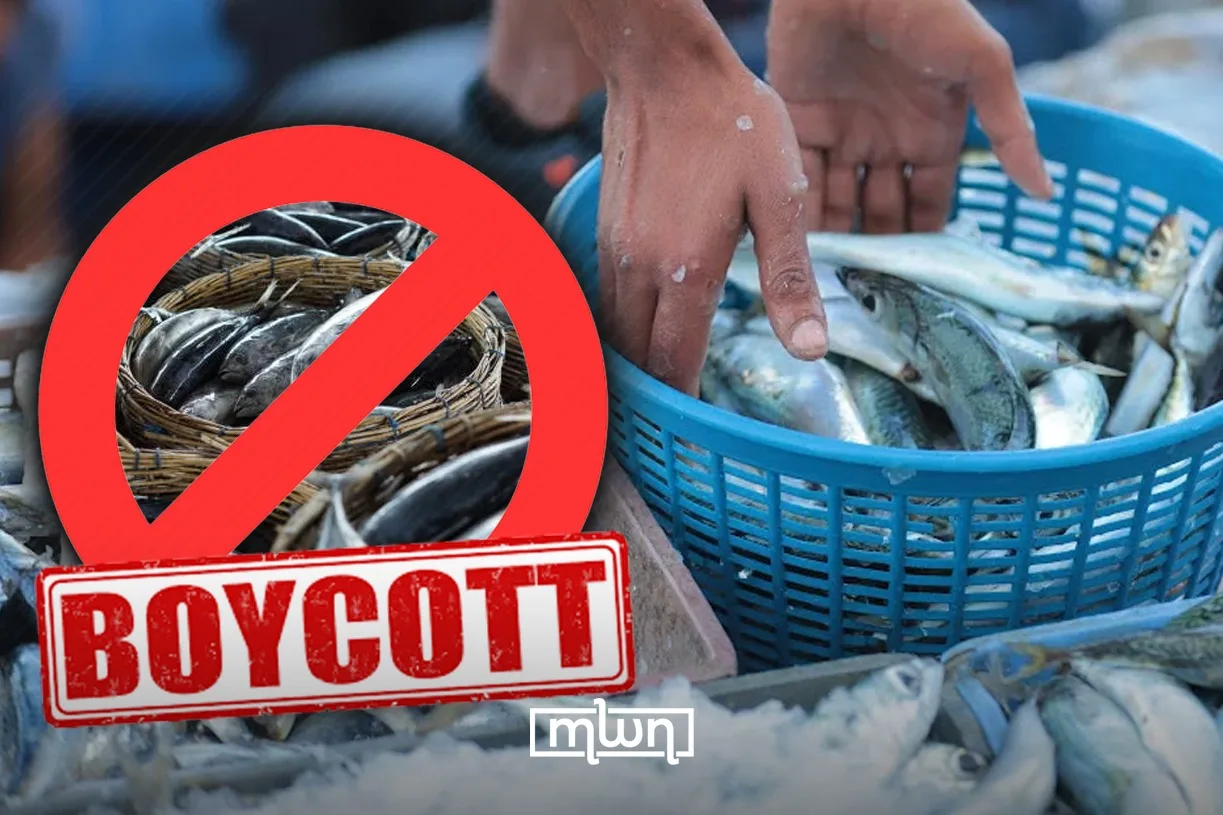
Rabat – Following a controversy over prices, Moroccan social media activists are calling for a campaign to boycott sardines during the holy month of Ramadan.
The campaign comes after authorities in Marrakech reportedly shut down a young man’s store that sold fish at the lowest prices compared to others in the market.
In closing the store, local authorities said Abdelilah, the owner, was not storing his products in the required hygienic conditions.
But social campaigners, who have chosen #خليه_يخناز (let it rotten) as their boycott’s hashtag, believe Abdelilah exposed the truth of the middlemen’s dishonest manipulation of fish prices.
Abdelilah, also known as Abdo or “Moul Lhout” (fish vendor) among netizens, said yesterday in a video that he is undergoing a fierce campaign and overload of pressure from people whose interests conflict with his initiative.
As the controversy lingers, the ministry in charge of the fish industry has made no official statements to provide a clear vision of what’s going on in the story of conflicting fish prices.
A heated debate is circulating on social media over fish prices accompanied by a tug of war. Some claim that Abdo is losing profit from selling fish at lower prices, compensating for that from TikTok and other social media platform gains.
Others believe that Moul Lhout has unveiled middlemen’s dishonest manipulation of prices.
Against the backdrop of this intense controversy, some Moroccan social media activists are calling for a campaign to boycott fish starting from the first day of Ramadan.
The Wali of Marrakech orders the release of Abdelilah’s fish
The Governor of Marrakech, Farid Chourak, ordered the release of Abdelilah “Moul El Hout,” receiving the young man in his office to let him know that he can reopen his shop and resume his activity.
Marrakech’s Wali also paved the way for Abdo to return to the wholesale market in the city.
Converging reports said that the governor assured the young fish vendor, who exposed the extent of controversy that raises the prices of fish, that he could contact him personally if he was subjected to any harassment.
Abdelilah appeared in a video surrounded by citizens while he was on his way back with his fish stock to reopen his store, saying “the Wali told me to give fish to the ‘poor.’”
The question remains: did Abdelilah win over middlemen’s manipulation of fish prices?
Citizens’ opinion on fish price controversy
Morocco World News (MWN) approached a fishmonger at Rabat’s central market and asked him about the ongoing controversy over fish prices.
The MAD 5 price is for a low-quality type of Sardines, the vendor said, adding that Abdo “sold the said sardines at lowest prices with no profit, but he compensated this by selling a similar kind to calamari charging the fish’s actual price.”
A citizen who was at the market to buy sardines said in an interview with MWN: “We know that fish prices in Morocco are subject to supply and demand, but officials should take the initiative to regulate fish prices’ manipulation.”
Officials “should interfere to make things clear to citizens about the actual prices of fish,” he added, citing recent declarations in which the federation of fish wholesalers urged their members to further lower their prices.
While the official price of a kilo of sardines is 15 dirhams, customers sometimes pay up to 25 dirhams for a kilo of the so-called poor man’s fish.
The fishmonger said that today’s price of sardines in the market is MAD 15 for a kilo, while the citizen confirmed to MWN that he bought one kilo for MAD 25.
Abdellatif Saadouni, President of the National Confederation of Fish Wholesale Vendors, said in an interview with Moroccan Channel 2M that the price of sardines in the wholesale market is MAD 6, adding that their responsibility stops at selling to retailers.
Saadouni further noted that officials should take steps and investigate the ins and outs of the change in prices, which according to him should be between 6 and 7 dirhams when they reach the final destination.
The controversy over fish prices has led many citizens to raise concerns over the government’s role in regulating and monitoring goods prices in the markets.