
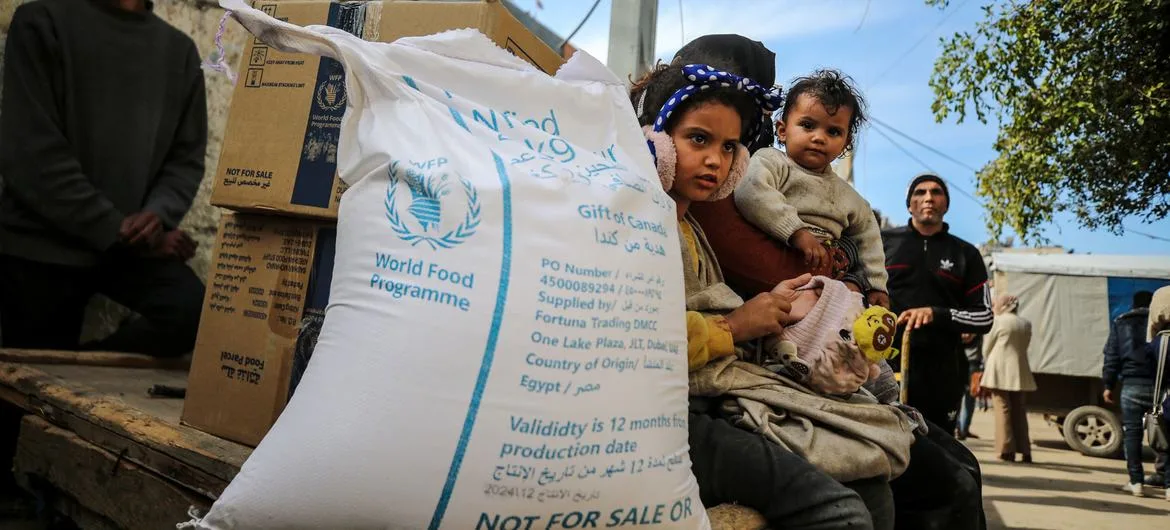
Rabat – According to new numbers from the United Nations, food prices have reportedly risen 100-fold since Israel cut the flow of aid into war-torn Gaza on Sunday, March 2.
While the initial timeline of the Israel-Hamas ceasefire deal, signed on January 19, affirmed that the Israeli Occupation Forces (IOF) would continue their withdrawal from Gaza during the second stage, Benjamin Netanyahu’s government demanded that Hamas release further Israeli hostages without holding its end of the bargain. The government says they want to extend the first phase through Ramadan.
Senior Hamas official, Sami Abu Zuhri recently accused Israel of exercising collective punishment and called the aid blocking a “war crime.” “We affirm that these pressures are meaningless, and we will not allow the occupation to impose a new format that goes beyond the signed agreement,” he said in an interview with Russian news agency, Sputnik.
Human rights groups and United Nations’ bodies have also de-cried Israel’s recent inhumane actions and warned that the halt of aid deliveries into the Palestinian enclave will be devastating for children and families struggling to survive.
“The aid restrictions announced yesterday will severely compromise lifesaving operations for civilians,” declared Edouard Beigbeer, UNICEF Regional director for the Middle East and North Africa. “It is imperative that the ceasefire remains in place, and that aid is allowed to flow freely so we can continue to scale up the humanitarian response,” he added.
Israeli government spokesperson David Mencer responded to the rising criticism during a press conference in Jerusalem by claiming that Hamas has “enough food to spark an obesity epidemic,” along with the baseless statement that “no one in Hamas is facing hunger.”
After cutting off the flow of food and supplies to Gaza at the end of the first phase of an already shaky ceasefire, Israeli authorities are reportedly threatening to cut off electricity and water, returning to the conditions during and prior to the genocide.
Gaza had been under naval and land blockade for 17 years prior to October 7. In 2018 the former UN Special rapporteur on the Situation of Human Rights in the Palestinian Territories, Michael Link, described the living conditions in Gaza as disastrous and warned that it will be “unlivable” by 2020.