
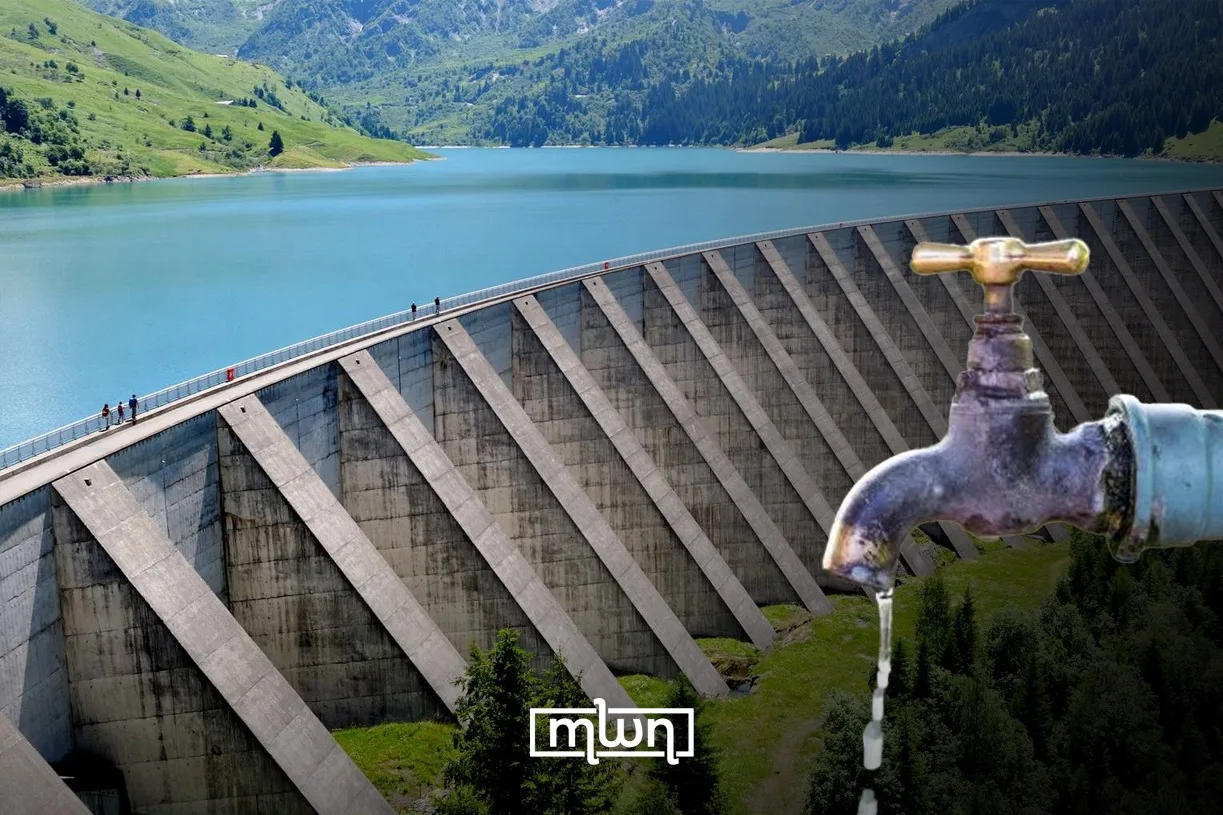
Doha – Heavy rains have returned to Morocco after seven years of drought, bringing relief to many regions and increasing dam levels across the country. According to official data, dam filling rates have improved from 26% last year to approximately 35% today, alleviating immediate concerns about water scarcity.
However, this improvement falls significantly short of the 68% filling rate recorded in 2018, indicating that Morocco’s water crisis is far from resolved. The recent precipitation has primarily benefited northern regions, which were less affected by water shortages, while central and southern areas continue to struggle despite the rainfall.
The situation has prompted water and climate experts to warn that these temporary rainfalls should not distract from addressing Morocco’s structural water challenges, emphasizing that drought is an inherent part of Morocco’s climate history that requires long-term management strategies.
‘Morocco has always been a country of drought’
Mohammed-Said Karrouk, professor of climatology at Hassan II University of Casablanca, told Morocco World News (MWN) that Morocco’s current water situation must be understood within its historical context.
“Morocco has always been a country of drought. This is structural, not something new. It existed before the establishment of the Moroccan state, before the Idrisid dynasty,” Karrouk said, criticizing government officials who make statements “with no basis in truth.”
He pointed out that despite being a drought-prone country, Morocco has managed to establish stability, build a state, and develop civilization throughout its history, which would not have been possible without the periodic return of rainfall.
The recent rains came after seven years of drought that “revealed the failure of water policies in Morocco,” Karrouk explained. He acknowledged that while Morocco has succeeded technically in building dams and developing various water management technologies, “we have not succeeded from a management, political, and social perspective.”
The heaviest rainfall has been concentrated in northern regions that “were not suffering from water shortages,” the climatologist noted, referencing dams that were at 30-50% capacity even after seven years of drought.
“These areas that didn’t have severe water shortages received the most water, causing small dams to fill rapidly to the point where some overflowed, which is another problem in dam management. A dam should not overflow,” Karrouk said.
While central and southern regions have also received rainfall, he added, these areas continue to face challenges. “The water table is still deep because it was heavily depleted and will take more time to recover,” Karrouk clarified. “The proof is that dams in these regions are not filling quickly because much of the water must first seep into the soil to reach the water table.”
He expressed skepticism about whether the government would learn from the current situation.
“I don’t think so, because we’ve said this repeatedly, and all Moroccans have heard it across all social, administrative, and political segments of the country. However, the prevailing policy remains focused on production, production, production, and export, export, export,” Karouk said.
“Water is a factor of administrative, political, and social stability as well as environmental, political, and food security. Those who were using this water to maintain power will not give up this power. Therefore, I do not believe that Morocco, with its various governments of all types, will change its water management policy.”
He further recalled: “When we developed dams, we increased water capacity. But what did we do? We expanded water usage—we encouraged water consumption.” For him, “this is the reason why the recent drought was so harsh on Moroccans. We created multiple activities linked to water. When the water stopped, the activities stopped, leading to unemployment and various problems.”
“The more water we have, the more we use water beyond what we need and beyond what we used before,” he concluded, citing as evidence the fact that when dam levels were lower than they are now, “we used less water in agriculture and things were fine.”
‘We sometimes think with the memory of a fish’
Abdelhakim El Filali, water and environmental expert and professor at Sultan Moulay Slimane University in Beni Mellal, shared a common point with Karrouk, going further in telling MWN that Morocco’s water crisis extends far beyond current rainfall patterns.
“Morocco has indeed experienced its sixth year of drought, a drought that naturally comes at a time when demand for water resources is increasing, whether in agriculture, industry, or drinking water,” El Filali stated.
While acknowledging the importance of recent rainfall in replenishing dam reserves and groundwater, he warned against complacency. “Unfortunately,” he lamented, “we sometimes think with the memory of a fish, where rainfall over two weeks makes us forget what we experienced for more than six years.”
El Filali also made the point that, contrary to alarmist reports, Morocco is historically familiar with alternating long dry and wet periods.
“What we’re experiencing today with climate change — the succession of dry years and wet years — is a characteristic and integral part of Morocco’s climate identity,” he argued. “This isn’t something we can consider new. What is new is the increasing intensity of extreme climate events, whether severe drought or sometimes severe flooding.”
He underlined that historical evidence, including references in the Quran’s Surah Yusuf and the Torah about seven dry years followed by seven wet years, confirms that the Mediterranean region “is marked by alternating dry and wet years, which necessitates rethinking how we deal with water resources from a scarcity perspective rather than an abundance perspective.”
He stressed, in particular, that the current rainfall, despite its importance, “cannot make us forget the water stress we’re experiencing and still experiencing in many regions. It cannot fill the deficit in dams and underground aquifers.”
As he sees it, “the problem will always remain if we don’t focus on consumption, because what brought us to where we are today is not just drought, but the unprecedented increase in water resource consumption.”
The water expert pointed to unsustainable water usage as a major factor in the crisis. As he revealed, “During these six years of drought, Morocco recorded unprecedented numbers in agricultural exports, which actually reflects a major problem in Morocco’s agricultural and water policies and highlights the contradictions between them.”
El Filali called for several urgent measures regardless of rainfall amounts. For him, “conserving water consumption, reviewing water and agricultural policies, and enforcing laws regarding water consumption are among the possible measures to exit the state of water stress.”
He criticized the delay in implementing planned infrastructure projects. “With a bit of objectivity, I can say that the water stress Morocco experienced over the last six years remains unacceptable, for a simple reason: if Morocco had implemented its outlined water supply policies, such as desalination plants that were scheduled to be ready in 2016, the situation would have been less dire.”
“It’s worth noting that 91% of wells are unlicensed,” El Filali disclosed, pointing to the widespread non-compliance with Water Law 36.15.
“Perhaps it’s time to take responsibility and establish in our general, water, and agricultural policies that Morocco, due to its location, will remain, regardless of circumstances, an area of alternating dry and wet years,” El Filali concluded, adding that “it’s time to link responsibility with accountability.”