
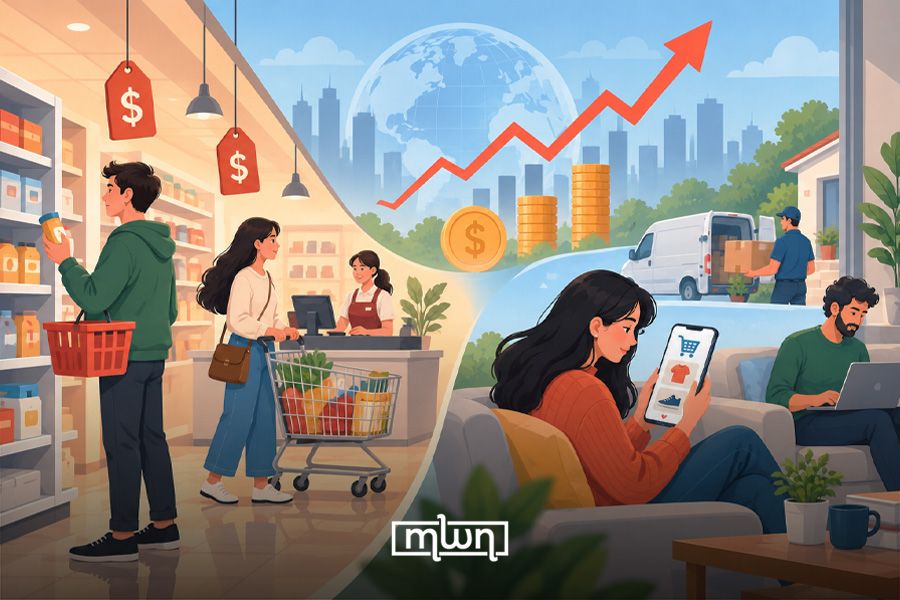
Casablanca – Moroccan consumers are looking for better deals on groceries while showing growing interest in shopping for food online, according to a new report by McKinsey & Company. Morocco has the lowest level of online grocery shopping among the five African markets surveyed, but ranks among the countries where consumers are most interested in trying it.
The report, State of Consumer Africa 2026: Meeting the Pragmatic Shopper, surveyed 9,036 consumers in Morocco, Egypt, Kenya, Nigeria, and South Africa. The Moroccan sample included 1,010 respondents.
Across the five countries, 73% of consumers said they stock up on products during sales, while 46% plan to look for promotions. Price also plays a major role in where people shop. Some 41% of respondents said they chose a retailer mainly because of its prices over the previous 12 months.
But cheaper does not always mean better for shoppers. Around 37% said they regularly pay extra for high-quality food, compared with 15% in Europe. Another 36% shop at several stores to find better-quality products, against 20% of European consumers.
What people buy is changing, too. Between 2024 and 2025, consumers’ intention to increase spending on alcohol fell by 58 percentage points, while the figure for snacks dropped by 35 points. For fresh produce, it rose by 31 points.
The report also notes that prices have consistently risen faster than wages across much of Africa. With less money left after covering everyday expenses, consumers are becoming more selective about their purchases. Some are cutting back on snacks and alcohol while continuing to spend on fresh food and other products they consider worth the price.
Traditional shops remain important in Morocco
Modern retail still accounts for a relatively small share of Morocco’s grocery market. McKinsey’s analysis of Euromonitor data puts formal retail’s share at between 25% and 30%.
Egypt records a share of 30% to 40%, while South Africa leads the five markets at 60% to 70%.
Discount chains such as BIM in Morocco and Kazyon in Egypt are expanding their presence by offering everyday essentials at lower prices and opening stores in convenient locations. Retailers are also looking at premium products to attract consumers who remain willing to pay more for quality.
Many shoppers continue to buy groceries in small quantities rather than making one large trip. Across the five markets, 73% of respondents said they make urgent grocery trips at least once a week to replace items they have run out of or meet immediate needs. These trips account for 44% of monthly grocery spending.
The number of consumers visiting several stores also increased, from 34% in 2024 to 38% in 2025. Shoppers may compare prices between retailers or visit different stores to find the quality they want. Limited cash and storage space can also make frequent, smaller purchases a more practical option.
Online grocery shopping faces a price problem
Online grocery sales account for around 3% to 5% of the African market, compared with about 10% in the US and 12% in the UK.
Morocco’s low adoption rate contrasts with consumers’ interest in trying online grocery services. However, getting shoppers to place an order is only part of the challenge. Retailers also need to give them a reason to keep coming back.
More than 30% of consumers who had stopped buying groceries online cited delivery fees and price markups as reasons for quitting. Another 18% pointed to problems with fresh produce, product availability, or delivery errors.
For 28% of respondents, shopping in person remained preferable because they wanted to inspect products themselves or had concerns about online payment security.
As the cost of everyday purchases continues to weigh on household budgets, retailers face pressure to keep prices competitive while giving shoppers the quality and convenience they expect.