 Join on WhatsApp
 Join on Telegram
Rabat – While Morocco continues to position itself as a leader in the transition to green energy, a new report on the country’s National Energy Transition from the IMAL Climate Think Tank said the effort is not meeting its full potential.
Morocco has the ability to become a leading country in its region for green energy by 2035, according to a press release from the IMAL Climate Think Tank. The New Development Model (NDM), which the Moroccan government implemented in 2021 with the purpose of carrying out this transition, stressed the importance of structural reforms to make this happen.
These reforms include creating a strong regulatory body, adjusting tariffs, restructuring the National Electricity Office (ONEE), promoting local energy production, and removing limits on natural gas access for industries.
Yet the IMAL Climate Think Tank’s March 2025 report, entitled “Morocco’s Energy Transition: Status of the Implementation of the New Development Model,” found that while the NDM had made some progress, it was lagging behind in meeting the goals set by King Mohammed VI when it was created.
“Imal believes that an accelerated implementation of the energy transition cannot be successful without a paradigm shift that approaches the issue from a more strategic and political perspective,” the press release said. “Rather than solely from a technical perspective, while also adopting greater transparency.”
The report calls for an accelerated transition, warning that delays could harm the national economy and competitiveness. Slow progress in reducing carbon emissions in the electricity grid may lead to higher costs, especially as other countries impose penalties for high emissions and Morocco’s dependence on fossil fuel imports strains financial resources.
The report also identified three key priorities for the NDM and several steps that must be followed to see that these priorities are fulfilled.
First, it called for expanding decentralized energy production, like rooftop solar, to cut fossil fuel reliance and boost jobs. In addition, it proposes to reassess long-term coal-linked electricity contracts that may harm Morocco’s economy and hinder climate funding efforts.
Lastly, to make Morocco a hub for green electricity trade, Imal wants to see improvements in regional energy connections, aligning Morocco’s electricity market with Europe’s. As well as reforms and decarbonization in the power sector and strong regulations that boost renewable energy production.
Morocco’s Energy Transition
The push for renewable energy in Morocco dates back to 2009 when the first comprehensive energy strategy was established. This initiative outlined short, medium and long-term objectives as well as legislative, regulatory and institutional changes.
The first phase, the National Plan for Priority Actions (PNAP), launched in 2009 until 2013 and focused on balancing the electricity supply and demand through increased production and the rationalization of energy usage.
In 2015, Morocco raised its renewable energy target from 42% to 52% by 2030 in response to the growing urgency of climate action. These initial phases created encouraging results, paving the way for the 2021 New Development Model.
King Mohammed VI established the Special Commission for the NDM in November 2019, tasking it with assessing Morocco’s progress and identifying gaps in its development across various sectors. Among the Commission’s key goals was a commitment to positioning Morocco as a leader in competitive, green energy.
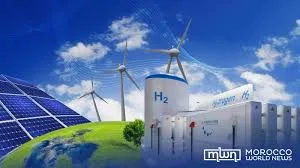
Morocco subsequently unveiled its green hydrogen strategy in 2021, aiming to use it domestically in industrial processes and as an alternative fuel and contributing to the country’s renewable energy ambitions. With its strategic geographic location and robust infrastructure, Morocco is poised to play a crucial role in the global green hydrogen market.
Prior to the transition – and even today – Morocco has relied heavily on natural resources, many of which are imports. The main consumer is the ONEE, which totals a consumption of 884.3 million cubic meters, according to the Policy Center for the New South.
The government’s growing shift to green energy aims for greater self-sufficiency and lower energy costs. Plans for this transition include developing key gas infrastructure to support industries, boost competitiveness for Moroccan exporters, and enable subcontracting in the natural gas sector.
Renewable Energy in Response to Drought
Morocco has long struggled with drought and is considered a ‘freshwater scarcity country’ by the UN Department of Economic and Social Affairs. At the same time, the latest Climate Change Performance Index ranks Morocco as the eighth most climate-prepared country in the world, deeming the nation a regional leader in sustainable development and GHG reduction.
Morocco’s climate challenges stem from its dry climate, limited renewable water sources, and poor farming policies that favor water-heavy crops, benefiting a few landowners while neglecting vulnerable agriculture communities.
According to a Princeton University study, such struggles with water and farming can be traced back to Morocco’s colonial history in which the French promoted water-heavy agriculture in the kingdom’s already dry environment. This legacy has left Moroccan farmers particularly vulnerable to the effects of climate change.
Renewable energy offers a promising solution to this ongoing challenge by providing sustainable power for desalination plants in southern coastal cities like Agadir. The nation-wide shift to green energy will also promote sustainable agricultural practices leading to less water waste.
Overall, Morocco’s goal of sourcing 52% of its electricity from renewable energy by 2030 will support global efforts to reduce carbon emissions, ultimately easing the impact of climate change on the country’s arid landscape.
The NMD outlined a plan to create a model that integrates electricity distribution, drinking water, and wastewater services under Regional Multi-Service Companies, with the goal of improving renewable energy integration and investment by placing responsibility in the hands of regional entities.
The IMAL Climate Report reveals that ONEE, a major energy consumer, has not followed this recommendation, instead persisting in practices that contradict it.
The report calls for a more holistic approach, emphasizing the decentralization of energy production, improved regional energy connectivity, and stronger regulatory frameworks to support renewable energy.
While Morocco has made significant progress toward its green energy objectives, the journey to achieving its 2030 targets remains challenging. The success of this transition will depend on ongoing reforms and strategic investments in the years ahead.