Rabat – Despite UN Security Council resolutions, Algeria continues to block the UN roundtable of talk initiatives on Western Sahara, shirking its responsibility as one of the four main parties to the Western Sahara dispute.
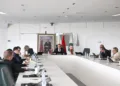
Algerian Foreign Affairs Minister Ahmed Attaf renewed his country’s reluctance to engage in the UN-led political process during a meeting with UN Envoy for Western Sahara Staffan de Mistura on Sunday.
According to a statement from the Algerian Foreign Affairs Ministry, Attaf reiterated “Algeria’s full support for the efforts of the UN Secretary-General Mr. Antonio Guterres and his Personal Envoy, Mr. Staffan de Mistura, aimed at reviving the political settlement process of the conflict in Western Sahara based on the UN Charter and principles of international legality related to decolonization.”
Attaf reiterated his country’s stance that they are not a party to the dispute.
De Mistura’s meeting with Attaf is part of his regional visit to discuss the dispute with the main parties to the Sahara dispute amid a stagnation at the level of the UN, which continues to fail to put pressure on the Algerian regime to engage in good faith in the political process to contribute to finding an agreed upon political solution to end the dispute.
Not a surprise, but it damages the process
Algeria’s regime prefers to refer to itself as merely an observer, despite its direct involvement as it hosts, finances, arms, and supports Polisario’s independence claims.
Despite this direct involvement, Algeria has repeatedly declined to engage in roundtable discussions initiated by the UN, bringing together all parties to discuss and deliberate a realistic and pragmatic solution.
Algeria’s reluctance has been documented in several UN Security Council resolutions as well as reports by the UN Secretary General.
In his latest report on Western Sahara last year, Guterres acknowledged Algeria rejected its role in the dispute.
“On 27 February 2024, my Personal Envoy met with the Minister for Foreign Affairs of Algeria, Ahmed Attaf, in Algiers, Algeria. On 16 April, he met again with Mr. Attaf on the margins of the Minister’s working visit to New York on Security Council matters.”
Attaf notably conveyed the continued focus of Algeria on “ensuring Western Sahara’s people the right to self-determination,” the UN chief added, further quoting the top Algerian diplomat as insisting that his country is not a party to the conflict.
UN Security Council Resolutions, including the latest Resolution 2756, called upon all parties to cooperate more fully with each other, a demand that has long been ignored by Algeria’s regime.
Critically, the Security Council recognized that achieving a political consensus would contribute to the stability and security of the region.
Algeria’s claims: disconnected from reality
Morocco has long exposed Algeria’s reluctance to shoulder its responsibility in the dispute.
In November last year, King Mohammed VI reaffirmed Morocco’s unwavering commitment to safeguarding the country’s sovereignty over its southern provinces.
In a speech which did not mention Algeria by name, the monarch unmistakably referenced the country’s regime’s hostile stance on Morocco’s territorial integrity and highlighted Algeria’s refusal to conduct a census in Tindouf camps.
The King stressed that clinging to the independence referendum amounts to being stuck in another “world clearly disconnected from reality” and “outdated theories and claims.”
The King also called on the UN to take bolder action in getting countries to distinguish between real or legitimate worlds and “frozen worlds disconnected from reality.
“Now is the time for the United Nations to assume its responsibility and spell out the major difference between the real legitimate world, represented by Morocco in its Sahara, and a world which is frozen in time, and which is disconnected from reality and the developments that have taken place,” the monarch said.
Omar Hilale, Morocco’s permanent ambassador to the UN, echoed the same remarks during a statement in October last year, rejecting Algeria’s attempts to undermine Morocco’s territorial integrity.
“It is Algeria that created the Polisario, it is Algeria that finances the Polisario, it is Algeria that pays the Polisario, and it is with Algerian passports that Polisario separatists travel around the world,” Hilale said, noting that the separatist group’s headquarters, the Tindouf camps, are also in Algeria.
Morocco has been stressing its four fundamental principles during its previous meetings with de Mistura.
The principles include Morocco’s support for the UN-led political process towards finding a mutually acceptable political solution, putting emphasis on the continuity of UN-sponsored roundtable discussions that engage all parties to the dispute.
Another key fundamental is Morocco’s Autonomy Plan as the only political solution to end the dispute.
Morocco also echoed its strict respect for a ceasefire by all parties as a prerequisite for the continuation of the political process