
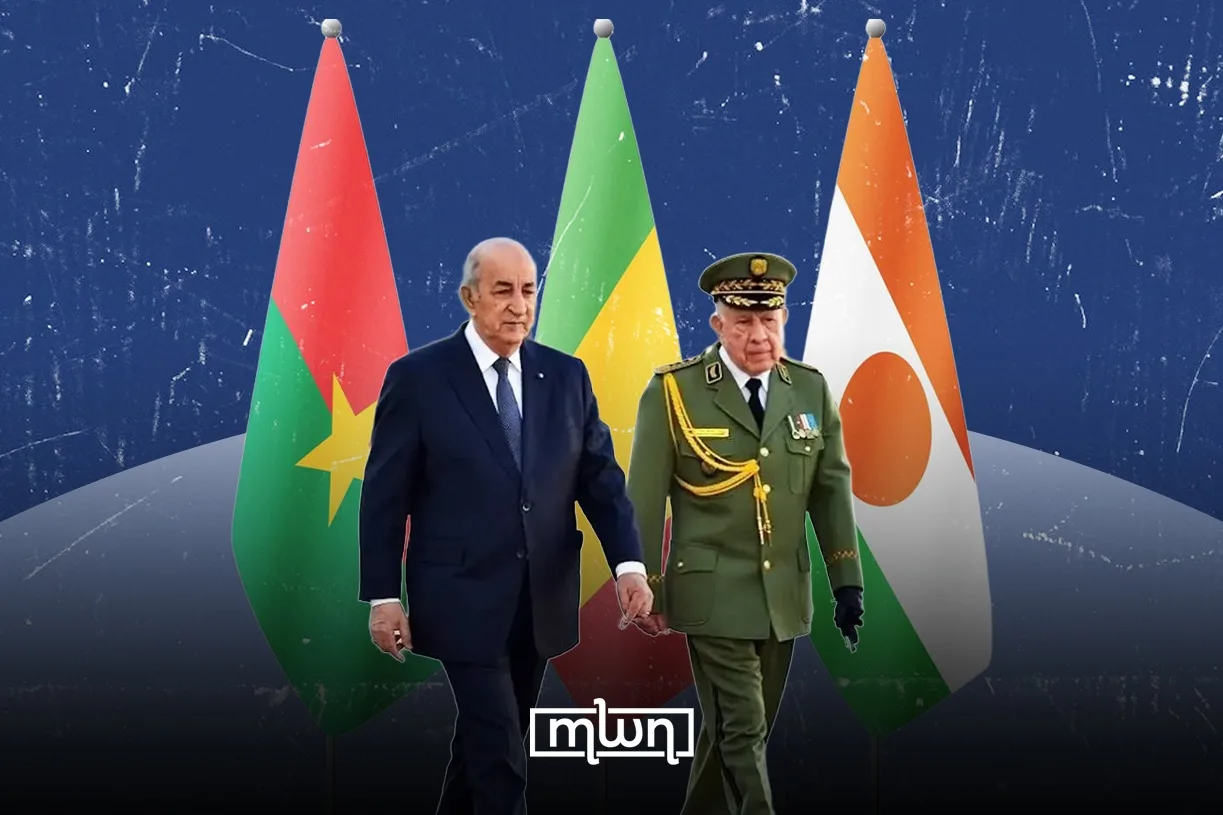
Rabat – Algeria continues to flare controversy after it announced the closure of its airspace to all flights to and from Mali, citing repeated drone incursions from its southern neighbor.
The move, confirmed in a statement issued by Algeria’s Ministry of Foreign Affairs, comes amid escalating diplomatic tensions and growing friction between Algiers and the military-led transitional government in Bamako.
According to the Algerian government, a Malian drone entered Algerian airspace during the night of March 31, crossing 1.6 kilometers into national territory before reentering on what it claimed was a “hostile path.”
Algerian forces confirmed that they shot the drone down. Officials also referenced two previous airspace violations in August and December of last year, all allegedly documented with radar data.
The timing of the airspace closure, however, raises broader questions. While Algeria framed the decision as a matter of national defense, the announcement followed a series of pointed accusations from Mali and its regional allies, Burkina Faso and Niger, who have accused Algiers of undermining their political sovereignty by harboring and sympathizing with armed groups in the Sahel. Algeria denies these charges, calling them “baseless” and “too unserious to warrant a reply” in its latest statement.
The language used in Algeria’s official response has drawn attention for its unusually combative tone. The statement described Mali’s leadership as a “clique” driven by personal ambition, blamed it for plunging the country into chaos, and portrayed Algeria as a scapegoat for internal failures.
It also expressed “deep regret” over what it called the “unjustified alignment” of Niger and Burkina Faso with Mali’s narrative, announcing that Algerian ambassadors in both countries would be recalled for consultations.
But some observers note that Algeria’s aggressive posture risks fueling further instability in a region already plagued by insurgencies, coups, and fragmented alliances. By closing its airspace and suspending diplomatic ties, Algeria may be narrowing the path to de-escalation at a time when coordination between Sahel countries remains critical.
Mali has not issued an official response to the closure as of yet. It remains unclear how this diplomatic rupture will affect broader security cooperation in the Sahel, where the balance of power is already shifting amid growing Russian influence and the gradual retreat of Western military forces.
“Algeria, notoriously considered a rear base for terrorist groups destabilizing the Sahel, has just decided to close its airspace to Mali starting April 7, 2025, citing alleged repeated violations of its airspace by the Malian state,” the website AES INFO wrote on X. “This hypocritical decision comes at a time when Algeria’s harmful influence in the region is becoming increasingly evident. In response to this measure, and given the persistent accusations, a firm reply and reciprocity from Mali are expected.”
Algeria’s interference in the Sahel region, notably in countries like Mali and Burkina Faso, is widely believed to be part of a broader pattern of destabilization that stretches across many nations. While Rabat continues to gain international momentum for its stance on the Western Sahara dispute, Algeria remains firmly entrenched in its campaign to undermine Morocco’s territorial integrity.
For decades, Algeria has backed the Polisario Front, a separatist group that seeks independence for Western Sahara, aiming to erode Morocco’s sovereignty over its southern provinces.
With full support from Algeria, the Polisario Front has carried out numerous terrorist attacks targeting Morocco’s southern regions. Over the years, the Algerian leadership in terms funded, armed the separatist group while giving it a platform to defend its claims in regional and international scenes.