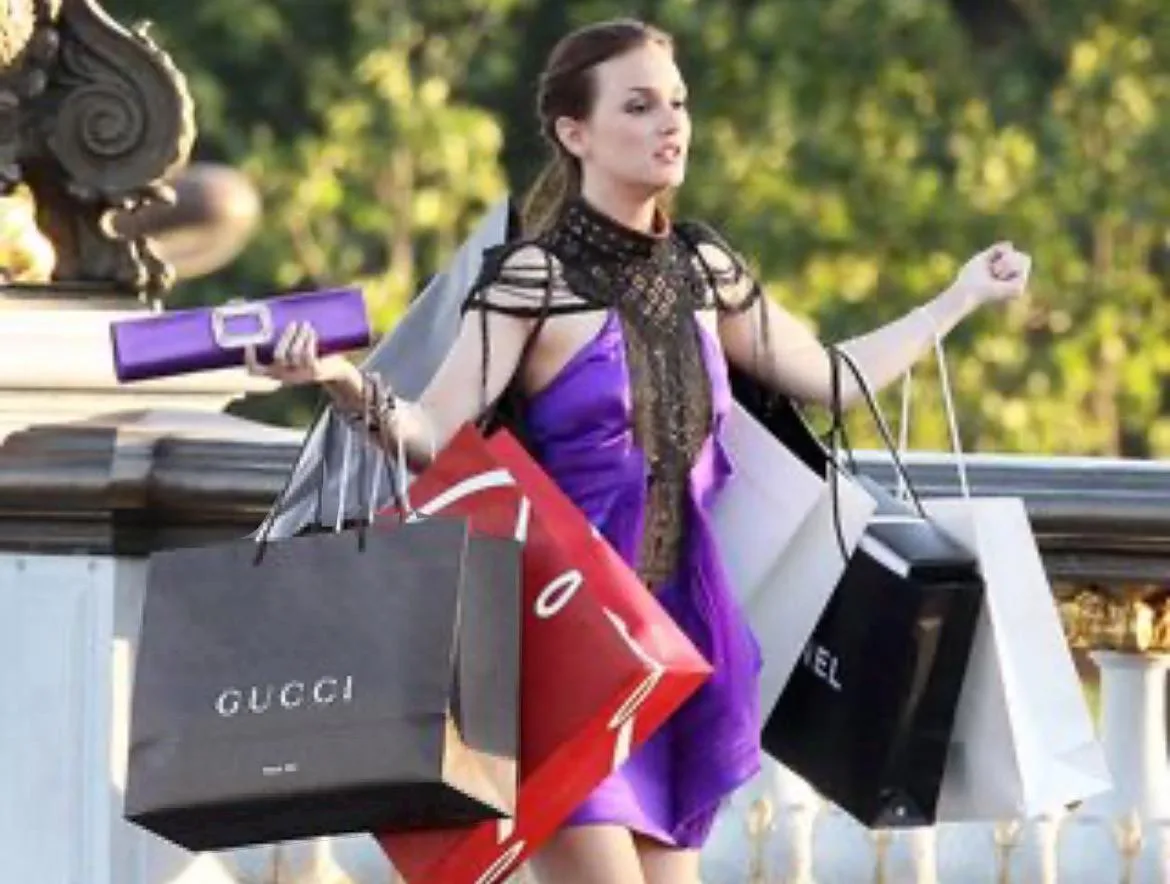
Rabat – People from all walks of life are familiar with luxury items – from Chanel, Gucci, Prada, Balenciaga,Dior, to Louis Vuitton. These brand names are sought after and duplicated in mass quantities. One can find a wide array of mock-ups in local markets around the world, reflecting the everyday person’s attempt to indulge in a luxury typically reserved for the pretty, happy faces they see on TV.
However, do we truly know how these opulent items are made, and if we did would we still buy them? A recent online trend is getting to the root of some of these questions. Chinese manufacturers and content creators have taken to TikTok to expose the inner workings of the luxury industry, revealing that many high-end brand items are manufactured in China at a low cost, only to be sold in the US and other markets at astronomically high prices.
This revelation spans major luxury names like Gucci, Fendi, Prada, Chanel, Hermès and Birkins – all of whom have a significant percentage of their products made in China.
While critiques of luxury brands being “rip-offs” that capitalize on consumer insecurities and the desire for social validation aren’t new, Chinese content creators are now pushing these discussions into the mainstream.
As a result, consumers are being prompted to reevaluate the true value they place on luxury goods and what that perceived worth is really based on, with many are beginning to see that high-end brands often serve as mere “high-markup middlemen” rather than genuine producers of superior quality—prompting a shift toward cutting out the middleman and going directly to the source: China.
While fears of a trade war grip people in the US and around the world, Canadian investor and Shark Tank star Kevin O’Leary recently voiced support for Trump’s tariffs, controversially suggesting that the U.S. should “train Beijing like a puppy.”
“It’s almost…the analogy is like a puppy when you’re training it. You stick the nose in the poo poo, and you roll up a newspaper and you smack it on their rear end,” said O’Leary.
Recent developments, however, suggest the training might be going in the opposite direction. “You should have left them alone,” remarked one content creator in response to the US attempts to disrupt China’s manufacturing dominance.
Some observers argue that luxury items serve as more than just status symbols, deeming them a form of “soft power” for the West. In fact, the dominance of Western culture through movies, music, and television creates an invisible grip on global perception, positioning American and European products as the “gold standard” of quality and desirability.
“China’s showing that 80% of anything you buy that’s Gucci is made in China, that over 60% of what you buy from Prada is made in China. The only difference is they ship it to Europe and stitch on a ‘Made in France’ or ‘Made in Italy’ label,” noted one TikToker.
“It’s like pulling the curtain back in The Wizard of Oz and realizing there’s no real magic behind the person running the show,” he added.
Luxury fashion is often the first visual marker of status, beauty, and an effortless life, with this illusion of modernity and refinement functions to separate the “civilized” from the “uncivilized” and the poor from the wealthy. It’s ironic, then, that this very illusion is being manufactured in China.
In addition to China’s massive and highly productive manufacturing capacity as well as its business-friendly regulation towards foreign investors, the country has also remained an attractive destination for global corporations due to its significantly lower wages compared to the US and Europe.
While the US has been accusing China of “stealing” from the US and exploiting trade agreements, Chinese factory workers have borne the brunt of this system, getting paid a fraction of what an American counterpart would earn–an amount that is increasingly inadequate in the face rising prices, and even more minuscule compared to the profits reaped by businessmen who are the true benefactors of this global cycle of labor exploitation.
According to the Apollo Academy, in 2024 manufacturing wages in China were approximately 20% of those in the United States, while in India they were at just about 3%.
This trend is still unfolding, but as these truths become more widely known, people are beginning to question whether luxury goods will maintain their perceived value. As the illusion fades, a new world may be taking shape — one where Western consumerism begins to lose its grip.
‘A new kind of nationalism’
Before Trump’s sweeping tariffs were announced, CNBC reported in March that the global luxury goods market — worth $380 billion annually — had seen a 2% decline in 2024, largely due to shifts in China.
Over the past few years, the industry has lost around 50 million Chinese consumers as buyers in the country have increasingly turned away from mainstream luxury brands.
The report attributes this decline in part to the aftermath of COVID-19, which left China’s youth grappling with an economic downturn and a youth unemployment rate that soared to 20%. But more significantly, the report points to a psychological shift among young, affluent consumers.
“Rather than buying stuff and status, young people wanted experiences and memories. So the whole market shifted,” it stated.
Another key factor identified in the report is the emergence of what they term “a new kind of nationalism” in China. This rising sentiment has led many Chinese consumers to favor local luxury brands over European ones — especially given that similar high-end quality can be found at a fraction of the price when manufactured domestically.
“Ten years ago, China accounted for half of all luxury sales in the world. That number was expected to grow. Instead, China now represents just 12% of global luxury goods sales,” the report concluded.
Skyrocketing tariffs on China
On Friday, April 11, US Customs and Border Protection issued a notice announcing that electronics imported into the United States will be exempt from both the standard 10% global tariff and the significantly higher tariffs on Chinese goods.
This exemption applies to products entering the US or released from bonded warehouses as early as April 5, including those subject to the steep 125% levies imposed on Chinese imports.
This development follows President Trump’s recent imposition of a sweeping 145% tariff on Chinese goods, citing national security concerns and China’s alleged involvement in the fentanyl trade. The electronics exemption, however, does not cover a specific 20% portion of the tariff that Trump claims is directly tied to China’s role in the fentanyl crisis.
The announcement comes amid growing pressure from US tech companies, many of which warned that sharply increased import costs could cause consumer prices to surge, especially since a large share of electronics sold in the US are manufactured in China.
“This is the dream scenario for tech investors,” said Dan Ives, global head of technology research at Wedbush Securities, in a post on X. “Smartphones and chips being excluded is a game-changer when it comes to China tariffs.” Ives added that tech giants like Apple, Nvidia, and Microsoft can breathe a huge sigh of relief.
Reports indicate that up to 80% of iPhones intended for US sale are produced in China, with the remaining 20% manufactured in India. In light of the tariffs, Apple has reportedly accelerated its efforts to ramp up production in India to reduce its dependence on Chinese factories.
The White House framed the exemptions as a strategic move to give companies time to shift manufacturing to the United States. “President Trump has made it clear that America cannot rely on China to produce critical technologies such as semiconductors, chips, smartphones, and laptops,” said White House Press Secretary Karoline Leavitt.
“At the president’s direction, these companies are hustling to onshore their manufacturing in the United States as soon as possible.”
President Trump promised further clarification on the exemptions in the coming weeks. “We’ll be very specific,” he told reporters aboard Air Force One. “But we’re taking in a lot of money. As a country, we’re taking in a lot of money,” he promised.