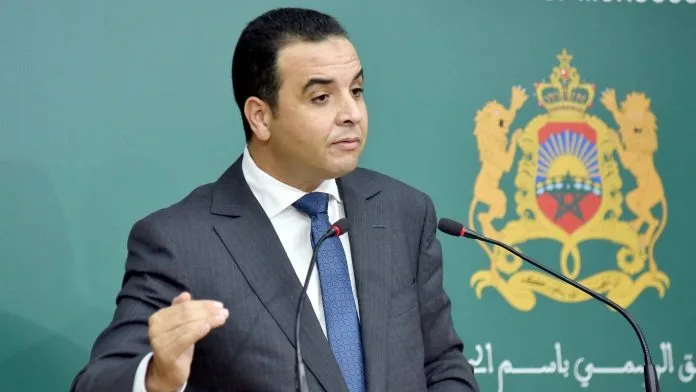
Rabat — Moroccan Delegate-Minister to the Head of Government and spokesperson Mustapha Baitas announced that the country’s social dialogue program is projected to cost MAD 45.7 billion ($4.93 billion) by 2026, with expenditures expected to exceed MAD 46.7 billion in 2027.
Speaking after the weekly cabinet meeting on Thursday, April 24, Baitas described the government’s efforts as “exceptional and unprecedented in the history of social dialogue,” noting that the initiative will directly benefit more than 1.1 million civil servants.
The reforms are set to positively impact millions of Moroccan households, with the average net monthly salary anticipated to reach MAD 10,100 ($1088) by 2026. The minimum wage for civil servants will also see a significant increase to MAD 4,500 ($485) as of July 1, representing a 50% boost.
Baitas added that, towards these efforts, social dialogue is serving as a strategic mechanism to reinforce gains for the working class and advance labor rights in the country.
Earlier this week, Morocco’s Minister of Economic Inclusion Younes Sekkouri reaffirmed the government’s commitment to fulfilling its promises under the social dialogue framework. He confirmed that the second MAD 500 ($53) salary increase will be disbursed in July 2025, following the initial MAD 500 raise granted last year.
The latest round of the government’s social dialogue efforts began on April 22, led by Head of Government Aziz Akhannouch. The event brought together senior officials, labor union representatives, and private sector stakeholders to evaluate achievements, address pending reforms, and resolve sector-specific issues. The discussions also included a renewed pledge to institutionalize social dialogue and prioritize the concerns of local government employees.
Morocco’s current institutional framework for social dialogue dates back to April 2022, when a landmark agreement was signed between the government, labor unions, and employers under Akhannouch’s leadership. This signals the larger role of social dialogue in building reform in the Moroccan government — not as a one-time negotiation, but as a foundational pillar of long-term social and economic policy.