 Join on WhatsApp
 Join on Telegram
Traveling Morocco gluten-free? Don’t worry! You can still savor the country’s famous tagines, sweets, and markets without compromising your health or taste buds.
Whether you have celiac disease or a gluten sensitivity, eating in a new country can feel overwhelming, especially in one where the cuisine is rich in bread, pastries, and flour based dishes. But don’t cross harira off your bucket list just yet. With a little planning and a few go-to spots, you can enjoy authentic Moroccan food while staying gluten-free.
What to Know Before You Go
Before arriving, prepare a few basics: download a translation or allergy app to help communicate your needs (Google Translate or Jibbigo works well offline). It’s also super useful to carry an allergy card in French and Darija explaining your gluten intolerance to bring to restaurants. This can make a big difference when navigating restaurants and street food vendors.
If staying in a hotel or riad, you can contact them ahead of time to ask about gluten-free options or nearby recommendations.
Some accommodations are happy to cater to dietary needs with advance notice- always reach out beforehand and follow up once you arrive to make sure staff are aware of your needs.
Dishes to Approach With Caution
Gluten shows up in more places than you’d think. Some of Morocco’s most iconic dishes use wheat, semolina, or barley, even when it may not be obvious.
Here are a few to be aware of: harira (Traditional soup often thickened with flour or barley), “pastilla” (a sweet-savory pie made with thin warqa pastry, couscous (made from semolina and often the Friday special in many homes and restaurants), and “dchicha” (a barley-based porridge or soup). If you’re unsure, ask how the dish is prepared or opt for alternatives like lentil soup, “zaalouk” (eggplant dip), or fresh grilled fish and vegetables.
Eating out
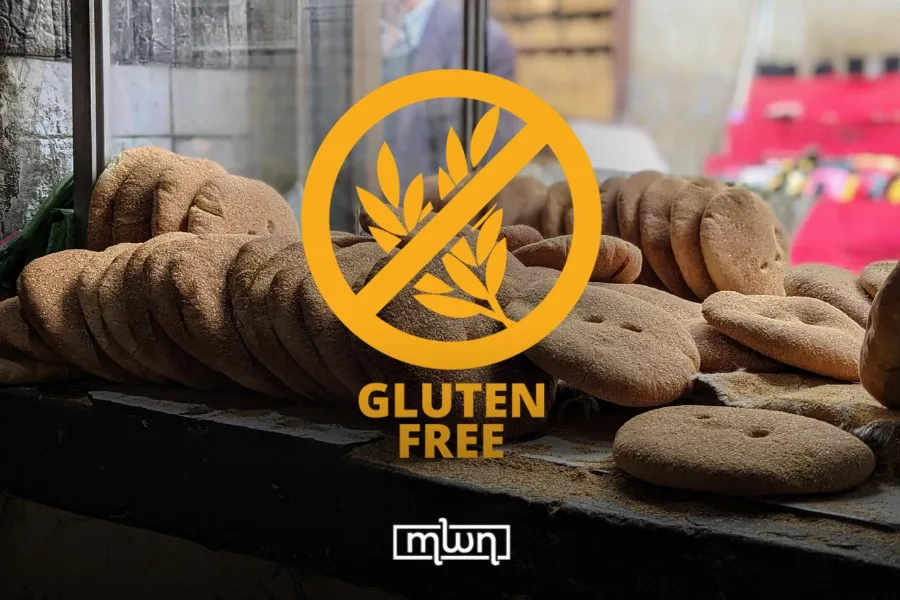
When eating out it’s also a good idea to bring your own bread. Tagines, grilled meats, and veggie sides are naturally gluten-free but are often served and eaten with khobz (Moroccan bread). The fix? Bring your own bread!
In most cities in Morocco, there’s either a Marjone or a Carrefour market right around the corner with a seperate gluten free section offering many alternatives including wraps, crackers, sliced bread and more. Markets and bio shops like Naturia BioShop are also a great source of gluten-free treats and pantry items. Stock up on your choice and keep them on hand for meals out.
But not to worry if you don’t happen to have your own substitute with you as with popular cities like Rabat, Marrakech, Casablanca, Tangier, and Chefchaouen, you’ll find more awareness around food allergies where some restaurants offer gluten-free menus or desserts, so don’t hesitate to ask staff for modifications or substitutions.
Sweet Surprise: Gluten-Free Pastries Do Exist
While most traditional Moroccan sweets include wheat, there are many bakeries and cafes that have delicious gluten-free versions from almond-based ghriba, to date-stuffed cookies.
In the capital Rabat, a great option is looking for the online bakery “Assiette Saine” whose products can be found not only in Carrefour markets, but at pop up stands in the Arribat Center, and various other locations in Rabat.
Some other great options that offer many tasty gluten free options are restaurants like Cafe Clock with locations in Fez, Marrakech, and Chefchouan, as well as bakeries in Marrakech like Monquotidien Gueliz, AnaYela, and Henna Art Cafe.
So don’t worry about having to skip Moroccan cuisine just because you’re gluten free, with a little creativity and the right resources, you can fully experience Morocco’s vibrant food culture minus the wheat.