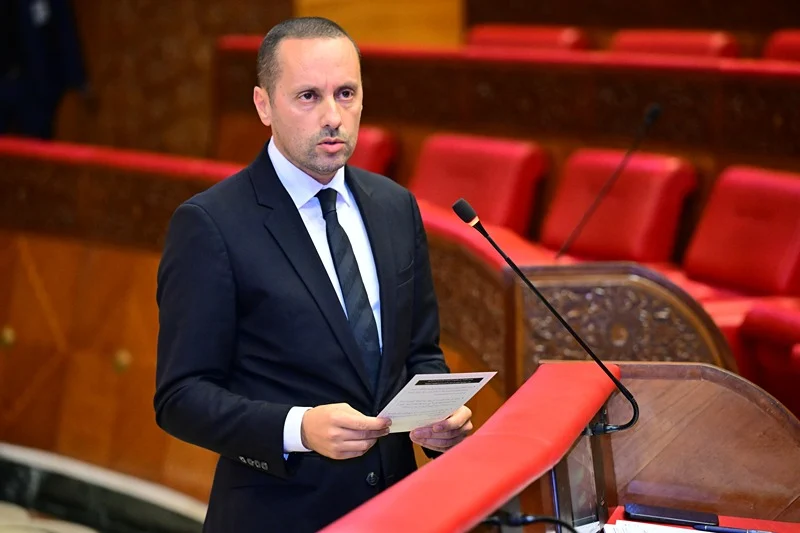
Doha – Morocco has recorded an 80% decrease in measles cases compared to the peak registered 16 weeks ago, according to Health and Social Protection Minister Amine Tahraoui. Speaking at the House of Representatives in Rabat on Monday, Tahraoui announced that the national weekly incidence rate has fallen to just one case per 100,000 people.
This reduction comes as a result of an intensive vaccination campaign implemented by the ministry following the initial outbreak. The campaign has successfully pushed the national vaccination coverage rate above 95% among children under 18 years old, meeting the threshold recommended by the World Health Organization (WHO).
The health ministry has been working since the first cases appeared to develop a comprehensive national plan to combat the spread of measles, accompanied by various field measures.
As of May 16, authorities had verified the vaccination status of more than 10.76 million children under 18, representing 98.57% of the target population. Through this process, 754,202 unvaccinated or incompletely vaccinated children were identified.
Through a large-scale field mobilization, 586,912 of these children have now been vaccinated, achieving a completion rate of approximately 78%. This has helped reduce the vaccination gap and limit the spread of the epidemic.
The campaign has enabled the administration of a total of 801,702 doses of measles vaccine, including booster and preventive doses.
Read also: ‘Bouhemroun’: Measles Outbreak Claims Lives in Morocco’s Remote Regions
The recent measles outbreak in Morocco hit concerning levels. WHO reported that from October 1, 2023, to April 13, 2025, the North African country saw over 25,000 suspected measles cases across all 12 regions, including 13,706 confirmed infections and 184 deaths.
The resurgence of measles, which had almost disappeared in Morocco, was largely attributed to the rise of anti-vaccine sentiments. Health officials noted that the global anti-vaccination movement influenced Moroccan parents, despite the country having measles vaccination programs in place since the 1960s.
During the COVID-19 pandemic, vaccination rates decreased due to lockdowns and fears of infection in hospitals. Some parents developed a “vaccine phobia” following the pandemic, requiring health workers to conduct interviews explaining the benefits of vaccination.
The government responded with awareness campaigns in schools and public warnings about false information spreading on social media, including misleading claims that the measles vaccine was actually a fourth dose of the COVID vaccine.
The Ministry of Health plans to maintain these gains by continuing campaigns and awareness activities, taking into account the local specificities of different regions across the country.
The ministry also mentioned strengthening the technical, managerial, and communication skills of health personnel, as well as accelerating the digitization of the information system, currently in a pilot phase, to create a national vaccination registry.