
Officials from Cambodia and Thailand met in Phnom Penh on June 14 to discuss their conflicting territorial claims. This comes after a recent rise in regional tensions, and a violent clash that killed a Cambodian soldier on May 28.
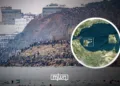
This meeting made little progress in terms of the disagreement between the two nations. On May 28, the two sides exchanged fire on an area referred to as the Emerald Triangle, as it is where the borders between Cambodia, Thailand, and Laos meet. Both sides said that they acted in self-defense and the tensions remain.
Bangkok has since taken tighter control at all the country’s border crossings and threatened to cut off electricity supplies to Cambodia.
Cambodia responded stating that it was on “Full Alert.” Hun Manet also announced that the country would stop buying Thai electric power, internet bandwidth and stop local television channels from displaying Thai films.
Former leader and father of the Prime Minister Hun Sen gave an ultimatum to Thailand stating that unless the Thai government lifts the restrictions in 24 hours, he will “implement throughout the border a ban on imports of fruit and vegetables.”
The Thai Prime Minister Paetongtarn Shinawatra stated that the country would not be bullied or threatened by Cambodian Pressure. Also, Shinawatra said this would damage the current diplomatic efforts to bring peace in the region.
This comes after Cambodia sent the border crisis to the International Court of Justice at the Hague. With Hun Manet stating, “Cambodia chooses a peaceful resolution based on international law through the ICJ mechanism for solving the border dispute.”
Deputy Prime Minister Pak Sokhoon is seen holding a letter on social media which is reportedly for the Hague.
Bangkok however, has consistently stated that it does not recognize the court’s decision on the issue. Thailand has always stated its preference is to hold bilateral discussions to solve the conflict.
There will be another meeting between the two countries at a conference in Thailand in September. Despite this, current tensions continue to rise and have the potential to destabilize the Southeast Asian region.
This dispute dates back to the Indochina period of French colonial rule between 1887 and 1954, when the borders were put in place.
Since independence, there has been consistent disagreement between the two sides on the 817km border. When Khmer Rouge leader Pol Pot fell, he escaped the country into Thailand.
In 2008, there was an outbreak of violence, which has continued sporadically since, resulting in the deaths of around 28 people.