


 Join on WhatsApp
  Join on Telegram
 Rabat – The International Court of Justice at The Hague in the Netherlands handed down a ruling on climate justice and accountability on Wednesday. This follows a long, landmark legal case initiated by Vanuatu.
The court has ruled that developing nations have the right to seek damages for the impacts of climate change, such as destroyed buildings and infrastructure. Nations can also sue for compensation.
However, these decisions would need to be made on a case-by-case basis, and be supported by strong evidence linking the damage to climate change. . During the evidence-based hearings in December last year, the court heard from a number of different nations on ecological damage.
The ICJ opinion can also lead to countries that are the biggest emitters being sued for fossil fuel production. It also opens the door for smaller nations to present their cases.
The case was brought forward by Vanuatu, a small Pacific Island nation, and backed by 130 countries, as many states have faced threats from climate change and harsh environmental conditions.
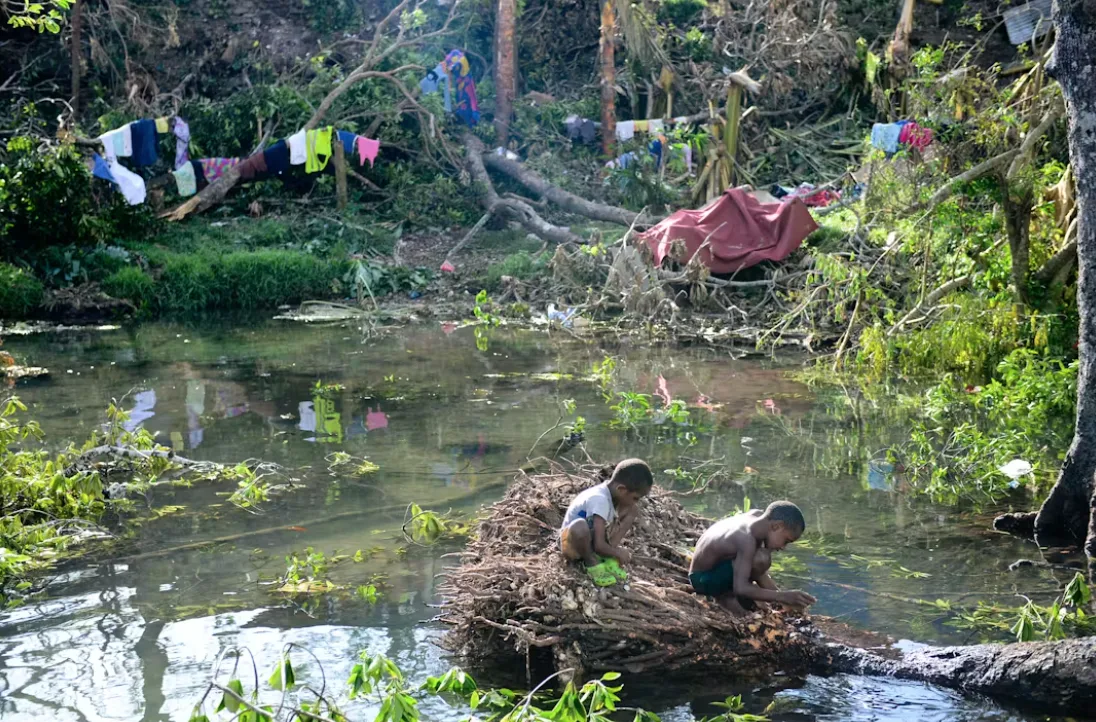
Vanuatu’s coral reefs have recently suffered from a series of devastating natural disasters, rising sea levels, and climate change. This has resulted in widespread coral bleaching across the nation in what the government has referred to as ecocide.
The decision is non-binding but will be considered a legal benchmark in terms of environmental law. It is the first-ever opinion on climate change and ecological justice. It will serve as a standard for future court decisions.
This is one of the largest cases overseen by the ICJ, with judges having been through tens of thousands of pages of documents and heard over two weeks of oral arguments. Fifteen judges from the ICJ announced their decision on Wednesday.
The decision of the court is non-binding at the present time, but it has the potential to be used by national governments and international organisations. The judgment goes further than climate change agreements like the Paris Climate Agreement and COP decisions.
Joie Chowdhury, a senior attorney at the Centre for International Environmental Law, told the Associated Press that this case “makes this so important because it addresses the past, present, and future of climate action. It’s not just about future targets, it also tackles historical responsibility because we cannot solve the climate crisis without confronting its roots.”
The case was first sent to court in 2023, and Vanuatu presented its testimony in December. Activists have insisted that the UN Framework Convention on Climate Change is not enough, and in their opinion, the ICJ is “the only international jurisdiction with a general competence over all areas of International Law, which allows it to provide such an answer.”
Many similar court rulings have been made recently, including the Inter-American Court of Human Rights, which found that countries have a legal duty to avoid environmental harm and to protect ecosystems. The European Court of Human Rights came to a similar conclusion.
This decision will outline the obligations of nations and potential penalties for the negative effects of ecocide. It will also seek to have ecocide seen as a crime under international law.
It will look at what states should be doing in terms of their human rights obligations and the impact of the sea-level rise and climate change. It will also look at the potential for action to be taken by bigger states, which are the largest contributors of Greenhouse Gas emissions, towards smaller, more affected states.
Action on climate change has become more vital in recent years as the effects have intensified exponentially over the last decade, with sea levels rising by an average of 4.3 centimetres a year, and an increase of 1.3 °C in global average temperature.
Pacific Island nations have been at the front line of climate change. As sea levels rise, their territory disappears. Several states are likely to have disappeared by 2050, destroying entire communities.
This decision and announcement mark a historic landmark for ecological accountability and environmental justice.


