
 Join on WhatsApp
 Join on Telegram
Rabat – At least 22 people have been killed and 197 others injured in a wave of violence that has erupted across Angola over the last week.
Protesters have fumed against the current government under strongman Joao Lourenco, lambasting the fuel prices hike that has affected cost of living across the African nation.
Fuel and petrol subsidies have been steadily removed in recent years, triggering a cost-of-living crisis, in what is already one of the most expensive countries to live in Africa.
According to a government spokesman, Angolan police have arrested at least 1,200 people during the demonstrations.
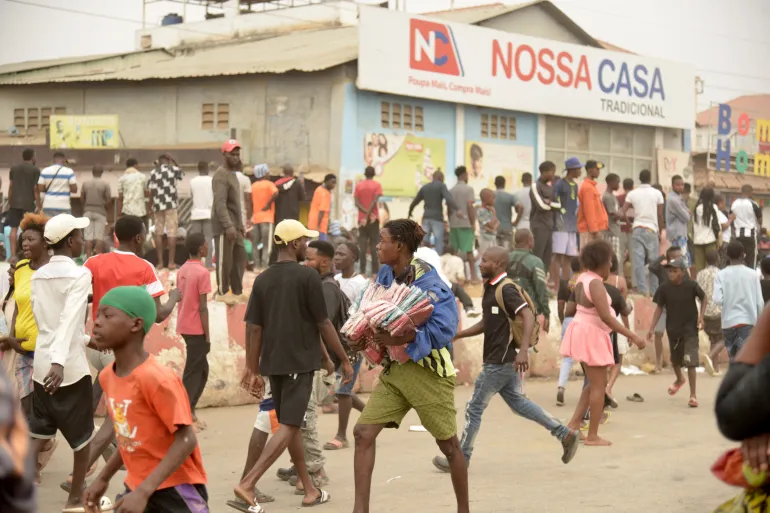
Looting, vandalism and violence began with deadly clashes between the police in the capital city Luanda and spread across the nation.
Gunfire was seen in several Angolan cities as the police opened fired on protesters across Monday and Tuesday, leading to confrontations with citizens.
In response to the unrest, Angolan strongman president Joao Lourenco chaired a cabinet in Luanda to discuss the tense situation.
Lourenco’s party, the People’s Movement for the Liberation of Angola, has been continuously in power for fifty years since the country gained independence from Portugal in 1975 and experienced a civil war shortly after.
During this cabinet meeting, the president and his advisors decided to “restore order” by deploying the military across the country to tackle what they called a “triggered climate of widespread instability.”
Human Rights Watch and other advocacy organisations have lambasted the government for its harsh and excessive use of force in dealing with a largely peaceful demonstration.
HRW has accused the police of unnecessarily firing tear gas and rubber bullets at protestors and assaulting many in the demonstrations.
These scenes throughout Angola have resembled reactions to other recent African protests, such as the still simmering anti-Ruto government protests in Kenya.
Angola’s protests have continued throughout the week, but the visibly frustrated streets have become quieter as security forces turn unpredictably violent in their confrontations with demonstrators.