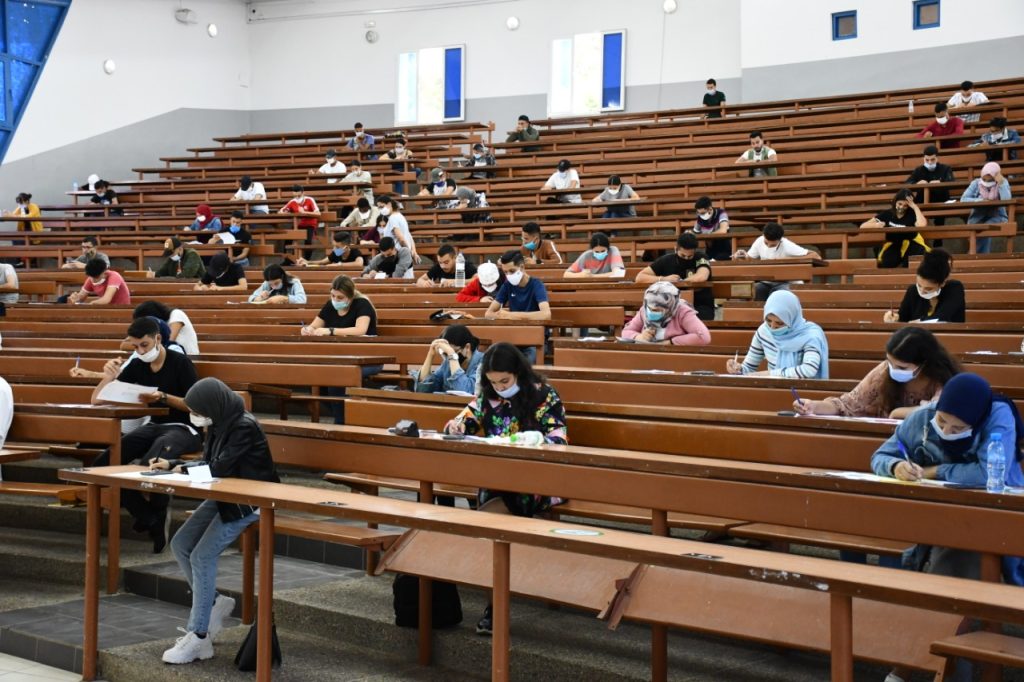
Marrakech – Minister of Higher Education Azzedine El Midaoui has introduced a sweeping reform to Morocco’s master’s degree admission process, eliminating written and oral entrance examinations in favor of a selection system based solely on undergraduate grades and academic records.
The change comes after years of repeated scandals at several Moroccan universities, ranging from “sex for grades” to “Kailech certificates,” named after a professor who was caught selling fraudulent degrees for money.
The new measure aims to increase transparency and reduce opportunities for direct faculty intervention in the selection process, which had been the source of scandals at some institutions.
According to ministerial decision No. 1891.25 issued on July 25 and published in Official Gazette No. 7430 on August 14, admission to master’s degree programs starting next academic year will be based solely on file selection.
The process will evaluate applications according to admission criteria specified in the approved program description, in line with the new national pedagogical regulations.
The decision is based on Decree No. 2.04.89 issued on June 7, 2004, which defines the jurisdiction of university institutions, higher education tracks, and corresponding national diplomas. The new regulations were approved after consulting with the National Committee for Higher Education Coordination on July 16.
According to the decision, the master’s program consists of four semesters. The academic year comprises two semesters, each including 16 weeks of study and assessment.
The deans or their representatives will chair the selection committees to ensure impartial decisions, effectively closing the door on direct relationships between candidates and professors.
The selection committee will include the head of the institution housing the program or their deputy as chairperson, the head of the department associated with the program, the pedagogical coordinator, and, when necessary, other members appointed by the institution head.
The committee will produce a document listing selected students and a waiting list, signed by committee members. An original copy will be sent to both the university president and the institution head, who are authorized to publish the selection results.
The new regulations also specify that students who obtained their bachelor’s degrees from “Centers of Excellence” established under Law 01.00 concerning higher education organization will automatically gain admission to master’s programs hosted by these centers.
The decision seeks to curb favoritism, bribery, and corruption
According to university professor Omar Cherkaoui, the decision comes as part of reforms carried by the new pedagogical guidelines.
He explained that eliminating examinations aims to cut off unfair practices previously associated with selection processes, including “favoritism, bribery, and corruption,” while ending direct relationships between candidates and professors.
Among the accompanying changes, the ministry plans to notably increase the capacity of master’s programs in line with its move toward open access. The ministry will maintain free registration for students while requiring employed individuals to pay fees under the “flexible time” formula that will be implemented nationwide.
Master’s programs will be open to holders of various bachelor’s degrees, including basic studies, professional degrees, science and technology degrees, education degrees, bachelor of technology diplomas, basic diplomas in medical sciences, dentistry sciences, pharmacy sciences, or equivalent qualifications. Candidates must meet the admission criteria specified in the approved program description.
The university will also adopt, when necessary, pedagogical formats that consider the specific needs of students with disabilities, as well as employed students, within the framework of supplementary regulations that define pedagogical measures for each category.
Read also: Morocco Grants Automatic Equivalence to Degrees from Five European Countries