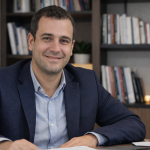

Swedish National Police Commissioner Petra Lundh has again praised Abdellatif Hammouchi, Director General of Morocco’s National Security and Territorial Surveillance services, and Moroccan security authorities after the Agadir arrest on September 25 of a 31-year-old Swedish national.
Swedish police said the man was wanted under an Interpol Red Notice in two cases involving preparation for murder and that, until his arrest, he had played a central role in the Foxtrot criminal network, which has been linked to violence and drug trafficking in Sweden. Swedish authorities described the arrest as strategically important and said it could affect the network’s capacity to drive violent and drug-related crime.
The arrest came less than ten days after another operation in Morocco targeted a Swedish high-value actor suspected of driving violence in Sweden and Norway as part of a European effort against what authorities call “violence as a service.”
Lundh thanked Hammouchi and Moroccan police for their “very professional and effective” work and linked the result to the cooperation agreement and the strong relationship between the two institutions. After the Agadir operation, Deputy National Police Commissioner Stefan Hector said Hammouchi and his colleagues had made an important contribution to the further weakening of Foxtrot network.
The succession of operations points to a broader change in the structure of organized crime. Criminal networks confronting European law enforcement no longer need to keep their leaders, operatives and money in the same territory. A network figure can live thousands of kilometers from the scene of a crime, funds can move through another jurisdiction, and operatives, sometimes minors, can be recruited through encrypted applications and digital platforms.
Pursuing organizers based outside Europe has therefore become part of dismantling a network rather than a secondary task after street-level offenders are caught. A Swedish Customs official made the point directly when welcoming the ability to pursue suspects in Morocco who control serious organized crime in Sweden.
Swedish authorities have stressed the importance of reaching organizers rather than only lower-level members. Once distance can no longer shield network leaders, organized crime loses one of the main advantages globalization has given it.
Moroccan expertise in tracking transnational networks
This is where the Moroccan experience becomes particularly significant. Cooperation between Rabat and Stockholm has deepened since a Swedish police liaison officer was posted in Morocco in 2023, followed by official visits and direct coordination.
In April 2026, Hammouchi and Lundh signed a cooperation agreement in Stockholm. Even before that agreement, Swedish police said three people had been arrested in Morocco during 2025 and three more after a Swedish delegation visited Rabat in November. Arrests and extraditions have continued since.
The value of this record lies not only in the number of fugitives detained, but in how intelligence is converted into an operational result. Tracking a wanted person moving across jurisdictions requires accurate intelligence, identity and location verification, surveillance of movements, a timely police intervention, and then coordination through Interpol and judicial procedures that allow extradition.
Morocco’s model benefits from the complementarity between the General Directorate for Territorial Surveillance (DGST) and the General Directorate of National Security (DGSN), linking intelligence work with criminal investigation and field operations while keeping international cooperation channels active throughout the process.
That capacity is not limited to Sweden. In March 2026, Spain said more than a decade of operational cooperation with Morocco’s DGST had produced 31 joint counterterrorism operations and 150 arrests, describing Morocco as a fundamental security partner in neutralizing terrorist threats.
In organized crime, coordination between Morocco’s DGSN and the French Gendarmerie helped dismantle an international drug-trafficking operation in May and seize nearly 2.7 tonnes of narcotics. Moroccan services have also worked with Spanish, French, American and British agencies and Europol in major transnational investigations. In one large Atlantic cocaine case, an international operation led to 105 arrests and the seizure of more than 10.4 tonnes of cocaine.
Partnerships built on trust, measured in results
These cases highlight an element that is difficult to quantify but decisive in security work: trust between services. A state may possess valuable intelligence, but its usefulness declines if transmission is delayed, procedures become cumbersome, or there is uncertainty over how the receiving partner will handle it. Against networks that rapidly change phones, locations, and intermediaries, a few hours can separate an arrest from another disappearance.
That is why the repeated Swedish praise for Hammouchi and Moroccan security services carries weight beyond diplomatic courtesy. It has followed specific operations and has described the cooperation as professional and effective, while Swedish police themselves have connected the direct relationship between the two services to tangible results. Spain’s official record likewise points to operational cooperation sustained for more than a decade, underscoring that security credibility is built through continuity, accumulated results and a partner’s ability to deliver.
This helps explain the standing Morocco’s security institutions have developed within international cooperation networks. Expertise long associated with counterterrorism now extends more visibly to narcotics, organized crime, weapons, international fugitives and digitally managed criminal activity, fields that are increasingly difficult to separate as networks, financing and operational tools overlap.
The Swedish experience offers a practical illustration of this trajectory. Organized crime treats borders as opportunities to hide leaders and distribute roles, while close security cooperation can turn those same borders into points of pressure and pursuit. The more relations between services rest on trust, clarity, rapid information exchange, and mutual respect for responsibilities, the fewer spaces criminal networks can exploit.
In a world where crime can move faster than traditional procedures, that trust becomes part of security itself. Morocco’s partnerships show that reliable security relationships do more than produce cooperation statements; they can turn the distances criminal networks use for protection into an extension of the pursuit against them.