Marrakech – In its recently published serialized “summer investigation” on Morocco’s sovereign – titled “L’énigme Mohammed VI” – Le Monde employed ominous framing devices suggesting an “atmosphere of end of reign” and “unfinished reforms.” This recurring narrative template reveals far more about French media’s post-colonial perspective than it does about Morocco’s constitutional reality or governance trajectory.
When a French publication deeply embedded within what French constitutional jurists themselves categorize as a “republican monarch” presidency presumes to lecture a centuries-old Moroccan monarchy about legitimacy and institutional efficacy, we are witnessing projection masquerading as reportage.
A ‘republican monarchy’ scolding a monarchy
Since 1958, France’s Fifth Republic has concentrated executive authority in the Élysée to a degree that French public law textbooks routinely characterize as “republican monarchy.” This terminology isn’t Moroccan rhetoric but established nomenclature in France’s own institutional literature describing De Gaulle’s architectural vision and Michel Debré’s constitutional rationale for a powerful head of state.
That architecture – universal suffrage, emergency prerogatives, and a hypertrophied presidency – remains the grammar of French politics.
France abolished its monarchy in 1792, restored it in 1814, retooled it into a constitutional monarchy in 1830, and finally shed it – in the literal sense of kings – by 1848, only to re-centralize power in the presidency a century later.
France’s constitutional evolution thus replaced crowns with republican symbolism but preserved the same vertical structures of authority. The vocabulary changed; the verticality endured.
This is not a moral failing; it is France’s constitutional story. But it makes the paper’s scolding tone toward a monarchic constitutional order next door sound less like universal principle and more like provincial projection. This historical context makes the publication’s normative claims about monarchical governance particularly incongruous.
The structural contradiction becomes immediately apparent: a publication operating within a system frequently criticized domestically for hyper-presidentialism now performs republican virtue abroad by pathologizing royal governance structures in a neighboring sovereign state.
From colonial optics to post-colonial paternalism
This pattern extends beyond Morocco coverage. French media’s Africa reporting has been consistently critiqued – by academics, media analysts, and African journalists – for paternalistic frameworks and Afro-pessimist tropes that flatten complex societies into simplistic morality tales.
Afrique XXI has documented how flagship French talk shows and editorial circuits (including Le Monde’s Africa desks) often debate the Sahel, coups, or “France’s image” in Africa without granting equal agency to African civil actors.
The critique is not “Moroccan propaganda”; it is voiced from within Francophone media spaces. Even Le Monde has published op-eds acknowledging the West’s “paternalistic gaze” and the unfinished work of decolonizing narratives.
Media-watch groups like Acrimed have also chronicled how coverage of Françafrique veers between denial and selective candor, or oscillates between denial and selective transparency, depending on the cycle, the palace mood, and establishment priorities. In other words, the bias is not specifically anti-Moroccan; it is the gravitational field of a persistent Paris-centric geopolitical gaze.
Le Monde’s current series reveals this methodological problem. The opening installments – “In Morocco, an atmosphere of end of reign…,” “Mohammed VI, a youth in the shadow of Hassan II,” and “Mohammed VI, the monarch of unfinished reforms” – establish predetermined conclusions through teleological framing: decline, shadow, incompletion.
This dramaturgy – build mystery, suggest palace intrigue, promise an unveiling in episode 6 – does journalism’s traffic work, but it also hard-codes a conclusion before evidence is weighed.
This narrative approach effectively transforms Morocco into a stage where the Western reporter becomes the protagonist who “deciphers” the Oriental enigma – precisely the Orientalist mechanism Edward Said identified in his landmark critique: the West positioned as interpreter, the non-West relegated to being interpreted.
Memory lane: when Le Monde and the Moroccan crown met in court
For insight into regional reception of this framing, Moroccan commentary has flagged the publication’s “fixation” on monarchy and argued that the investigation functions more as a destabilization script than neutral inquiry. The pattern becomes undeniable regardless of one’s perspective on the conclusions.
This media dynamic has historical precedent. In the 1990s, a Le Monde article relaying a European observatory’s report on drug trafficking prompted a criminal conviction in France for “offense to a foreign head of state” after Morocco requested prosecution. The conviction was later overturned by the European Court of Human Rights (ECHR) in the landmark 2002 “Colombani et autres contre France” case as incompatible with Article 10.
The ECHR affirmed that the press may rely on credible official reports without re-investigating the underlying facts – clarifying standards that still govern cross-border reporting today. This landmark involved Le Monde and the King of Morocco; it is part of the paper’s own institutional memory when it writes about Rabat.
Listing all cases of disinformation, fake news, and fraudulent reporting would take pages and pages, but the most recent notable ones are:
In April 2024, Burkina Faso’s media regulator blocked Le Monde and other outlets after they covered Human Rights Watch findings about alleged army-led massacres. Authorities accused the reporting of “disinformation” likely to discredit the military.
In May-June 2016, Algeria’s former president Abdelaziz Bouteflika sued Le Monde for defamation over a Panama Papers front page pairing his photo with leaders named in the scandal, although he wasn’t cited in the files.
In July 2021, Morocco denounced the Pegasus Project revelations, including Le Monde’s reporting, as “lies” and “fake news,” filing defamation actions in Paris against Amnesty, Forbidden Stories, and later media partners such as Le Monde, Mediapart, and Radio France.
‘Progressive’ optics and the missionary reflex of the French left
Le Monde self-identifies as the house of “moderation” and “critical thinking,” historically aligned with center-left political currents yet often policing ideological boundaries. However, its Africa and Maghreb coverage frequently demonstrates missionary universalism – a left-coded civilizing rhetoric that survives the formal end of empire.
That universalism is hardly neutral: a French definition of “progress” becomes the yardstick, while local constitutional trajectories – Morocco’s monarchic constitutionalism since 2011, its long state-formation arc, its evolving social contract – are treated as mere deviations from a Parisian normal. The blind spot is not that Le Monde is “left” or “right”; it’s that it still imagines itself as arbiter.
Said’s foundational insight wasn’t that Western journalists harbor malicious intent; rather, it was that knowledge systems produce recurrent interpretive frames: infantilization, exoticization, suspicion of indigenous sovereignty, and the fantasy that the external observer alone can “decode” political realities.
Even the paper’s own pages concede that “la décolonisation est un processus inachevé,” including in how Paris narrates Africa. If decolonization is unfinished, then so is media decolonization.
Le Monde will reply that its independence architecture (pôle d’indépendance, right of approval over controlling shareholders, and, more recently, the transfer of majority shares to a foundation-style vehicle) insulates journalism from oligarchic capture.
Those are real safeguards; they were hard-won after the 2019 shareholder crisis and strengthened in 2024. But structural independence from owners does not magically neutralize cultural or ideological priors. A newsroom can be both formally independent and socially captive to a narrow metropolitan habitus.
France’s left has long looked at Morocco through a punitive, post-colonial moral lens – suspicious of the monarchy, indulgent toward Algeria’s narratives on the Sahara – and when Paris finally shifted in 2024, they lined up to denounce it.
After Emmanuel Macron formally pivoted on July 30, 2024 – judging Rabat’s autonomy plan the “only basis” and, within weeks, speaking of France’s “recognition” of Moroccan sovereignty – the Socialist Party condemned a “precipitated” diplomatic turn “without consultation,” the Greens blasted a betrayal of France’s historic line, and Communist figures likewise decried the move.
Meanwhile, La France insoumise’s ecosystem – long sympathetic to Polisario-style self-determination frames – kept signaling its discomfort, even as some voices hedged. In short: when the Élysée finally aligned with decades of Moroccan statehood reality, the French left reflexively clung to an older script that pathologizes Rabat and romanticizes anachronisms in the name of virtue.
Media credibility erodes amid ideological enforcement
The newspaper’s credibility crisis extends beyond Morocco coverage. As The Spectator reported in December 2024, Le Monde faces internal turmoil characterized by a “climate of fear, where only left-wing and woke views are tolerated, and dissenters whisper their frustrations in the shadows.”
Once respected for intellectual rigor and fearless reporting, the publication has been criticized for ideological conformity affecting its coverage of sensitive topics. A 2024 investigation by Le Figaro revealed a newsroom “gripped by ideological rigidity, internal strife, and a culture of self-censorship.”
The tension reportedly reached a breaking point with the newspaper’s coverage of the Israel-Palestine conflict. Anonymous journalists interviewed by Le Figaro expressed discomfort with editorial decisions, describing them as reflecting personal biases rather than journalistic objectivity.
Le Monde’s prose on Morocco’s palace demonstrates these tendencies: evocations of “Arabian Nights” pageantry, palace-as-theater metaphors, and the sovereign portrayed as a sphinx whose “enigma” awaits Western intellectual resolution. These aren’t merely stylistic choices but structural epistemological assumptions.
Narrative construction supersedes empirical observation
While Le Monde fixates on palace intrigue and speculation, Morocco continues its national development trajectory. Under Mohammed VI, the country has implemented significant infrastructure projects: Africa’s first high-speed rail system, Tanger Med emerging as the Mediterranean’s leading port complex, and Noor Ouarzazate establishing itself among the world’s largest concentrated solar power facilities.
Social reforms have included the Moudawana revision, the progressive 2011 Constitution, expanded social protection systems, and the National Human Development Initiative (INDH). Diplomatically, Morocco has strengthened strategic partnerships across Europe, Africa, Asia, and North America.
The country has demonstrated remarkable resilience during crises, including effective pandemic management during COVID-19 and coordinated responses to the 2023 Al Haouz earthquake.
The history Le Monde forgets to remember is that in September 2023, Rabat limited foreign rescue teams – accepting Spain, the UK, Qatar, and the UAE – and initially declined France’s offer, prompting Macron to post a video to Moroccans saying Paris stood ready to help “if the King accepts.”
Taking to social media to respond to Macron’s video message, thousands of Moroccans called it a “stupid,” “impulsive” idea, as well as a “snap decision.” In particular, they stressed that King Mohammed VI is the only legitimate person to deliver such a solemn address to the Moroccan people.
These demonstrations of institutional capacity and social cohesion contradict narratives of instability or governance fragility.
This suspiciously timed publication emerges just as Morocco achieves significant diplomatic breakthroughs, including recognition of its sovereignty over the Saharan provinces by more than 120 countries, and its strategic positioning in African institutions.
It also coincides with the country’s preparations for hosting the 2025 Africa Cup of Nations (AFCON) and its selection as co-host for the 2030 FIFA World Cup alongside Spain and Portugal.
These milestones showcase historic infrastructure achievements completed by Moroccan companies and expertise. Yet, they remain entirely absent from Le Monde’s analysis – revealing the selective lens through which the publication views Morocco’s trajectory.
The timing of Le Monde’s publication also coincides suspiciously with European Union discussions to consolidate its trade agreement with Morocco, explicitly including the Saharan provinces – a diplomatic advancement aligned with Morocco’s vision for the peaceful resolution of the Sahara dispute.
Rather than acknowledging these achievements, Le Monde is choosing to recycle its familiar narrative template. Its fixation on monarchy and insinuations of palace intrigue read less like journalism and more like a pre-scripted destabilization manual – exposing not analysis, but the editorial agenda itself.
Le Monde’s series represents a recognizable genre – the Parisian morality play about non-European sovereignty. It flatters metropolitan conscience, disciplines the former protectorate, and reassures readers that Western governance paradigms remain universally applicable.
Morocco’s security expertise overshadows media narratives
Far from the imagined instability portrayed in Le Monde’s analysis, Morocco is widely recognized as a regional bulwark of stability, with intelligence services whose precision has prevented terrorist threats across Europe.
The country’s diplomatic expertise has facilitated critical peace initiatives, including the December 2024 mediation that secured the release of four French hostages detained in Burkina Faso.
These security contributions, acknowledged by France itself, exemplify international anti-terrorist and anti-criminal cooperation that merits substantive coverage rather than palace gossip.
Morocco’s effective actions, including the recent arrest of over twenty criminals sought by Interpol and the decisive role in eliminating the Boko Haram leader responsible for 40,000 deaths in the Sahel, demonstrate governance efficacy that contradicts narratives of institutional weakness.
Responsible journalism requires historical context
And since former colonial powers preserve this hierarchical vocabulary toward their ex-colonies – a lexicon that could just as easily be reversed – the question then becomes: what would responsible coverage entail?
It would apply consistent constitutional standards rather than criticizing monarchy as a concept while operating within a “republican monarchy.” It would incorporate plural Moroccan voices – scholars, civil society, entrepreneurs, opposition figures – rather than filtering the country through Western perspectives alone.
Morocco deserves journalism that recognizes its complex institutional development, acknowledges its achievements alongside challenges, and respects its sovereignty. Similarly, Le Monde’s readers deserve reporting that transcends simplistic narratives and engages with the nuanced realities of contemporary Morocco.
Responsible journalism would situate present-day reforms within Morocco’s long-term state development rather than episodic moral evaluations. It would acknowledge its own theoretical priors and historical framing devices when narrative choices reflect inherited tropes.
Meanwhile, the colonial media habits seeded in the long 19th century – metropole-centric gatekeeping, extraction of narrative authority, and “explanations” of the colonized to themselves – did not disappear with formal independence.
Scholarship on colonial-era press ecosystems and post-colonial newsroom routines keeps showing how forms of paternalism were laundered as “expertise.”
While Le Monde squanders its ink on baseless Moroccan speculations, France itself is mired in a storm of real crises that the paper largely ignores in its quest for buzz. On the horizon, the September 10 social mobilization threatens to paralyze the country with calls to block roads, ports, and institutions – fueled by mounting frustration over budget cuts and runaway inflation.
At the same time, Le Monde has published alarmist pieces on Algeria’s potential collapse, yet frames them through veiled critiques of Morocco, effectively serving Algiers’ propaganda.
Since 2021, Algeria has waged a “fake war” of media narratives against Rabat, and Le Monde appears to act as one of its vectors – blaming Morocco for regional tensions while glossing over Algeria’s own failures. The latest six-article series seems less like independent reporting than the product of orchestration amplified by pro-Algerian voices.
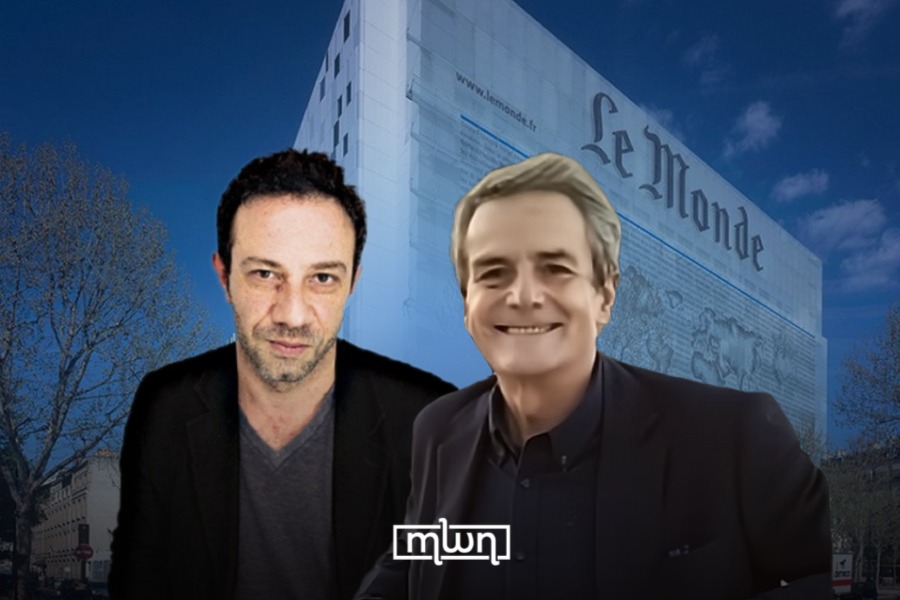
The architects of this farce are Christophe Ayad and Frédéric Bobin. Ayad, a former Libération journalist, has long been criticized for biased coverage of Middle Eastern conflicts, often relying on vague phrasing and anonymous sources while privileging sensationalism over verifiable facts.
His track record includes superficial analyses of jihadism, Franco-African relations, and Maghreb politics that betray a lack of local grounding and methodological rigor.
Bobin, meanwhile, has distinguished himself by trafficking in indulgent portrayals of authoritarian regimes and inconsistent treatment of North African states – minimizing foreign interference in Moroccan affairs while casting Algeria in a more favorable light, even whitewashing dubious figures such as fugitive fraudster Mehdi Hijaouy in a July piece.
Together, they embody a journalism of shortcuts, recycling clichés instead of conducting on-the-ground investigation, and in doing so, they stray far from the Munich Charter’s demands for accuracy, fairness, and impartiality.
Methodological transparency remains journalistic obligation
The fundamental narrative isn’t about a supposed “end of reign” but about Morocco’s continued institutional development, diplomatic advancement, and national resilience in addressing socioeconomic challenges – a story that merits more substantive journalistic treatment than recycled colonial tropes.
The real story lies instead in a prestigious publication’s apparent inability to transcend post-colonial narrative frameworks, a concerning decline for an institution once committed to journalistic excellence and critical analysis.
When Le Monde proclaims Rabat’s “end of reign,” it inadvertently reveals its own intellectual exhaustion – an inability to perceive a modernizing monarchy beyond orientalist clichés.
Morocco, meanwhile, continues advancing with infrastructure development, institutional reform, and diplomatic achievements that merit substantive analysis rather than recycled colonial tropes dressed as investigative journalism. Morocco deserves better journalism than a serialized déjà-vu. So does France.
Read also: France in Morocco: A History of Manipulation and Fake News