 Join on WhatsApp
 Join on Telegram
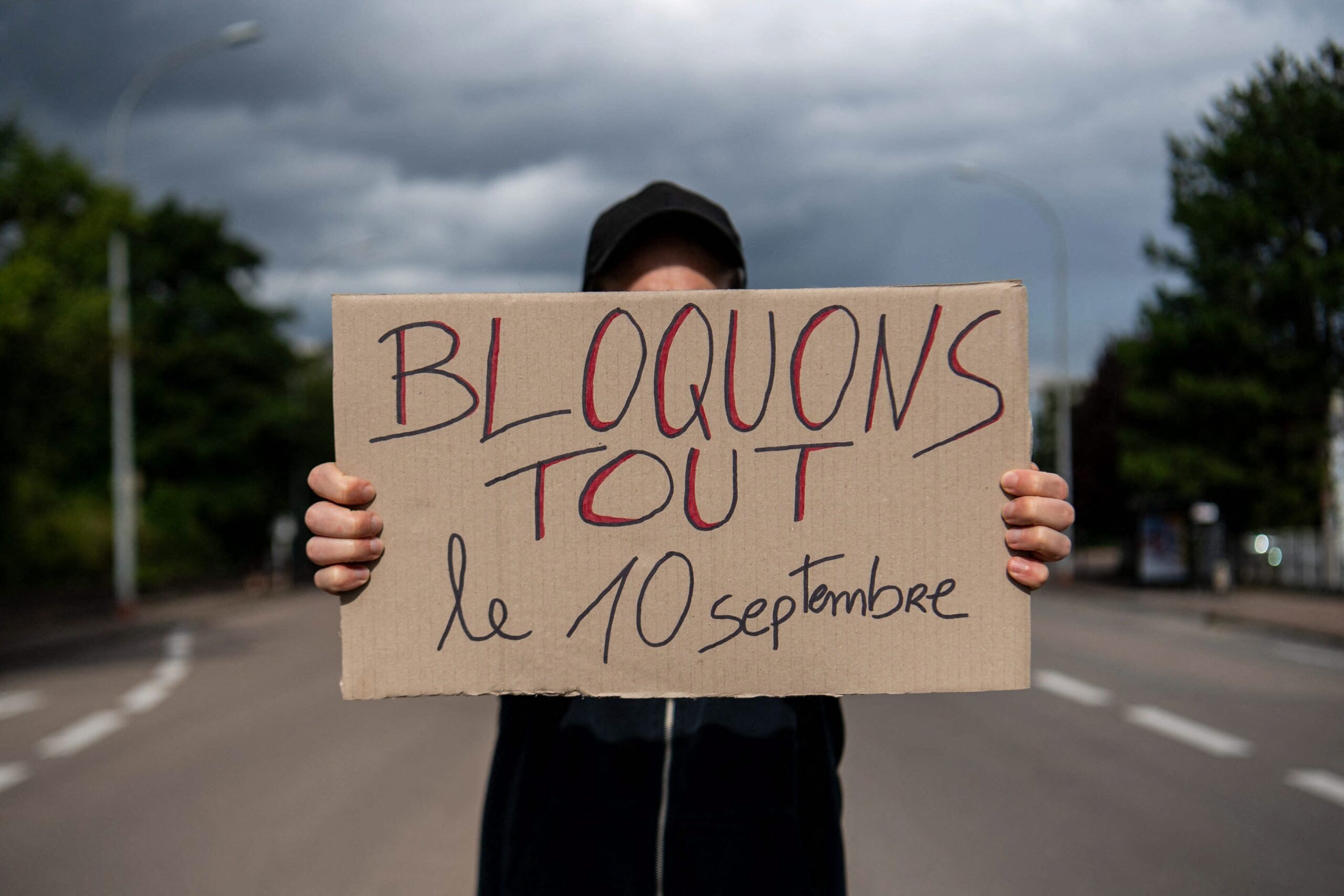
Marrakech – France is experiencing significant disruptions today as the “Bloquons Tout” (Let’s Block Everything) movement gains momentum across the country. This grassroots protest, which began on social media in May, called for a nationwide shutdown on September 10 to demonstrate against government policies.
By 11:19 a.m., nearly 200 interpellations had been reported nationwide, with 132 in the Paris region alone, according to Interior Minister Bruno Retailleau. Approximately 80,000 police and gendarmes have been deployed throughout France, including 6,000 in Paris.
The transportation sector is facing planned disruptions, particularly affecting RER and Transilien train lines. The SNCF reported “two acts of malveillance” overnight, including cable damage between Marmande and Agen that disrupted rail traffic between Bordeaux and Toulouse, and similar issues near Toulouse interrupting service between Saint-Cyprien and Colomiers.
In Paris, transport authorities indicated that metro and bus services remain “quasi normal,” while RER B line operations are reduced to two trains out of three. The line, which serves Charles de Gaulle airport and typically carries nearly one million passengers daily, is among the affected routes.
Read also: Royal Air Maroc Warns of Flight Disruptions Due to French Controllers’ Strike
Multiple educational institutions have been targeted as well, with three high schools completely or partially blocked in Montpellier. In Rennes, high schools have been blocked by garbage bins and barriers, while in Lille, authorities have deployed forces to prevent complete blockages.
The Ministry of Transport also reported road disruptions, including slowdowns and barricades near Rennes, Nantes, on the A10 highway near Poitiers South, on the A9 at Aix-en-Provence, and on the Toulouse beltway.
In northern France, protesters blocked the A1 motorway near Lille by early morning. The demonstrations spread beyond major cities, with the Confédération Paysanne agricultural union participating in blockades with tractors at several locations, including the A20 highway, Chambéry, Bourges, and Albi.
Bruno Retailleau accused “the far-left movement” of having “confiscated” the mobilization, which originated on social networks before being joined by several unions and left-wing political parties.
The trigger for the widespread discontent is Prime Minister François Bayrou’s 2026 financial plan aimed at slashing €43.8 million from the national budget. Among the most controversial austerity measures are plans to remove two national holidays, freeze pensions, and implement €5 billion in health cuts.
The timing of the protests is particularly significant as Bayrou has already resigned, with Sébastien Lecornu set to succeed him. This political transition occurs just two days after Bayrou called for a parliamentary confidence vote in his government, originally scheduled for September 8.