
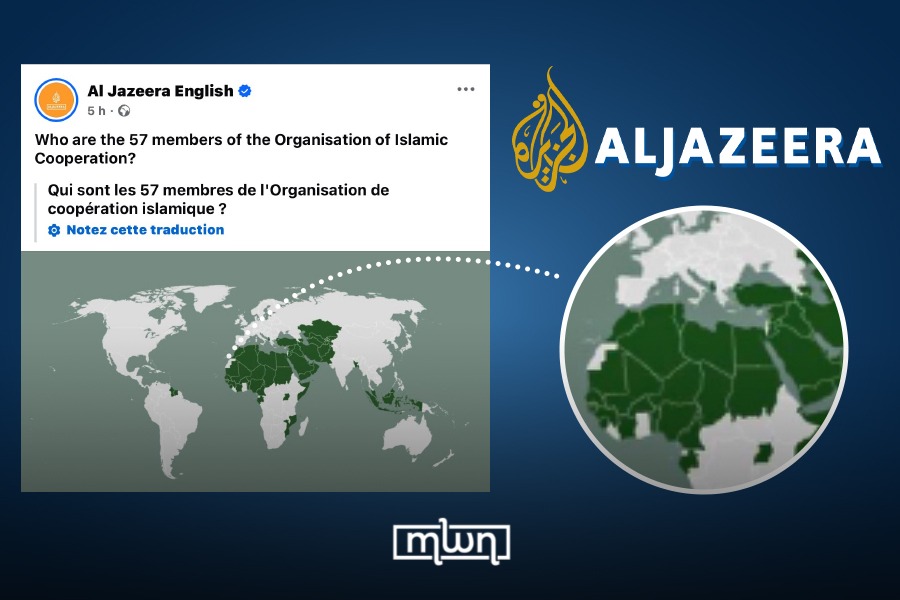
Rabat – Al Jazeera English has come under fire from Moroccan social media users after the Qatar-based channel published a map of the Arab League that excluded Morocco’s southern provinces.
The map, used in a segment explaining the composition of the Arab League, portrayed Morocco as divided, triggering a wave of criticism online. Many Moroccans denounced the move as a direct attack on their country’s territorial integrity, describing it as part of repeated attempts by international media outlets to undermine Morocco’s sovereignty over its Sahara.
The timing of the controversy is particularly notable, as Prince Moulay Rachid represented King Mohammed VI at the urgent Arab-Islamic Summit held in Doha over the weekend. He was accompanied by Morocco’s Minister of Foreign Affairs Nasser Bourita to discuss Israel’s September 9 attack on Doha. On social media, especially X, Moroccans voiced frustration at the editorial choice.
Other Moroccan accounts, including Mahdi Baladi News, echoed the outrage, with one post stating: “Al Jazeera Qatar… media tampering with Moroccan sovereignty.” The user argued that the incident is not isolated, but part of a “series of repeated media attempts to cast doubt on Morocco’s position in the Sahara issue.”
Algerian journalist and political analyst Walid Kebir also criticized the network, questioning its editorial line:
“Why does Al Jazeera English not adhere to Qatar’s foreign policy and its clear stance supporting Morocco’s sovereignty over the Sahara? Isn’t this behavior a stab at Arab and Islamic unity? Publishing a truncated map of Morocco is nothing but executing the agendas of colonial proxies in North Africa, and this is unacceptable. Enough hypocrisy!”
This latest controversy adds to a pattern of similar incidents from the publication of distorted maps to reports portraying the separatist Polisario Front as a legitimate representative.
Such practices overlook major diplomatic shifts, including the United States’ recognition of Morocco’s sovereignty over its southern provinces in 2020 and the growing European and Latin American support for Morocco’s autonomy initiative.
For Moroccans, these editorial choices are not mere “mistakes,” but politically motivated acts aimed at undermining their country’s territorial integrity.
Regardless of shifting narratives abroad, Morocco’s stance remains unshakable: the Sahara is Moroccan, and no map or broadcast can change that reality.