
 Join on WhatsApp
 Join on Telegram
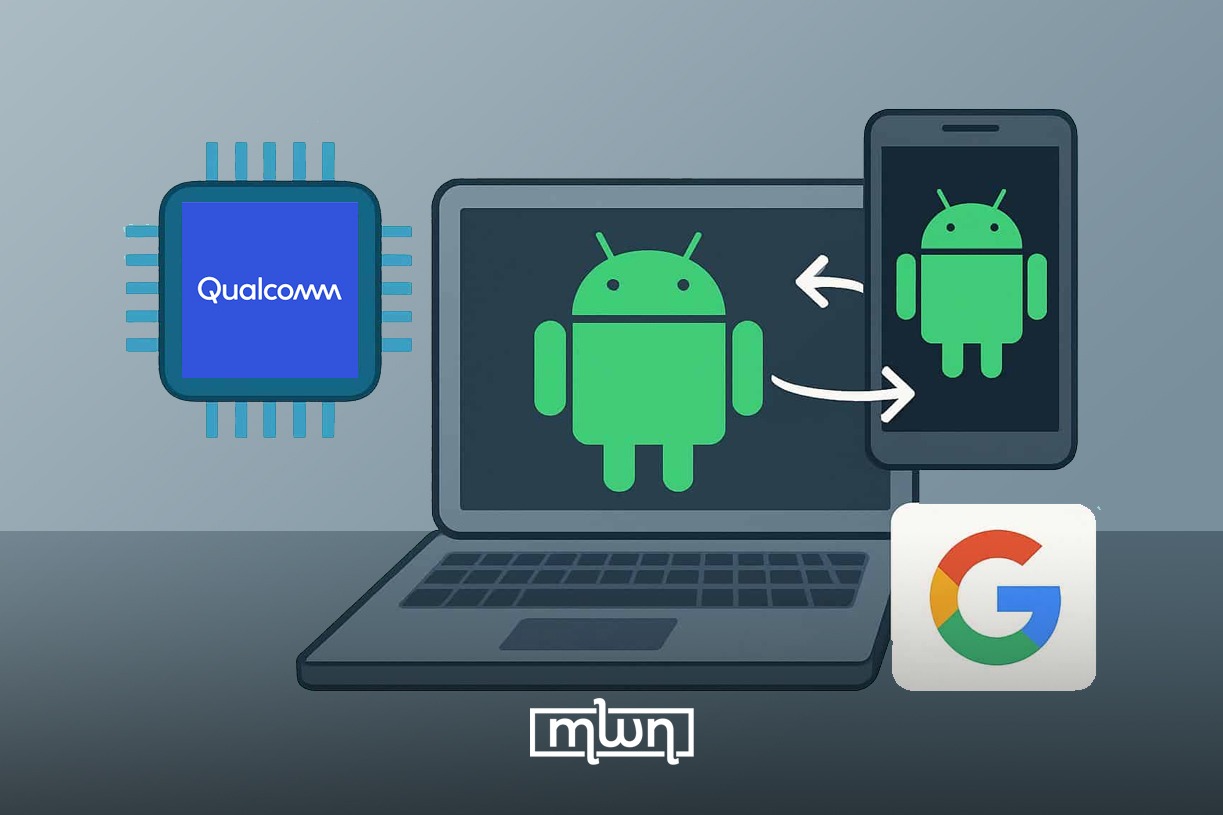
Rabat – At the Snapdragon Summit, Google revealed plans to merge Android with ChromeOS, creating a unified platform for laptops and desktops set to launch in 2026. This move, confirmed by Google SVP Rick Osterloh and Qualcomm CEO Cristiano Amon, brings the mobile experience – along with Android’s AI capabilities – smoothly to PCs.
The announcement came during a keynote that highlighted Google’s broader ambitions in AI. Qualcomm’s Alex Katouzian invited Sameer Samat, president of Google’s Android ecosystem, to discuss AI integration.
“Let’s switch contexts and talk about productivity on a large-screen computer environment,” said Samat, shifting the focus from AI to phones, watches, and smart glasses.
He emphasized Google’s goal of having devices work seamlessly together, while maintaining a strong commitment to ChromeOS.
Google will base ChromeOS on Android’s underlying technology. “We’re basically taking the ChromeOS experience, and we’re re-baselining the technology underneath it on Android,” Samat explained. “That combination is something we’re super excited about for next year.”
Rick Osterloh elaborated on this solution, “In the past, we’ve always had very different systems between what we’re building on PCs and what we’re building on smartphones. We’ve embarked on a project to combine that.”
‘We are building together a common technical foundation for our products on PCs and desktop computing systems. This is another way we can leverage all of the great work we’re doing on our AI stack, our full stack, bringing Gemini models, bringing the Assistant, bringing all of our applications and developer community into the PC domain,” he continued.
Read Also: iPhone 17 Series: Faster Chips, Smarter Cameras, and Brighter Screens
Amon added that he had seen the system and called it “incredible. It delivers on the vision of convergence of mobile and PC. I cannot wait to have one.”
Key features to expect in the new operating system include:
- Unified Platform: The new OS will merge the best of Android and ChromeOS, allowing apps and features to work across devices.
- AI Integration: Google’s Gemini AI and Assistant will be baked into the desktop experience, helping with productivity and multitasking.
- Hardware Support: Google is collaborating with Qualcomm, using Snapdragon X2 chips to ensure smooth performance.
- App Compatibility: Android apps will run natively, expanding the software options available on desktop devices.
Samat also clarified that ChromeOS branding may remain, even as the underlying technology shifts toward Android. This approach could allow laptops and phones to work better together, unlocking new levels of performance and faster iteration.
For users, this could mean more consistent app behavior, AI-powered assistance across devices, and easier management of tasks across laptops, tablets, and phones.
While details on marketing and exact device designs remain scarce, the 2026 launch promises a new chapter in computing, with Android’s versatility and ChromeOS’s desktop strengths.