


 Join on WhatsApp
  Join on Telegram
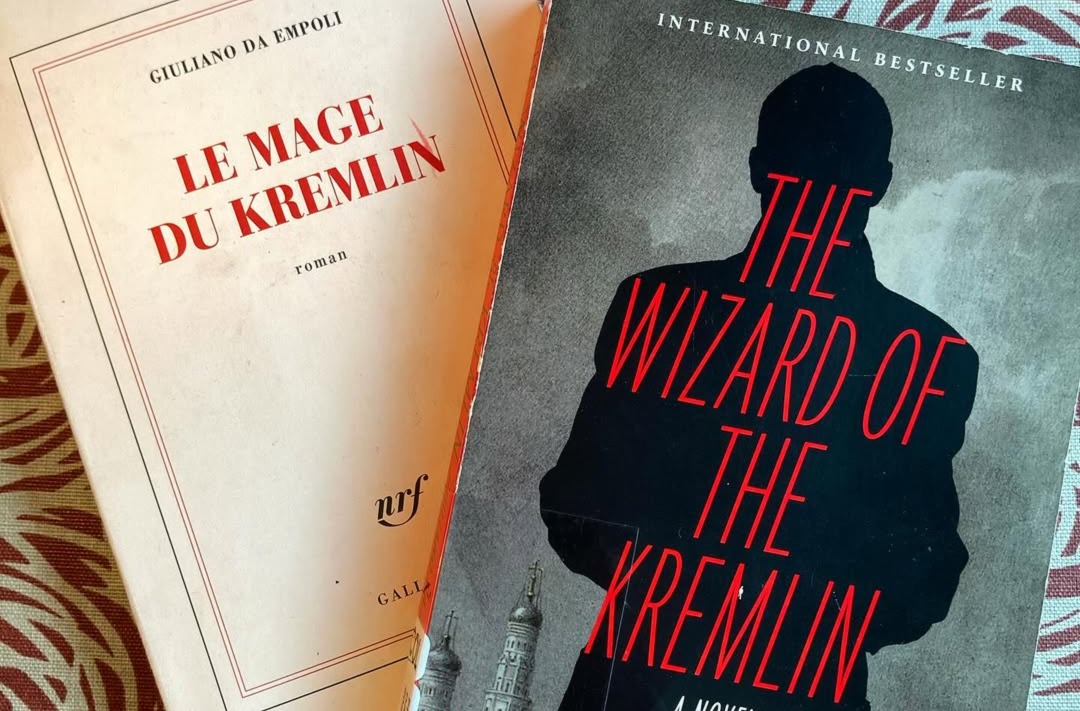
 Cinema likes to tackle the reality of international politics, to describe, analyze, dissect and criticize political systems. This is what recently led Hollywood to adapt Giuliano Da Empoli’s best-selling book, “The Wizard of Kremlin.” Director Olivier Assayas took up this story, based on fictionalized real events, to produce a film that reflects the reality of today’s Russia. Currently showing in the United States and Great Britain, it will soon be distributed in other countries from early 2026.
Transposing a novel from a book to a film is always risky and challenging. It involves transforming a written work of art that appeals to the imagination into a visual art form, limited by time space and budget. Fixing a written work in images mutilates the lyricism of a novel. Reading a book allows everyone the freedom to dream up the scenes.
In “The Wizard of Kremlin,” the narrator, who is visiting Russia, a country that fascinates him, describes his encounter with a certain Vadim Baranov, former adviser to President Vladimir Putin, whom the author refers to as the Tsar. Baranov recounts his past alongside Putin and reveals the secrets of his life alongside the Tsar, as well as his philosophy ofpower and politics.
Baranov, nicknamed the Kremlin’s wizard, was a successful reality TV director and producer in his youth, before becoming Putin’s eminence grise. In the turmoil of the new Russia undergoing reconstruction after the collapse of the Soviet Union, this formidable figure carved out a path for himself in the country’s political upper echelons. After resigning from his position as advisor to the president, he helped launch into orbit. Legends about him multiplied, making it impossible to separate fact from fiction. His meeting with the narrator gave him the opportunity to lift the curtain on some of the driving realities of the power he helped to establish.
The new Rasputin
From his career as an artist, Baranov was propelled into the upper echelons of the Russian state, acting in the heart of the political system. In a short space of time, he became one of the cogs in Putin’s new Russia, shaping the president’s speeches and perceptions. He thus prepared him to fully play his role as leader of the Russian nation. After retiring from his duties to the Tsar, Baranov agreed to reveal all his secrets and truths to the writer.
During his time in the service of the Tsar, it emerged that he had been given the title of the new Rasputin. Baranov was often in Putin’s office, advising him on how to dramatize his actions in order to manage state affairs. It was not the president’s secretaries who summoned him, but Putin himself who requested him for discussions on internal politic affairs. Baranov, a theatre director, helped Putin stage Russian politics to make him the invincible hero and actor he has become.
Baranov confesses to the narrator, however, that he was unfairly blamed for influencing the Tsar and for being the one who brought the tricks of avant-garde theatre to the country and applied them to state affairs. He reveals that he was accused of being a conjurer who made political figures appear and disappear with a snap of his fingers. He confessed his love of Russian literature and his discovery of the great writer Yevgeni Zamyatine, who lived between 1884 and 1937. Zamyatine was known for his book We, in which he expressed his disappointment with the Bolshevik revolution led by Lenin.
For Baranov, Zamyatine sums up the problems facing Russia today. Since discovering him, Zamyatine has become an obsession and an example for him. It seemed to me that his work summed up all the issues of our time, he tells the narrator. His book, “We,” did not only describe the Soviet Union of the time, but also recounts our smooth and uneventful world, and the irremediable inadequacy of our primitive brains, he points out. He added: Zamyatine was not only addressing Stalin, he was pinpointing all dictators, the oligarchs of Silicon Valley and the mandarins of the Chinese Communist Party.
Baranov then shows the narrator a letter that Zamyatine wrote to Stalin, asking for permission to leave the USSR at the time. In it, he writes: “I do not claim to be innocent. I know that I am in the habit of saying what I consider to be the truth, rather than saying what would be useful to me at the moment.”
Zamyatine subsequently went into exile in Paris, where he lived and was later buried, while Baranov chose to remain in the country after serving the Tsar, to live out his days peacefully in Russia. Was it a lack of courage? It is plausible, but in reality we do not know. There is no greater gamble, he said, than waking up in the morning, having your coffee and taking your daughter to school.
The futility of absolute power
To justify himself, Baranov describes the experiences of his grandparents and bourgeois parents who faced the communists, a bunch of morons who seized power by force and massacred the people, he tells him. He, who made his career in theater and television, took his revenge after his meteoric rise with Putin, lavishing him with useful advice on how to manipulate the general public and consolidate his power. Baranov willingly details how he shaped and orchestrated official propaganda and communications.
He also reveals the Tsar’s obsession with controlling the Russian people. Putin appears in the author’s description as a pragmatic leader, obsessed with the stability of the country and the power of the state. This account reveals Putin’s vision, fueled by resentment towards the West and a strong instinct for revenge. However, behind this façade of efficiency and strength, the wizard reveals another side to the Tsar, marked by fear, isolation and fragility. The Tsar lives, he tells the narrator, in icy solitude, mistrusting everyone, both his loved ones and his adversaries. Then, like a philosopher, he concludes that power, instead of bringing security, traps those in charge in an eternal cage.
Baranov then realizes the futility of his position and the price he is paying with his life and peace of mind for being too close to power. He sees the lies, violence and oppression that the system inflicts on citizens. And, for his own salvation, he decides to distance himself from it for the peace of his soul and the tranquility of his family. Disillusioned, he ends up resigning and retreating to meditate on the nature of power, which for him is nothing but an illusion and a deadly trap.
He recalls, with a certain nostalgia and bitterness, details of his actions and what he describes as his work with the president. When he organized political scenarios, like a director staging a play. He then notes that political opposition in Russia was merely tolerated, even if it was integrated into the system. It was mainly used as a backdrop in a grand theatrical scene with no real substance.
Thus, in this novel, The Kremlin Wizard, author Giuliano Da Empoli alternates between historical fresco, portrait of a president, and reflection on political power and the manipulation of the masses and the elite. He thus blurs the boundaries between historical truths, real facts, and literary narratives to ultimately serve the plot of his novel.
Through this work, he allows us to tiptoe behind the scenes of Russian power, and into the very heart of the Kremlin, while maintaining a critical distance to enhance the fictional narrative. Let us hope that the film, which will certainly be screened in Morocco soon, will not disappoint us. And above all, let us hope that it will convey the same sense of pleasure and discovery that the novel so gracefully and generously provided us with.


